
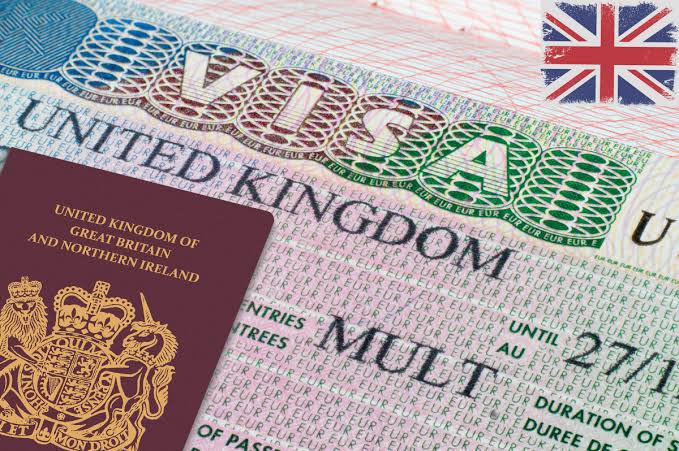
NIGERIANS RESPOND TO PROPOSED INCREASE IN UK VISA FEES
Read Time:2 Minute, 35 Second
By: Balogun Ibrahim
Some Nigerian professionals in the United Kingdom have reacted to the British government’s proposed increase in visa, application, and citizenship fees for foreign nationals.
The UK Home Office announced that the fee hike will take effect from April 8, 2026, affecting Nigerians and other foreign nationals seeking to visit, study, work, or settle in the country.
Under the new rates, the short-term visit visa will rise from £127 to £135, while the student visa will increase from £524 to £558.
The naturalisation application fee for British citizenship will go up from £1,605 to £1,709, and those applying for permanent residency will see fees rise from £3,029 to £3,226.
Reacting to the fee increase, political and social cartoonist Samuel Ojo warned that the development could limit young Nigerians’ access to educational opportunities in the UK.
Ojo noted that while the fees may seem modest, the high cost of migration due to Nigeria’s exchange rates makes them burdensome for prospective travelers.
“The system increasingly favours those who can afford to navigate rising costs and prolonged uncertainty, rather than those who have the skills and potential to contribute meaningfully,” he said.
“For Nigerians, the impact is evident. Firstly, it restricts access for young people aiming to pursue education and opportunities in the UK.
“Secondly, it reinforces the perception that the UK is becoming less accessible to migrants from lower-income countries, even as it continues to depend on their labour in sectors such as healthcare and technology,” Ojo added.
“Thirdly, it may prompt many to explore alternative destinations like Canada or Australia, where immigration pathways appear more stable and predictable,” Ojo added.
The graphic designer observed that the fee increase risks limiting opportunities for talented individuals who could contribute meaningfully to British society.
READ MORE…
Drawing from personal experience navigating the UK system, he said, “This trend indicates a broader shift: the UK is not entirely closing its doors, but entry and long-term settlement are becoming increasingly dependent on financial capacity.
“The danger is that individuals with genuine talent, resilience, and perspective may be priced out, leaving only those with sufficient financial resources able to stay.
“While the policy may make sense administratively or economically from a government standpoint, socially, it risks reducing diversity and excluding voices that could add significant value to British society.”
Similarly, British-Nigerian author Majemite Jaboro urged a focus on revitalising the Nigerian economy and addressing exchange rate challenges.
He said, “The fee increase may seem small, but the real problem lies in the exchange rate. Student and family visas now cost millions in naira. How many Nigerians can actually afford that? Very few.”
Jaboro argued that the core issue is not UK policy but Nigeria’s economic reality.
“Even without the hike, most people are already priced out. The problem is a weak naira, low incomes, and our reliance on foreign education and opportunities. We need to look inward. Why is our currency so weak? Why has travel become a luxury?” he added.


Happy
0 %

Sad
0 %

Excited
0 %

Sleepy
0 %

Angry
0 %

Surprise
0 %
 0
0
 0
0