
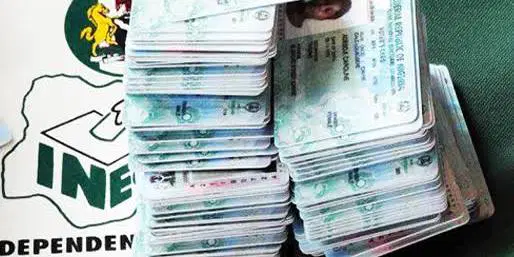
INEC REMOVES 1.6 MILLION INVALID, DECEASED VOTER RECORDS AHEAD OF 2027 ELECTIONS
Read Time:2 Minute, 55 Second
By: Hammad Fasasi
The Independent National Electoral Commission (INEC) has announced the removal of 1,609,553 invalid and deceased voter records from the national register as part of efforts to sanitise the electoral database ahead of the 2027 general elections.
The INEC Chairman, Professor Joash Ojo Amupitan, SAN, disclosed this during a press conference in Abuja, where he also explained the delay in the production and distribution of Permanent Voter Cards (PVCs) for those who registered during the third phase of the Continuous Voter Registration (CVR) exercise.
Amupitan said the records removed comprised 1,608,660 confirmed invalid registrations and 873 verified deceased-voter records.
He explained that the commission was committed to addressing identified irregularities through evidence-based investigations, corrective measures and stronger preventive controls.
“The Commission recognises that the detection of irregularities raises legitimate questions about how they arose. The response is evidence-led investigation, completed corrective action and stronger preventive controls.
“1,609,553 records have been removed, comprising 1,608,660 confirmed invalid registrations and 873 verified deceased-voter records. INEC will continue to communicate verifiable aggregate outcomes while protecting personal information and the integrity of ongoing investigations,” he said.
On the status of PVCs for third-phase registrants, the INEC chairman said the distribution of cards from the first and second phases, including transferred PVCs, was ongoing at various local government areas across the country.
He added that some of the PVCs produced for the third and final phase were already being delivered and would be dispatched to the states by the following week.
According to him, distribution would return to Registration Areas nationwide from December 1, 2026.
He appealed to those who registered during the third phase to remain patient, explaining that the production of the cards was being carried out outside the country.
Vanguard recalls that a total of 2,970,257 Nigerians registered during the third phase before INEC’s de-duplication process.
The latest clean-up followed widespread public concerns over irregularities identified in the preliminary voter register displayed between October 9 and 15, 2026.
A technical audit conducted with the Automated Biometric Identification System (ABIS) reportedly uncovered several irregularities, including unusual registration patterns, substituted photographs and fraudulent multiple registrations.
The investigation also identified 54 INEC staff members across 10 states who allegedly manipulated the registration process by bypassing established procedures and abusing special provisions designed to accommodate vulnerable groups, including persons with disabilities.
Amupitan said disciplinary measures and possible prosecution had been initiated against the affected personnel.
On questions concerning ongoing court cases involving political actors, particularly the leadership dispute involving former Vice President Atiku Abubakar and the African Democratic Congress (ADC), the INEC chairman said the commission would only act on authenticated legal documents.
“On ADC/Atiku: as of today, we have not received the Certified True Copy of the court judgment and we don’t act based on what we see on social media,” he said.
INEC further disclosed that although the 2025/2026 CVR exercise had addressed recent irregularities, older records carried over from registration exercises conducted between 2011 and 2023 still contained duplicate entries.
The commission’s board has consequently directed that flagged records from previous registration cycles be removed after proper verification.
To strengthen the credibility of the 2027 elections, INEC assured Nigerians that safeguards against multiple voting and unauthorised accreditation would remain in place.
These measures include the mandatory physical presence of voters and biometric verification through the Bimodal Voter Accreditation System (BVAS), using fingerprints or facial recognition.


Happy
0 %

Sad
0 %

Excited
0 %

Sleepy
0 %

Angry
0 %

Surprise
0 %
 0
 0