
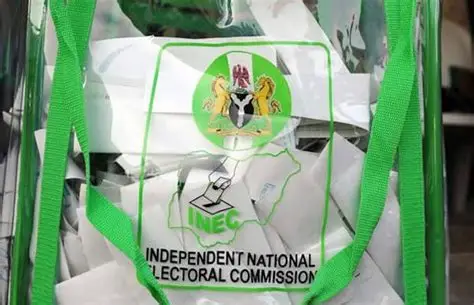
INEC UNCOVERS VOTER REGISTRATION MANIPULATION, IDENTIFIES 54 PERSONNEL IN 10 STATES
Read Time:5 Minute, 41 Second
By Aishat Momoh. O.
The Independent National Electoral Commission (INEC) has uncovered alleged deliberate manipulation of voter registration procedures involving about 54 of its personnel across 10 states of the federation.
INEC Chairman, Prof. Joash Amupitan, disclosed this at a conference on Monday, saying the commission would take disciplinary action against the affected personnel, including possible prosecution.
He also said individuals involved in double registration could face prosecution under the law.
Amupitan said the commission had so far removed 1,608,660 confirmed invalid registration records and 873 records belonging to verified deceased persons from the voters’ register following complaints received during the cleaning exercise.
He explained that the exercise followed concerns raised over the preliminary register displayed ahead of the 2027 general elections.
According to him, investigations revealed that some registration personnel deliberately circumvented established procedures and abused provisions designed to accommodate exceptional registration circumstances, including registration for persons with disabilities.
He said the affected records had been identified, verified and corrected, while the personnel allegedly involved had been identified for further administrative investigation.
The INEC chairman said the commission would take appropriate disciplinary measures against the 54 personnel identified across the 10 states to deter future manipulation of the registration process.
He added that the commission had directed its Information and Communication Technology department to develop a specialised application for photo capture in future registration exercises.
Amupitan also announced that INEC would extend its scrutiny to historical voter registration records from 2011 to 2023, following concerns that questionable entries from previous exercises could remain in the register ahead of the next general elections.
He said the commission, at its meeting on Monday, November 9, directed that duplicate and other obviously irregular records in the historical register, particularly those already flagged through public complaints, should be removed after proper verification.
According to him, the controversy surrounding the preliminary register had exposed longstanding integrity challenges arising from successive registration exercises conducted with different technologies, operational arrangements and quality-control standards.
He noted that the current National Register of Voters was built through successive registration and Continuous Voter Registration exercises since 2011.
Although the commission had conducted biometric comparisons and other cleaning exercises over the years, he said significant historical integrity concerns remained.
Amupitan disclosed that out of the 11,088,238 registration records generated during the three phases of the 2025/2026 CVR exercise, the Automated Biometric Identification System (ABIS) initially flagged 1,545,052 records for further examination.
He clarified that being flagged by the automated system did not automatically invalidate a registration, as each case was subjected to authorised adjudication before a decision was reached.
According to him, 1,277,052 registrations were confirmed invalid and excluded before the publication of the preliminary voters’ register.
Following the display of the register at polling wards between October 9 and 15, 2026, and its subsequent online publication, the commission received additional complaints, claims and objections from members of the public.
Amupitan said a further 268,000 cases were subjected to adjudication following the complaints. Of these, 217,722 were confirmed invalid and removed, while 50,278 were cleared as valid registrations and retained.
He said an additional 331,608 invalid records were identified after the public display, bringing the total number of confirmed invalid registrations removed to 1,608,660.
The INEC chairman warned that cleaning up records generated during the 2025/2026 CVR exercise alone would not resolve all integrity concerns surrounding the national register.
He said most of the duplicate names and photographs circulated on social media in recent weeks related to registrations conducted between 2011 and 2023, rather than the latest exercise.
He added that investigations showed that some complaints about multiple registrations originated from the historical database, making a separate verification and cleaning exercise necessary.
Amupitan also explained that some voters who complained about the omission of their names from the preliminary register might have inadvertently contributed to the problem by registering afresh after relocating instead of applying for a transfer of their registration.
He said many of the affected persons had registered between 2011 and 2023 before attempting fresh registrations after moving to other locations.
However, the ABIS screening system voided their subsequent registrations, leaving their original records at their previous polling locations.
The chairman recalled that INEC announced plans in February 2026 to conduct a nationwide voter revalidation exercise to improve the accuracy and reliability of the register, particularly historical records captured with older registration technologies.
He said the exercise was intended to enable voters to update their biometric information, resolve registration inconsistencies and improve accreditation on election day.
However, following concerns from stakeholders about the exercise’s proximity to the 2027 general elections and the possibility of disenfranchising eligible voters, the commission decided to postpone it until after the elections.
He stressed that the postponement did not mean INEC had suspended its existing mechanisms for maintaining the integrity of the voters’ register.
Addressing concerns that the irregularities could undermine the credibility of the 2027 general elections, Amupitan said the commission had introduced additional safeguards to prevent multiple accreditation and voting on election day.
He explained that the Bimodal Voter Accreditation System (BVAS), working with the prescribed Standard Operating Procedures for presiding officers, would require voters to be physically present at their designated polling units for biometric authentication.
According to him, accreditation would be conducted through either fingerprint or facial recognition, with the system designed to verify voters’ identities against the register and prevent anyone from being accredited more than once.
He added that procedures for issuing ballot papers would provide another layer of protection against multiple voting.
The chairman maintained that the commission remained committed to removing invalid entries without compromising the rights of eligible Nigerians to participate in the elections.
On the distribution of Permanent Voter Cards (PVCs), Amupitan said cards produced under the first and second phases of the CVR, alongside transferred PVCs, were being distributed at local government areas across the country.
He said some PVCs produced under the third and final phase were still being delivered and would be dispatched to states the following week.
According to him, distribution would return to registration areas nationwide from December 1, 2026.
He appealed to Nigerians who registered during the third phase to be patient, explaining that the cards were being produced outside the country.
Amupitan said the commission would continue to provide verifiable information on the outcome of the cleaning exercise while protecting personal data and the integrity of ongoing investigations.
He acknowledged that the discovery of irregularities raised legitimate questions about how they occurred but insisted that INEC’s response was based on evidence, corrective action and stronger preventive measures.
He reaffirmed the commission’s commitment to ensuring that only eligible voters remained on the register while protecting the rights of Nigerians entitled to participate in the 2027 general elections.


Happy
0 %

Sad
0 %

Excited
0 %

Sleepy
0 %

Angry
0 %

Surprise
0 %
 0
 0