
NOVAYA GAZETA CLOSES OFFICE AFTER YEARS OF CRITICISING PUTIN, UKRAINE WAR
Read Time:1 Minute, 56 Second
By: Hammad Fasasi
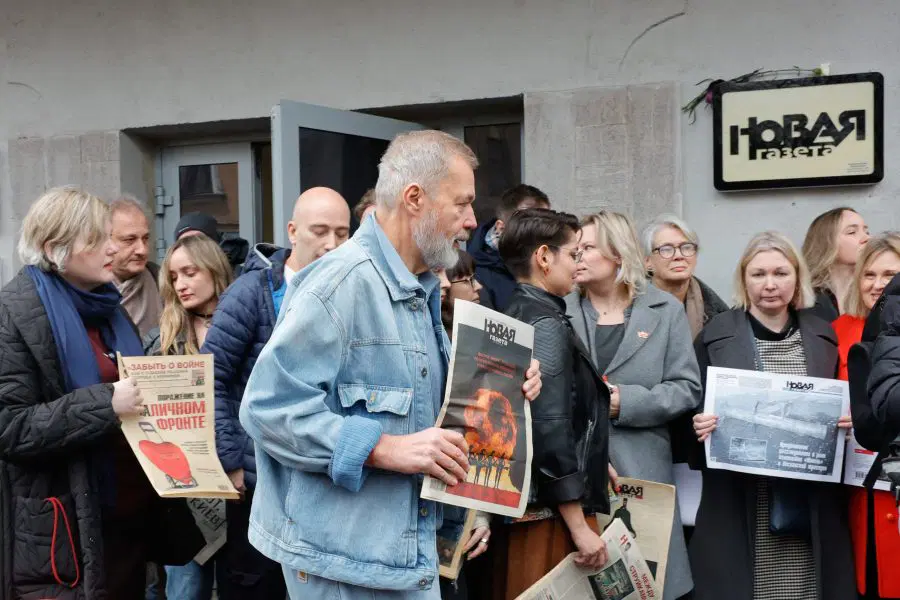
Russia’s leading independent newspaper, Novaya Gazeta, on Monday held its final editorial meeting and cleared its office following its announcement last month that it was shutting down under pressure from the Kremlin.
For years, the newspaper was among the few media outlets in Russia that openly criticised the government and Moscow’s war in Ukraine, despite growing restrictions on press freedom and a crackdown on dissent.
The publication was designated a “foreign agent”, a label associated with Soviet-era repression, while several of its journalists were detained and questioned by authorities.
According to Russian media outlets Sota Vision and Ostorozhno Novosti, Novaya Gazeta held its final editorial meeting on Monday.
Photographs published by Ostorozhno Novosti showed the newspaper’s editor-in-chief, Sergei Sokolov, removing pictures of journalists who were murdered in attacks widely believed to be linked to their investigative work.
Among the photographs was that of Anna Politkovskaya, who spent years investigating alleged abuses by Russian troops during military operations in Chechnya and became one of the early critics of President Vladimir Putin’s lengthy rule.
Politkovskaya was found dead in her apartment building in October 2006, on Putin’s birthday.
In an emotional video released last month, Sokolov said the newspaper had “been killed” and announced its closure, blaming the Russian authorities and security services for forcing its editorial team to discontinue operations.
International rights organisations, including Reporters Without Borders and Amnesty International, condemned the development.
UN human rights chief, Volker Türk, described the newspaper’s closure as “yet another devastating blow for remaining independent media in the Russian Federation” in a statement issued in October.
However, Kremlin spokesman Dmitry Peskov on Monday dismissed concerns over the closure, describing it as “a normal cycle of change”.
He told reporters, “It would be wrong to say that the era of independent Russian media is coming to an end. The Russian media is highly diverse and is developing in a highly competitive environment.”
Meanwhile, Moscow has imposed unprecedented media restrictions and censorship since the start of its military campaign in Ukraine, forcing many independent media organisations to operate from exile.
Founded in 1993, following the collapse of the Soviet Union, Novaya Gazeta became one of Russia’s most respected media organisations, particularly for its reporting and documentation of human rights abuses.


Happy
0 %

Sad
0 %

Excited
0 %

Sleepy
0 %

Angry
0 %

Surprise
0 %
 0
 0