
OBI COULD HAVE WAVED AT FLAMINGOS, SHAIBU REACTS TO AIRPORT CONTROVERSY
Read Time:4 Minute, 30 Second
By ‘Balogun Ibrahim
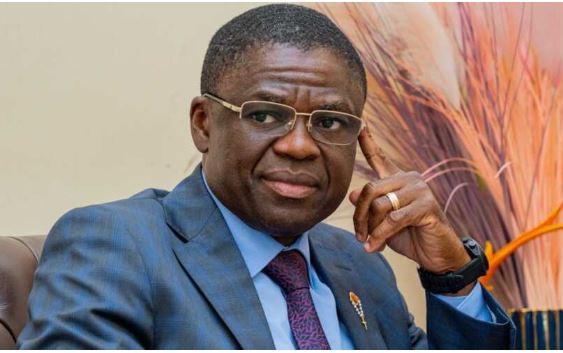
The Director-General and Chief Executive Officer of the National Institute for Sports (NIS), Philip Shaibu, has said that the presidential candidate of the Nigeria Democratic Congress, Peter Obi, could have simply stood at the airport and waved at the victorious Flamingos like other Nigerians.
Shaibu made the remark on Tuesday during an interview on Channels Television’s Morning Brief, while reacting to the controversy surrounding allegations that officials of the Nigeria Football Federation (NFF) prevented Obi from greeting the Nigeria Under-17 women’s team upon their return to Abuja.
READ MORE…
OBI COULD HAVE WAVED AT FLAMINGOS, SHAIBU REACTS TO AIRPORT CONTROVERSY
The former Edo State deputy governor said he did not consider visiting the airport to welcome the players necessary, arguing that the support and encouragement given to the team before and during the competition mattered more than celebrating their victory afterwards.
“You know, the President will not play to the gallery. And the First Lady will not play to the gallery. Going to the airport to want to see them is playing to the gallery, as far as I’m concerned,” he said.
Shaibu maintained that President Bola Tinubu personally contacted the players before, during and after the tournament, describing such gestures as more meaningful, particularly when the team encountered difficult moments during the competition.
“I consistently tell Nigerians, the President makes personal calls before, during, and after. And those calls are more important than after the victory.
“Because when the spirit is down and you get a call from the President telling you, look, forget about the last match, focus on the next match, I think that is more important than after winning coming to do a popularity show of showing affection,” he said.
Although he acknowledged that the players deserved recognition for their achievement, the NIS chief stressed the importance of appreciating the preparations and support that contributed to their success.
“These girls deserve to be received, these girls deserve all the accolade that they need. But what is key is the foundation preparatory to that victory,” he added.
Shaibu, who identified himself as a former footballer and a former deputy governor responsible for sports in Edo State, described the President’s direct communication with athletes as a significant source of motivation.
He recalled the difficulties often encountered in getting governors to address players in their dressing rooms, contrasting the experience with what he described as Tinubu’s willingness to personally reach out to the Flamingos.
“To get a governor to even speak to players in the dressing room was difficult. And here you are not even compelling or appealing or begging the President to make a call. He’s on his own. Says, ‘I want to talk to the girls. How are they doing? Fine. I want to talk to them.’
“And you know, you understand what it means? I was a player. You are in a dressing room and you are hearing from your President talking to you. That, for me, is more important. That’s what the President does,” Shaibu said.
Asked whether NFF officials acted appropriately by preventing Obi from welcoming the team, Shaibu responded that the former Anambra State governor could have stood at the airport and waved at the players like everyone else.
“Mr Obi can stand at the airport and wave to them like every other person did,” he said.
Shaibu also recalled an encounter with Enyimba players at an airport, explaining that he waved at them and allowed them to proceed after learning they were travelling.
He noted that sports teams sometimes issue instructions restricting players from interacting with members of the public while travelling, adding that such directives should be respected.
“When I was actively involved in sports, there are times that our system will say, look, don’t talk to anybody, just wave. And so when such instructions come, we have to follow,” he said.
He added that teams adopt different approaches to managing interactions between players and members of the public, depending on the circumstances.
The controversy followed Obi’s allegation that NFF officials stopped him from greeting the Flamingos when they arrived in Abuja on Monday after winning the FIFA Under-17 Women’s World Cup in Morocco.
Obi said he arrived at the airport around 7 am to catch a flight to Enugu and asked his protocol officer, Jackie Wayas, to enquire whether he could greet the players.
He alleged that his request was rejected and that officials warned they could lose their jobs if he approached the team.
However, the Chairman of the National Sports Commission (NSC), Shehu Dikko, said officials who received the team reported that they neither saw Obi near the players nor around the international terminal where the team arrived.
Dikko explained that two individuals wearing Obi’s campaign face caps and other branded items approached officials to request an opportunity to meet and take photographs with the players.
He said the request was declined because the team had just returned from a demanding competition and needed adequate consideration and rest.
The NSC chairman also called on Obi to apologise to the players, insisting that their historic achievement should not be overshadowed by the controversy.
The Flamingos defeated Japan 2-1 in Saturday’s final in Morocco to claim their first FIFA Under-17 Women’s World Cup title, becoming the first African nation to win the competition.


Happy
0 %

Sad
0 %

Excited
0 %

Sleepy
0 %

Angry
0 %

Surprise
0 %
 0
 0