
US MIDTERM DEFEAT: TRUMP SEEKS TO REASSERT GLOBAL INFLUENCE
Read Time:3 Minute, 45 Second
By: Hammad Fasasi
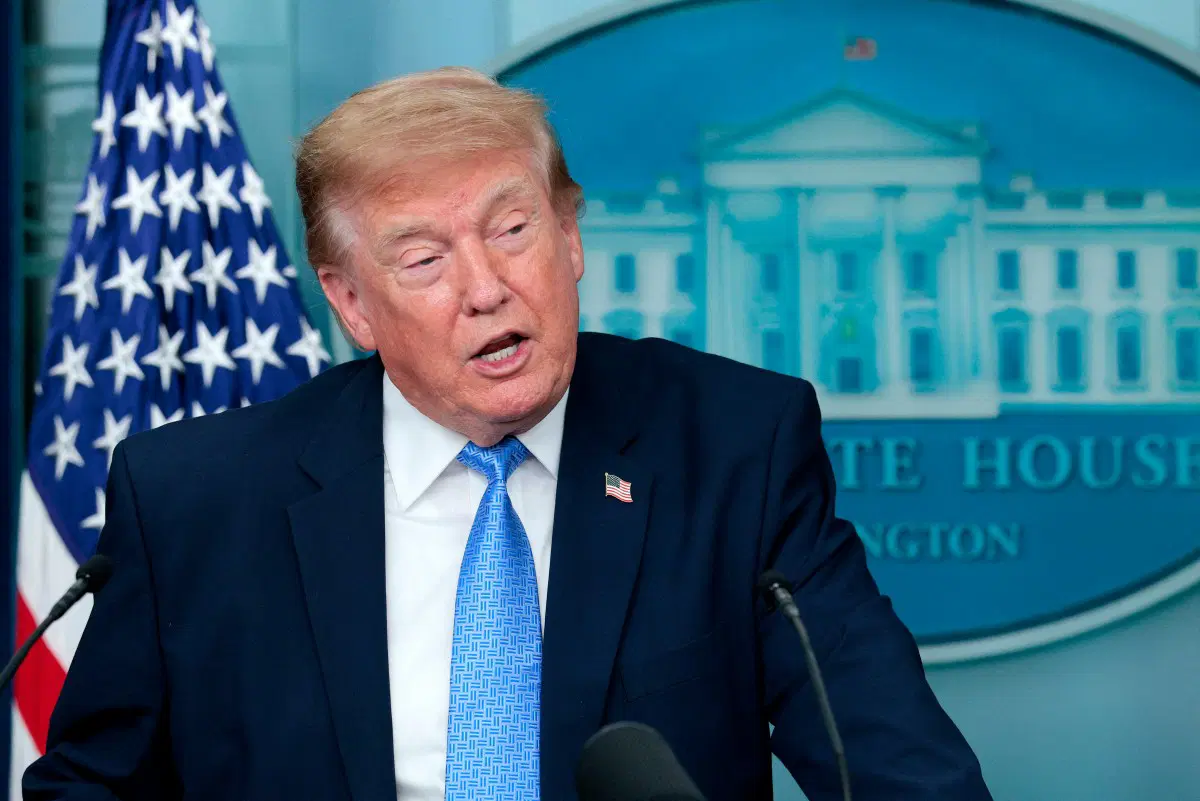
Following his party’s crushing defeat in the midterm elections, United States President Donald Trump faces a fresh challenge of demonstrating that he still controls the country’s foreign policy on the global stage.
With his political influence weakened as he enters the final two years of his presidency, commonly referred to as the lame-duck period, world leaders may be considering how to take advantage of the new political balance in Washington.
The 80-year-old Republican is scheduled to attend the ASEAN summit in the Philippines and the APEC summit in China against the backdrop of a dramatically changed political situation at home, following the Democrats’ victory in both the House of Representatives and the Senate.
Although constitutionally barred from seeking a third presidential term in 2028, Trump’s unpredictable nature and political circumstances could encourage him to devote even more attention to international affairs.
“After bad midterms, this is how presidents reset,” Edgard Kagan, an expert at the Center for Strategic and International Studies (CSIS), said during a news briefing.
Trump’s Asian tour presents an opportunity for him to concentrate on international relations, particularly as he is unlikely to face public questions about domestic political challenges.
China has described the US midterm elections as an “internal affair” and expressed its willingness to maintain cooperation with Washington despite the Republicans losing control of both chambers of Congress.
However, the political shift in the United States is expected to remain a major consideration for Asian leaders, according to Joshua Kurlantzick, an expert on Southeast and South Asia at the Council on Foreign Relations.
Kurlantzick noted in an article published this month that several Asian leaders were privately relieved by the Democrats’ electoral victory.
He explained that the war involving Iran had created significant challenges for the United States’ Asian allies and partners, who hoped the election outcome would make Trump’s decisions on the conflict more predictable.
Since the midterm elections, Trump has repeatedly suggested that a renewed military confrontation between the United States and Iran is unlikely.
Kurlantzick also noted that a Democratic-controlled Congress could adopt a tougher position towards China, potentially reversing what he described as the Trump administration’s softer approach to Beijing, which has raised concerns among US allies in Asia.
Asian leaders are equally hopeful that Democrats will challenge Trump’s extensive tariffs on trading partners, which have significantly affected economies across the continent that depend heavily on exports.
Democratic House leader Hakeem Jeffries has called on Congress to reclaim its authority over American trade policy.
However, reversing Trump’s trade policies may prove difficult, as the president retains considerable constitutional powers over trade and can veto legislation passed by Congress, a power he has vowed to exercise.
Trump is known for his preference for dramatic diplomatic gestures, with foreign policy providing an opportunity for high-profile engagements with influential world leaders, including Chinese President Xi Jinping and Russian President Vladimir Putin.
Speaking to reporters this week, Trump said he expected to meet both leaders during the APEC summit scheduled to hold in Shenzhen, China, from November 18 to 19.
He disclosed that discussions could focus on issues including denuclearisation and ending the war involving Iran.
However, according to Kurt Campbell, chairman of The Asia Group and a former senior diplomat in the Biden administration, Trump’s broader objective could be to secure a symbolic photograph alongside Xi and Putin, whom he regards as his equals among the world’s major powers.
“I think in many respects this could be ‘the meeting is the message’,” Campbell said.
Meanwhile, Ukrainian President Volodymyr Zelensky has expressed concern over the possibility of major powers reaching agreements that could determine the future of other countries without their involvement.
Zelensky warned against what he described as a “Yalta 2.0”, referencing the 1945 arrangement in which Western leaders and the Soviet Union agreed on the post-war division of Europe.
Victor Cha, president of geopolitics and foreign policy and Korea chair at CSIS, said the Republicans’ defeat in the midterm elections could make a high-profile diplomatic engagement even more likely.
He identified North Korea as one of the issues Trump could prioritise, noting that the president had personally invested considerable time in the matter during his two terms in office.
“There’s nobody else in the US government that makes policy on North Korea except the president, so I think that he’ll be focused on that sort of legacy issue,” Cha said.


Happy
0 %

Sad
0 %

Excited
0 %

Sleepy
0 %

Angry
0 %

Surprise
0 %
 0
 0