
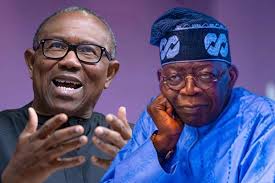
PETER OBI CRITICIZES TINUBU OVER NEW \$21BN LOAN, WARNS NIGERIA’S DEBT COULD REACH N200TRN BY 2025
Read Time:3 Minute, 44 Second
By: Muftau Fatimo
The Labour Party’s 2023 presidential candidate, Peter Obi, has once again raised alarm over what he described as the Tinubu administration’s continued reckless borrowing without transparency or accountability.
Obi criticized the recent approval by the Nigerian Senate for fresh external loans amounting to $21 billion, €2.2 billion, and ¥15 billion for the 2025–2026 fiscal cycle. He warned that this borrowing spree has pushed Nigeria’s public debt to an estimated N187 trillion, with growing fears it may exceed N200 trillion before the year ends.
In a post on his X handle, Obi wrote:
“On July 22, 2025, the Nigerian Senate approved an additional $21 billion, €2.2 billion, ¥15 billion of external borrowing for the 2025–2026 fiscal cycle. It also approved a N750.98 billion domestic bond issuance and a €65 million grant. With an already existing public debt of about N149.39 trillion as at Q1 2025, adding the newly approved loans of about N37.2 trillion brings our current debt stock to roughly N187 trillion. There are genuine concerns that this figure could climb beyond N200 trillion by the end of 2025.”
According to Peter Obi, before Nigeria’s GDP was rebased, it stood at approximately N269.2 trillion (around $180 billion), meaning the government has borrowed nearly 70% of the country’s previous GDP. Even after the rebasing, which increased GDP to about N372.8 trillion (roughly $243.7 billion), the government’s borrowing now totaling over N187 trillion accounts for around 50.16% of the new GDP, marking the highest debt to GDP ratio in Nigeria’s history.
Obi pointed out that the national debt has surged by N27.72 trillion year-on-year, with a quarter-on-quarter increase of about N4.72 trillion. He warned that the country is piling on unsustainable debt at an alarming rate, without any significant improvement in key areas such as education, healthcare, electricity, security, or poverty alleviation.
He noted that Nigeria continues to lag behind on nearly all major human development indicators. The education sector remains grossly underfunded, with standards consistently falling. Access to healthcare is still limited, especially for the poor, and insecurity has worsened—over 10,217 people have been killed and 672 villages destroyed between May 29, 2023, and May 29, 2025—despite an increase in security spending from N2.98 trillion in 2023 to N4.91 trillion in 2025.
Infrastructure, too, is in decline. Out of Nigeria’s estimated 195,000 km of roads, roughly 135,000 km remain unpaved and largely unusable. The power sector is another glaring failure, with the country still generating less than 5,000 MW for a population of over 200 million people.
Obi emphasized that more than two years into the current administration and despite massive borrowing, poverty is worsening. An estimated 133 million Nigerians about 63% of the population are now classified as multi-dimensionally poor. Unemployment continues to rise, and tragic figures like the deaths of 652 children due to escalating malnutrition in Northern Nigeria highlight the deepening crisis.
Médecins Sans Frontières (MSF), also known as Doctors Without Borders, has raised a red flag over the worsening malnutrition crisis in Northern Nigeria, identifying Katsina State as one of the hardest-hit regions.
Peter Obi lamented that despite Nigeria’s vast natural and human resources, millions still go to bed hungry. He attributed this to a persistent failure in leadership that has driven a majority of citizens deeper into multi-dimensional poverty.
He clarified that borrowing in itself isn’t the problem when done responsibly, with clear ties to productive investments and measurable outcomes, it can be beneficial. However, the current trend of unchecked borrowing without accountability, transparency, or tangible impact, he warned, is mortgaging the future of the nation’s youth.
Obi urged the government to consider the long-term implications of its unsustainable debt habits on future generations and to start demonstrating a genuine commitment to the welfare of young and unborn Nigerians.
He called for a return to disciplined and responsible economic management reducing the cost of governance, closing financial leakages, investing in human capital, and creating a productive economy.
“Nigeria cannot continue on this path of reckless borrowing while poverty worsens and public confidence declines,” Obi stressed.
He concluded by emphasizing the urgent need for a new direction one where leadership is accountable, development is people focused, and every borrowed or spent kobo yields measurable results toward sustainable and inclusive growth.
“A New Nigeria is POssible.”


Happy
0 %

Sad
0 %

Excited
0 %

Sleepy
0 %

Angry
0 %

Surprise
0 %
 0
0
 0
0