
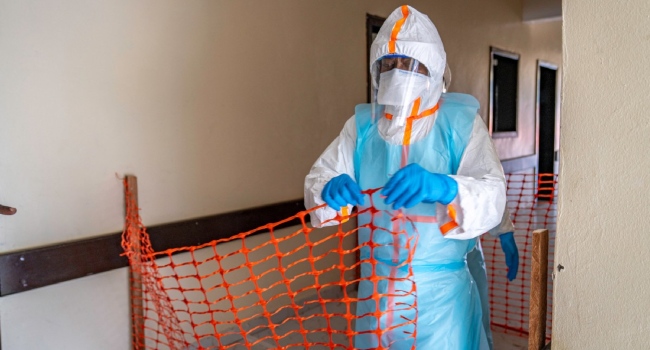
AFRICA CDC CHIEF REVEALS EBOLA PATIENT’S UGANDAN ORIGIN, URGES FULL DISCLOSURE OF TRAVEL HISTORY
Read Time:3 Minute, 50 Second
By Aishat Momoh. O.
The Africa Centres for Disease Control and Prevention (Africa CDC) has disclosed that the woman diagnosed with the Bundibugyo strain of Ebola virus disease in Nigeria was born in Uganda and arrived in Abuja with her husband on October 3, 2026.
The Director-General of Africa CDC, Dr Jean Kaseya, disclosed this during an interview on Channels Television’s The Morning Brief on Thursday, saying the patient’s full travel and exposure history was crucial to containing the outbreak and preventing tensions among African countries.
Kaseya said the regional health agency was engaging with authorities in Nigeria, Uganda and the Democratic Republic of the Congo (DRC) to coordinate response efforts.
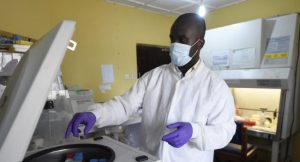
He, however, stressed the need for the patient to provide relevant information to health officials, including whether she had travelled to the DRC, visited locations outside Kampala or had contact with anyone arriving from the country.
“I am talking to all authorities — with Nigerian authorities, with Ugandan authorities, even to DRC authorities. But we are lucky that this person we know today, without any doubt, is a Ugandan-born person who went to Uganda and she was there for some days. Then the husband flew to join her in Uganda then they came back to Abuja on October 3. This is a fact,” Kaseya said.
He added that obtaining the information was essential to supporting investigations in all three countries.
“Now, what we want is collaboration from this person, the lady. She has to disclose to the authorities. I need this information as Nigeria needs this information because we need also to support Uganda,” he said.
Kaseya said the information would help establish the likely source of infection and prevent misunderstandings between the affected countries.
“I think this is the information we are looking for. It will help all of us to avoid crisis between African countries,” he added.
The Africa CDC chief also maintained that the continent was better prepared to respond to public health emergencies, dismissing suggestions that Ebola was exclusively an African problem.
He warned against assuming that people in other parts of the world were safe from the disease, noting that outbreaks required a coordinated international response.
Kaseya described the Bundibugyo strain as geographically widespread, with cases reported across parts of West, Southern and East Africa. He said the continent was not in a state of panic and understood the measures required to address the threat.
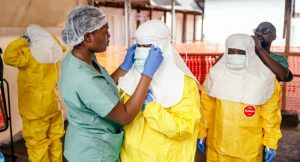
The Africa CDC chief also criticised what he described as unequal global attention to vaccine development, arguing that Ebola outbreaks in Africa should receive the same urgency as public health emergencies elsewhere.
He disclosed that the agency had initiated clinical trials of new vaccines, including a candidate vaccine against the Bundibugyo strain manufactured in Egypt.
According to him, Africa CDC had also worked with authorities in the DRC and Uganda to advance the use of a vaccine targeting the Zaire strain through clinical trials and compassionate-use arrangements.
“We don’t want to see Africa left behind again. We have the knowledge. We have people with intelligence,” he said.
“We have capacity to manufacture vaccines; we need to move on. This is also the case for medicine and diagnostics.”
The Federal Government confirmed Nigeria’s Ebola case on Tuesday after laboratory tests established that the patient had contracted the Bundibugyo strain.
Coordinating Minister of Health and Social Welfare, Professor Muhammad Ali Pate, said the patient had been placed in isolation and was receiving medical care, while contact tracing had commenced. He disclosed that 44 contacts had been identified at the time.
Ugandan authorities, however, have said the country has no confirmed active Ebola cases, with investigations continuing into the woman’s travel history and possible exposure to the virus.
The development has prompted calls for stronger surveillance and emergency preparedness in Nigeria.
The Senate on Wednesday urged the Federal Government to release emergency funding from the service-wide vote to strengthen disease surveillance and enforce health screening at international airports, seaports and designated land borders.
The House of Representatives also called for increased public awareness and early preparation of isolation facilities following confirmation of the case in the FCT.
Meanwhile, the Minister of Aviation and Aerospace Development, Festus Keyamo, directed the Federal Airports Authority of Nigeria to coordinate enhanced surveillance measures and ordered the Nigeria Civil Aviation Authority to notify local and international airlines about a proposed 21-day no-fly restriction for 46 identified contacts of the patient.
Health authorities and international partners are continuing investigations, contact tracing and other containment measures to establish the source of infection and prevent further transmission.


Happy
0 %

Sad
0 %

Excited
0 %

Sleepy
0 %

Angry
0 %

Surprise
0 %
 0
 0