
ECOWAS COURT AWARDS EX-COMMISSIONER DARMA $50,000 OVER UNLAWFUL REMOVAL
Read Time:4 Minute, 35 Second
By ‘Balogun Ibrahim
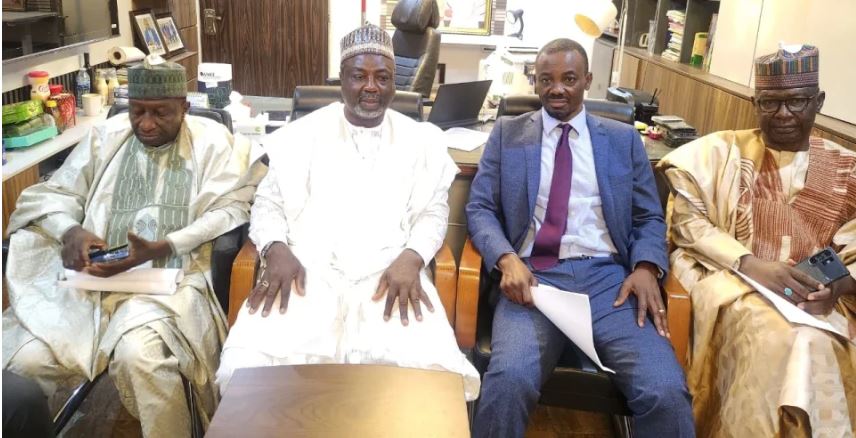
The ECOWAS Court of Justice has awarded $50,000 in general damages to former ECOWAS Commissioner for Internal Services, Prof. Nazifi Abdullahi Darma, after declaring his removal and replacement before the end of his tenure unlawful.
The court also ordered the payment of his outstanding salaries, allowances and other accrued entitlements from the date his tenure was unlawfully terminated until its expiration, after deducting any amounts already paid to him.
Darma disclosed this on Friday while addressing journalists on the judgment delivered on October 7, 2026, in his suit against the President of the ECOWAS Commission and the Council of Ministers.
READ MORE…
RAZAQ OKOYA’S FAMILY SAYS ESTRANGED SON STILL RECEIVES FINANCIAL SUPPORT
He described the ruling as a victory for institutional accountability, due process and the rule of law within the regional organisation.
“This judgment is not a personal victory. It is a victory for the rule of law, institutional integrity, accountability, and due process within ECOWAS,” he said.
The court further ordered the ECOWAS Commission to bear the costs of the proceedings.
However, it declined to order Darma’s reinstatement because his four-year tenure, which commenced on July 16, 2022, expired on August 31, 2026.
Explaining the court’s orders, Darma said the commission was directed to pay all outstanding salaries, allowances and accrued financial entitlements due to him from the date his tenure was unlawfully terminated until its expiration, less any sums already received.
He added that the court awarded him $50,000 in general damages for the non-financial harm arising from the procedural irregularities and premature termination of his tenure.
The former commissioner said the judgment followed 11 months of legal proceedings over the withdrawal of his responsibilities, his recall by Nigeria and his replacement as a statutory appointee of the regional body.
Darma was nominated by Nigeria and appointed Commissioner for Internal Services in 2022. His responsibilities covered administration and general services, procurement, budget and treasury, financial reporting and grants, human resources, conference and protocol services, and internal telecommunications.
He explained that following institutional reforms within ECOWAS, duties previously assigned to four commissioners were consolidated under his office.
As a result, he said he effectively served as the organisation’s chief financial, procurement, human resources and grants management officer, while also overseeing the Commission’s Rules of Procedure.
According to Darma, the dispute arose after he raised concerns about the participation of non-management personnel in management meetings, the lack of objective and consistent scoring procedures for recruiting senior officials, and the assignment of responsibilities within the Department of Infrastructure, Energy and Digitalisation to a non-statutory official following the departure of the commissioner from Niger.
He said the concerns were formally brought to the attention of the then President of the Commission and, in some instances, the Chair of the Council of Ministers, but were not adequately addressed.
The dispute escalated on October 30, 2025, when the former President of the Commission issued a memorandum seeking to withdraw Darma’s delegated authority, making adverse allegations about his conduct and performance and initiating steps towards his replacement.
Darma subsequently filed a case before the ECOWAS Court of Justice on November 3, 2025. While the proceedings were ongoing, Nigeria recalled him on December 12, 2025, and nominated a successor. The Council of Ministers later formalised the replacement.
Explaining the court’s findings, Darma said the judges rejected the argument that the October 30 memorandum was merely an administrative measure.
According to him, the court found that the memorandum contained adverse allegations that significantly affected his responsibilities and formed part of a process aimed at replacing him, without prior notice or an effective opportunity for him to respond.
The court also clarified that the President of the Commission’s managerial powers did not extend to transferring or extinguishing responsibilities assigned to another statutory office under Community law.
On Nigeria’s decision to recall him, the court reportedly held that nomination and appointment were distinct legal acts. Darma said the judges ruled that once appointed, a commissioner derived his mandate from ECOWAS Community law rather than from the member state that nominated him.
Consequently, Nigeria’s recall of Darma did not, by itself, terminate his appointment or create a vacancy in his office.
Applying the relevant provisions of the ECOWAS Treaty and supplementary protocols, the court ruled that his removal and replacement were unlawful because the legal requirements for terminating a commissioner’s mandate had not been satisfied.
Darma said the judgment reaffirmed that statutory appointees of the regional organisation could only be removed through lawful procedures and on legally recognised grounds.
He added that the ruling strengthened the independence of ECOWAS institutions and provided protection against arbitrary actions that could undermine their credibility and effectiveness.
Reflecting on his time at the Commission, the former commissioner said his actions throughout the dispute were motivated by a commitment to institutional integrity and good governance rather than personal interests.
“I was not among those who founded the institution, but I became one of its senior officials and considered it my duty to protect the systems, procedures, and values that sustain it.
“If faced with similar circumstances in the future, I would take the same stand again. Institutions survive only when rules, procedures, and established processes are respected,” he said.
Darma urged ECOWAS institutions to comply fully with the judgment and review relevant protocols and regulations where necessary to eliminate ambiguities and prevent similar disputes in the future.


Happy
0 %

Sad
0 %

Excited
0 %

Sleepy
0 %

Angry
0 %

Surprise
0 %
 0
 0