
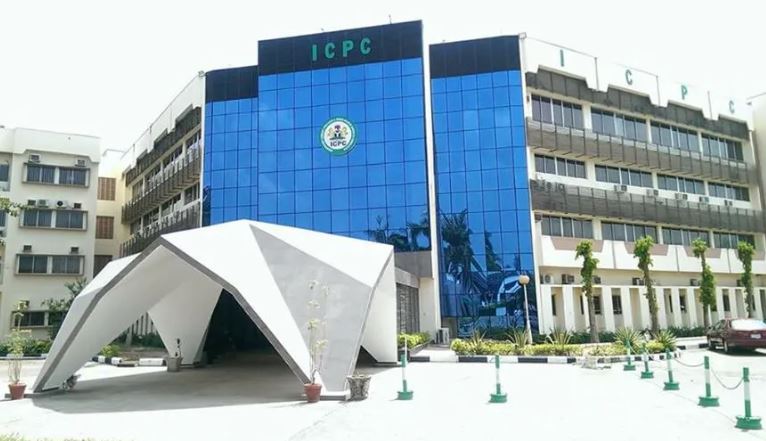
ICPC RECOVERS N5.3BN FROM LOCAL GOVERNMENT ACCOUNTS IN SEVEN STATES, FCT
Read Time:5 Minute, 15 Second
By ‘Balogun Ibrahim
The Independent Corrupt Practices and Other Related Offences Commission has disclosed that it recovered more than N5.3bn following an examination of local government accounts in seven states and the Federal Capital Territory.
The commission also announced plans to ensure that all 774 local government councils in Nigeria publish their financial records and activities online to promote transparency and accountability at the grassroots.
The ICPC Chairman, Dr Musa Adamu Aliyu (SAN), disclosed this on Thursday in Lafia, Nasarawa State, during the launch of the ICPC-National Information Technology Development Agency Local Government Websites Pilot Project.
The initiative, which commenced in Nasarawa State, is expected to be extended to all local government areas across the country.
Aliyu said the recovery of the funds exposed the extent of financial irregularities at the grassroots and underscored the need for stricter monitoring of public resources.
READ MORE…
CJN URGES NIGERIAN GRADUATES TO CONTRIBUTE TO NATIONAL DEVELOPMENT
He noted that the Supreme Court judgment of July 2024, which affirmed local government financial autonomy and ordered the direct payment of statutory allocations to councils, had increased the need for accountability in the management of public funds.
“Autonomy brings responsibility. Funds that now flow directly to the councils must be spent openly and for the benefit of the people,” he said.
The ICPC chairman explained that the proposed websites would operate using a standardised template developed under the commission’s Accountability and Corruption Prevention Programme for Local Governments.
He said the platforms would require councils to disclose information about their budgets, statutory allocations, internally generated revenue, expenditure, audit reports and outstanding debts.
Other information to be published would include public procurement records, human resource management, citizen engagement platforms, whistleblowing channels and anti-corruption measures.
According to Aliyu, the digital platforms would enable residents to monitor government spending, while journalists and oversight institutions would have access to relevant information to identify potential financial misconduct.
He said regular publication of the records would allow citizens to track public funds, encourage informed media scrutiny and help oversight agencies detect financial risks before they result in losses.
Aliyu urged local government chairmen to appoint dedicated personnel to manage the websites and ensure that published information remained accurate and regularly updated.
He warned that the initiative would achieve little if councils failed to maintain their platforms after their launch.
The ICPC chairman stressed that the commission’s involvement was aimed at preventing corruption rather than targeting local government officials, adding that experiences from the Nasarawa pilot would inform its nationwide implementation.
In his goodwill message, the Director-General of NITDA, Kashifu Inuwa Abdullahi, said the initiative would address the difficulties residents face in obtaining information about government activities.
He illustrated the challenge with the example of a woman living in a remote community in Nasarawa State who might have to travel more than 60 kilometres at her own expense to find out whether her local government had approved a community project or to submit a complaint.
“We are in a digital age. Our people are online; therefore, government needs to be online to serve them better,” he said.
Abdullahi identified improved governance, increased citizen engagement and expanded economic opportunities as the three major objectives of the initiative.
He said NITDA would provide technical standards, develop website templates and train citizens, while encouraging local governments to engage technology professionals within their communities to maintain the platforms.
The NITDA director-general also disclosed that the agency had committed to registering domain names, developing and hosting websites for all 774 local government areas for at least one year.
“Our ambition is not 774 websites. It is 774 digitally empowered local governments delivering better experience to millions of Nigerians,” he said.
Flagging off the initiative, Nasarawa State Governor, Abdullahi Sule, designated the Nasarawa State Information Technology and Digital Economy Agency as the state’s technical lead for the project.
Sule directed local government councils to take responsibility for the accuracy of information published on their websites and ensure that designated officers verified all details before publication.
He said the success of the initiative would depend on the availability of relevant and up-to-date information rather than the ceremony marking its launch.
The governor added that public disclosure of council allocations would eliminate excuses by local governments for delayed salary payments on the grounds that their statutory funds had not been received.
However, he challenged the ICPC and NITDA to extend the transparency initiative to state governments to enable Nigerians to monitor funds allocated to local councils.
Sule also volunteered Nasarawa State as the first to embrace such disclosures.
In separate remarks, the Emir of Lafia, Justice Sidi Bage Muhammad I (retd.), commended the ICPC, NITDA and the Nasarawa State Government for the initiative.
The Speaker of the Nasarawa State House of Assembly, Danladi Jatau, also pledged the legislature’s support, noting that the Constitution empowered the Assembly to oversee local government finances.
The launch ceremony, held at the Government House Banquet Hall in Lafia, was themed, “Deepening Transparency and Accountability at the Grassroots through Digital Disclosure.”
The event was followed by a technical session on the standardised website template for local government councils.
The initiative builds on the ICPC’s Accountability and Corruption Prevention Programme for Local Governments, introduced after the Supreme Court’s landmark judgment of July 11, 2024, on local government financial autonomy.
The judgment, delivered in a suit filed by the Federal Government against the 36 state governments, directed that statutory allocations due to democratically elected local government councils from the Federation Account be paid directly to them rather than controlled by state governments.
The apex court also declared the continued administration of local governments by unelected caretaker committees unconstitutional, insisting that councils must be governed by democratically elected officials.
Despite the ruling, concerns have continued over the management of local government finances, transparency in the use of allocations and the capacity of councils to deliver essential services.
As part of its accountability programme, the ICPC commenced an examination of local government accounts in seven states and the FCT to identify financial irregularities and strengthen safeguards against corruption.
The commission said the exercise had led to the recovery of billions of naira, prompting the introduction of digital disclosure platforms to give residents, journalists and oversight institutions access to local government financial records.


Happy
0 %

Sad
0 %

Excited
0 %

Sleepy
0 %

Angry
0 %

Surprise
0 %
 0
 0