
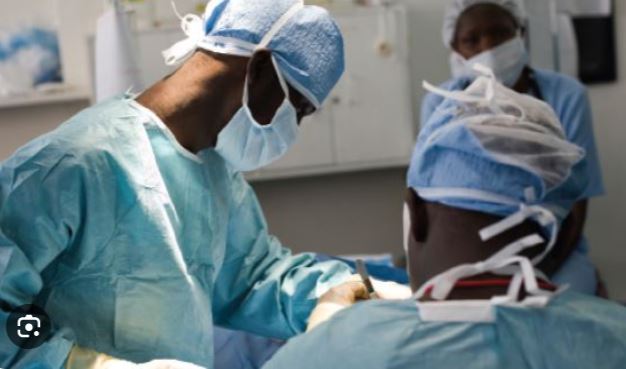
LAGOS TRAINS HEALTHCARE WORKERS TO CONVERT FAMILY REPLACEMENT DONORS TO VOLUNTARY BLOOD DONORS
Read Time:2 Minute, 50 Second

By ‘Balogun Ibrahim
… Says Sustained Donor Advocacy, Incentives, Strategic Investments Are Key To Ensuring Adequate Blood Supply
The Lagos State Government has intensified efforts to build a sustainable blood supply system by training healthcare professionals across public health facilities on strategies to convert family replacement blood donors into regular voluntary donors. The initiative is aimed at reducing dependence on emergency-driven donations and ensuring that safe blood is readily available whenever patients need it.
The training, organised by the Lagos State Blood Transfusion Service (LSBTS) for nurses, medical laboratory scientists and technicians, was held on Friday, November 13, 2026, at the Lagos Chamber of Commerce and Industry (LCCI), Alausa-Ikeja, under the theme, “Beyond Family Replacement: Building a Culture of Voluntary Blood Donation.”
Speaking at the programme, the Executive Secretary, LSBTS, Dr. Bodunrin Osikomaiya, said the initiative was designed to equip healthcare workers who interact regularly with blood donors with the skills to encourage family replacement donors to embrace voluntary donation as a regular practice. She explained that most blood donations in hospitals currently come from individuals donating for relatives, friends and loved ones, making it necessary to leverage these interactions to build a pool of committed voluntary donors.
Osikomaiya disclosed that participants were selected from general and state hospitals across Lagos, particularly nursing officers in Obstetrics and Gynaecology units, as well as medical laboratory personnel working in hospital blood banks. She noted that their daily contact with donors places them in a strategic position to influence donor behaviour, promote repeat donations and strengthen voluntary blood donor recruitment across the state.
She highlighted the state government’s investments in voluntary blood donation advocacy, including the designation of January annually as a month for intensified donor mobilisation, provision of souvenirs and food items to appreciate voluntary donors, and the establishment of modern LSBTS blood donation centres in General Hospital Gbagada and General Hospital, Odan-Lagos. She also cited efforts to strengthen the Lagos State Accident and Emergency Centre’s capacity to receive blood donors and encourage sustained voluntary donations.
Emphasising the urgency of regular blood donation, the Executive Secretary said, “Blood cannot be manufactured.” She urged residents to embrace voluntary blood donation without waiting for emergencies or requests from relatives, stressing that blood must be collected and made available ahead of time to meet unforeseen medical needs.
Also speaking, the Medical Director, Lagos State Accident and Emergency Centre (LASAEC), Dr. Olumuyiwa Odusote, described blood as indispensable to emergency healthcare delivery, noting that its availability is critical to the centre’s commitment to saving every life. He disclosed that LASEAC regularly organises blood donation drives across private companies, government establishments, ministries and motor parks to encourage voluntary donations. According to him, the centre also relies on its partnership with LSBTS for the storage and management of blood collected during its drives, describing the relationship as symbiotic and essential to saving lives.
In their separate remarks, participants, including the Director of Medical Laboratory Services at General Hospital, Ikorodu, Adegoke Adenike, and the Assistant Director of Nursing Services at Lagos Island Maternity Hospital, Mrs. Rhoda Shobande, commended the training for strengthening their capacity to recruit and retain voluntary blood donors. They pledged to apply the knowledge gained in their respective facilities by intensifying donor education, encouraging repeat donations and promoting a culture of voluntary blood donation to ensure a more reliable blood supply across Lagos State.


Happy
0 %

Sad
0 %

Excited
0 %

Sleepy
0 %

Angry
0 %

Surprise
0 %
 0
 0