
NEC APPROVES 90-DAY PLAN TO LOWER COST OF LIVING
Read Time:2 Minute, 50 Second
HOTJIST NEWS
The National Economic Council has approved a 90-day economic action plan focused on lowering the cost of living, making food more affordable, and bringing more investment into Nigeria.
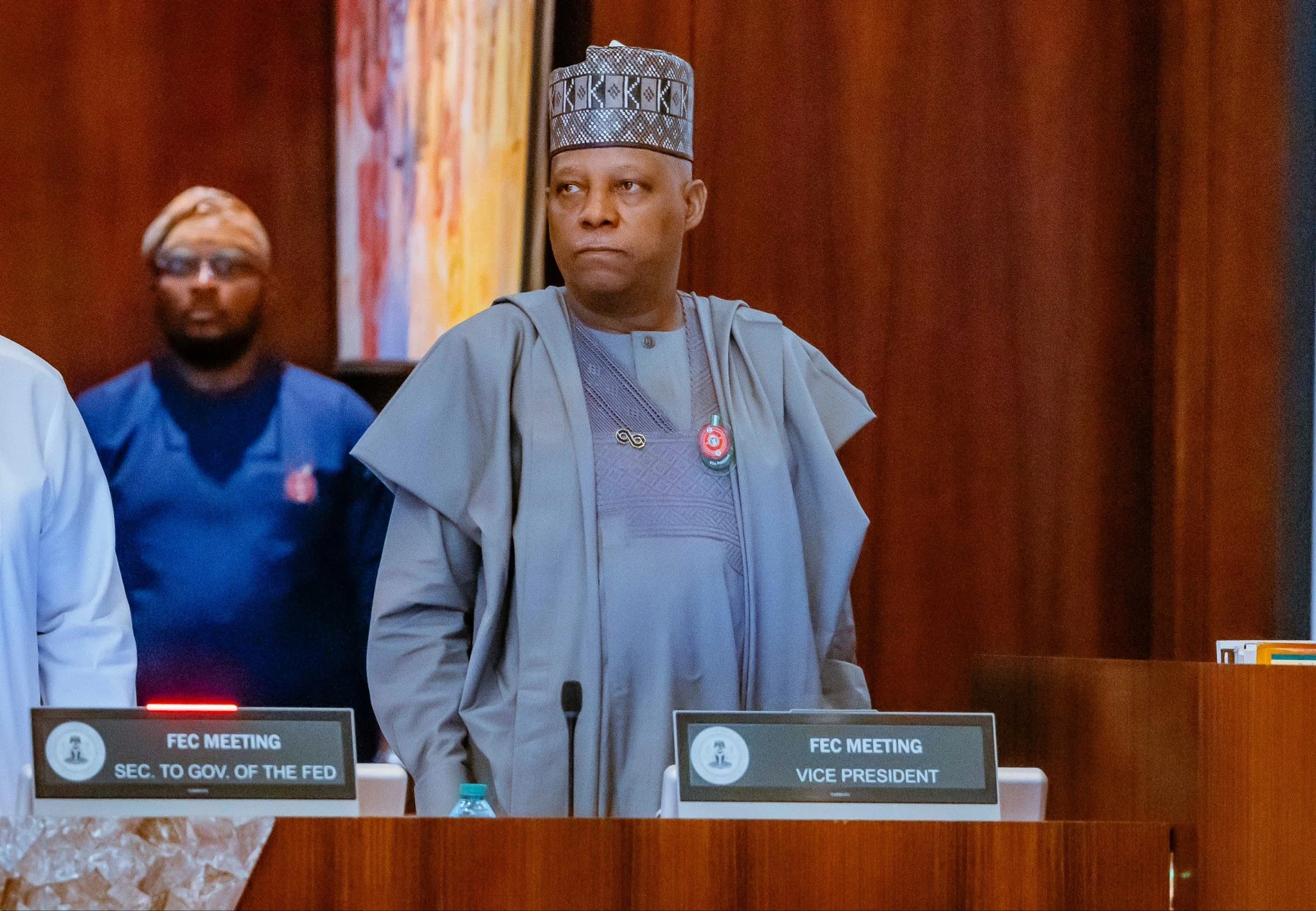
This plan was put forward by the Federal Ministry of Finance and was agreed upon on Thursday during the council‘s 161st meeting, which was held online and led by Vice President Kashim Shettima.
A statement from Stanley Nkwocha, who is Shettima’s Senior Special Assistant for Media and Communications, said the plan has five main areas of focus: making food more affordable, aligning tax systems, finishing important projects, fixing issues that stop investments, and providing support to households in a controlled way.
The council also agreed to create a national dashboard to monitor projects nationwide, with a focus on being transparent, accountable, and showing how money from removing fuel subsidies is being used.
Speaking at the meeting, Shettima urged state governors and relevant government institutions to ensure that the benefits of President Bola Tinubu’s economic reforms translate into better living conditions for Nigerians.
He said the success of economic policies should be measured by their impact on people’s daily lives, including access to affordable transportation, healthcare, employment opportunities and financial security.
“The first dividend of prosperity should be the confidence to plan a life. Our task is to make such confidence less dependent on fortune,” the vice president said.
Shettima also called for greater cooperation between federal and state governments, saying their separate responsibilities should not hinder the delivery of essential services.
“Our separate mandates must not become competing excuses. Each governor carries knowledge that no federal document can supply,” he said.
On transportation, the vice president said the National Compressed Natural Gas Bus Initiative should be assessed by how much it reduces commuters’ expenses rather than the number of vehicles deployed.
“The cost of reaching a livelihood should never consume the livelihood itself. The passenger’s experience must guide our ambition, because the value of public transport resides in the journeys it makes possible. We should assess success through affordability and access, rather than fleet size alone,” he said.
The council also resolved to establish a joint financing framework between the Federal Government and state governments to accelerate the deployment of compressed natural gas and electric vehicles.
It directed relevant authorities to engage transport unions and operators to ensure that savings from the use of the vehicles are passed on to commuters through lower fares.
Meanwhile, the Minister of Health and Social Welfare, Prof Muhammad Ali Pate, briefed the council on the reported Ebola outbreak in the Federal Capital Territory and assured members that Nigeria had the institutional capacity to contain the situation.
Pate mentioned that the national effort will focus on working together, checking for cases at entry points, doing lab tests, providing necessary tools and protective gear, and sharing information with the public.
He added that 21 states have updated their plans for dealing with the situation, and he encouraged the other 15 states to set up proper systems.
The council also told states to work harder on ending polio, especially in areas where kids weren’t reached during vaccinations and in regions with safety issues.
They also recognized that raising livestock can help create jobs, boost the economy, and improve people‘s living standards.
They decided to increase cooperation between the federal and state governments to help grow this area.


Happy
0 %

Sad
0 %

Excited
0 %

Sleepy
0 %

Angry
0 %

Surprise
0 %
 0
 0