
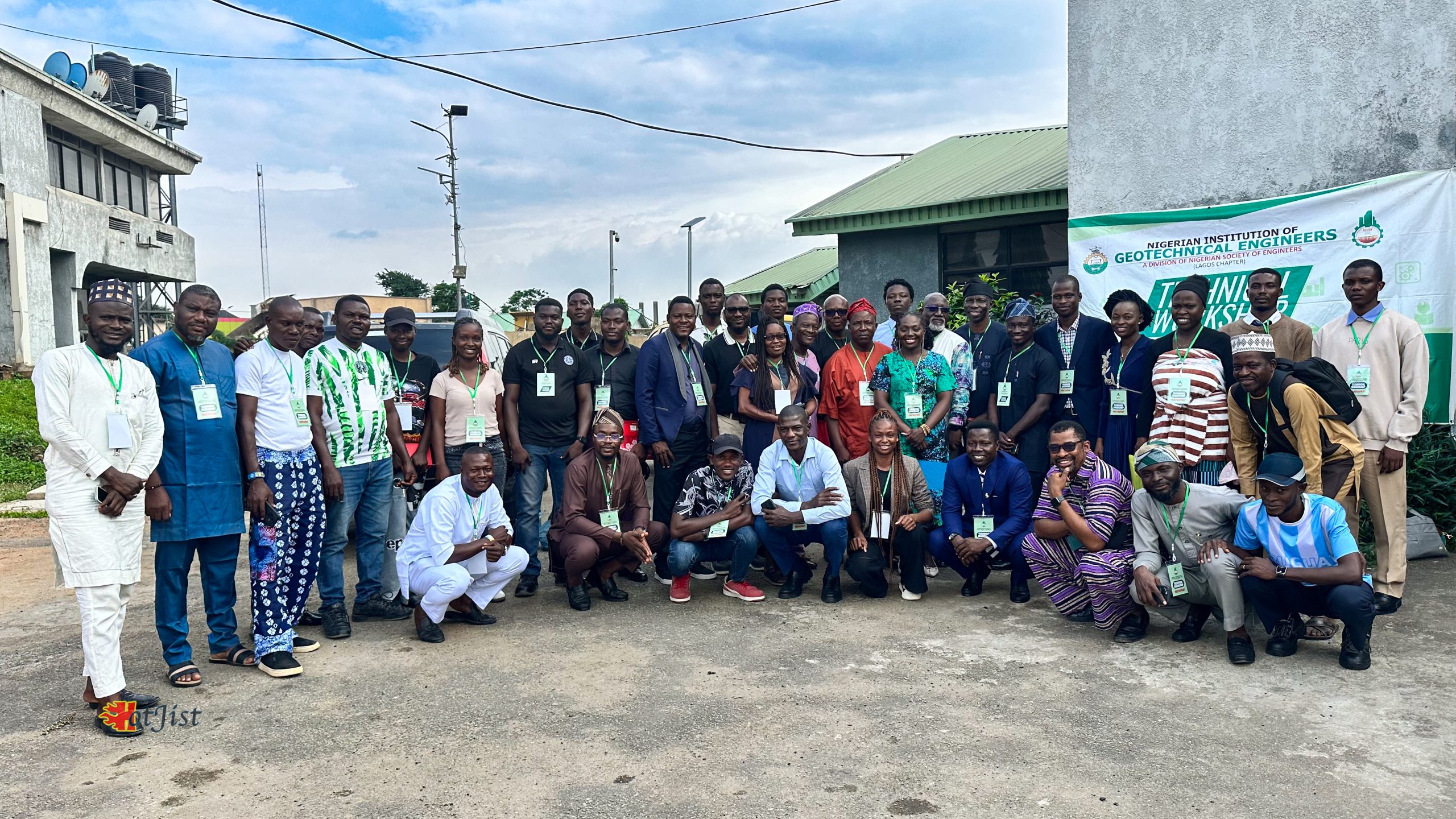
NIGE WORKSHOP: ENGINEERS CALL FOR STRONGER GEOTECHNICAL PRACTICES TO CURB BUILDING COLLAPSE
Read Time:6 Minute, 13 Second
By ‘Sefiu Ajape
The Nigerian Institution of Geotechnical Engineers, Lagos State Chapter, has called for stronger geotechnical investigation and improved engineering practices to enhance the safety, stability and durability of structures and infrastructure in Nigeria.
The call was made at the 2026 NIGE Lagos Chapter Workshop held on Saturday at the Lagos State Public Works Corporation, Ojodu-Berger, Lagos, with the theme, “The Relevance of Effective Geotechnical Investigation and Application of Geosynthetic Materials to the Stability of Structures.”
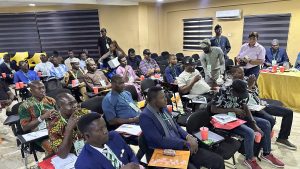
Speaking virtually, the National Chairman of NIGE, Engr. Fadeyi Olaniyi, FNSE, FNIGE, FNICE, FNISTRUCTE, commended the Lagos State Chapter for organising the workshop, stressing the importance of collaboration among engineers in addressing the persistent challenge of building collapse.
Olaniyi also emphasised the importance of geotechnics and proper ground investigation in ensuring safe and durable structures.
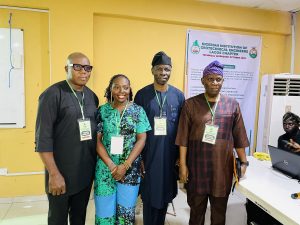
Delivering the keynote address, Engr. Dr. Kofo Popoola, PhD, FNSE, FNISE, FNIstructE, M. ASCE, R.Engr., raised concerns over the recurring cases of building collapse in the country.
Popoola, citing figures from the Collapse Prevention Guild, said 47 building collapses were recorded across 14 states in 2024, with Lagos recording 13 cases, Abuja six and Anambra five.
He further recalled that 2022 was the worst year on record, with 62 building collapses reported, while Lagos accounted for 55 per cent of the cases.
However, Popoola stressed that soil should not be blamed for every structural failure, noting that building collapse could result from several factors, including structural defects and poor workmanship.
He said geotechnical engineering remained critical because every structure ultimately rests on the ground.
“Every building collapse, collapse our regulations, our economy and our humanity,” Popoola said, calling for an end to the recurring incidents of building failure.
He added that the knowledge and proper application of geotechnical engineering principles were essential to achieving safe and economical foundations, particularly in the design and construction of deep foundations and piles.
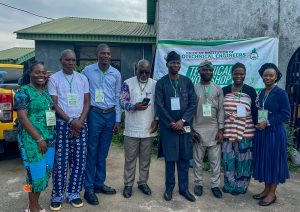
Earlier in his welcome address, the Chairman of NIGE Lagos State Chapter, Engr. Fola Adeniyi, MNSE, FNIGE, FNICE, said the workshop was designed to promote sound geotechnical practice and improve the safety, durability and performance of infrastructure.
Adeniyi urged participants to actively engage in the lectures, discussions and question-and-answer sessions, stressing that the interactions would contribute to their professional development.
He encouraged participants to “learn, share experiences, build professional relationships and identify practical solutions” to challenges confronting geotechnical engineering practice.
Speaking on the relevance of sound and effective geotechnical site investigation to the stability and safety of engineering structures, one of the speakers, Engr. Dada Festus Bamidele, C.Eng., MNSE, MNICE, MNistruct.E., MNIGE, said proper investigation could determine whether a structure would stand safely and serve its intended purpose.
“When you see a structure standing, it shows something must have been done rightly and if you see a structure falling, something must have gone wrong somewhere,” Bamidele said.
He stressed that geotechnical investigation must be sound, effective and of sufficient quality to serve its intended purpose.
According to him, proper investigation enables engineers to identify potential risks before construction begins, helps clients determine the overall cost of a project and increases the likelihood that a structure will meet its intended design life.
Bamidele also cautioned against focusing solely on the initial cost of geotechnical investigation, noting that quality investigation could ultimately save money by preventing costly failures and unforeseen problems.
“Geotechnical investigation is key,” he said, urging professionals not to compromise the scope or quality of investigations simply because a client was unwilling to pay for the required work.
He added that engineers should educate clients on the value of quality geotechnical work because “in the long run, it pays.”
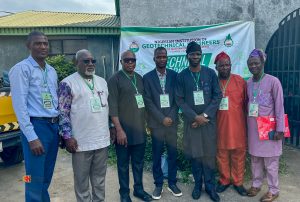
Also speaking, Engr. Opeyemi Isreal Adetunji, B.Eng., M.Sc., Ph.D. (In view), R.Eng. (COREN), MNICE, MNIGE, MNSE, who addressed participants on the cost effectiveness of geosynthetic materials in the design of road pavements, slopes and embankments, said geotechnical engineers needed to understand the functions, capacities and applications of geosynthetic materials.
Adetunji explained that geosynthetics could reduce overall project costs while improving the service life of infrastructure.
He stressed that the success of civil engineering projects was closely linked to the ground on which they were built.
“Every civil engineering project depends on where it is sitting,” he said, explaining that projects sit on or under soil, making proper understanding and investigation of the soil critical to their success.
He added that effective geotechnical investigation could determine the appropriate type of geosynthetic material to use, thereby improving cost effectiveness and extending service life.
Adetunji therefore called for rigorous geotechnical investigations on proposed construction sites and encouraged engineers to consider geosynthetic solutions alongside conventional approaches to the construction of roads, pavements, embankments and slopes.
The Publicity Secretary of NIGE Lagos State Chapter, Engr. Sunday Opaniyi, MNSE, MNIGE, also highlighted the importance of hazard identification and risk assessment in geotechnical engineering.
Opaniyi identified excavation and trenches, heavy drilling equipment, noise, dust and flying particles among the hazards that could arise during geotechnical operations.
He explained that engineers needed to identify potential risks, including injury, loss of life, equipment damage, environmental hazards and project failure, and apply appropriate controls based on the hierarchy of control.
Sharing a real-life experience from a CFA piling operation, Opaniyi recounted an incident in which drilling equipment became entangled, highlighting the consequences that could arise when safety equipment is not properly checked.
He stressed the need for engineers and workers to verify the quality and condition of safety equipment, particularly older equipment, before using them on site.
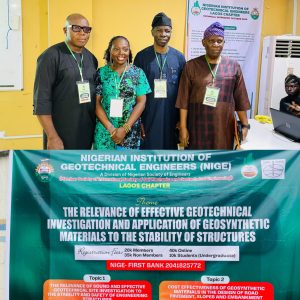
The National Secretary of NIGE, Engr. Precious Osagie, said the workshop provided an important platform for professional development and knowledge sharing among geotechnical engineers.
Osagie stressed the importance of paying adequate attention to geotechnical investigation, using a popular warning among professionals that “investigation you don’t pay for, you’ll pay for” through disastrous collapse or other consequences arising from ground or structural failure.
She said the workshop’s two technical presentations were practical and thought-provoking, adding that participants could apply the knowledge gained to their professional practice.
Osagie also noted that workshops such as the event provided opportunities for engineers to contribute to discussions around specifications, methodologies, codes and standards for geotechnical engineering practice in Nigeria.
She said engineers who failed to participate in such professional gatherings risked missing important conversations and opportunities to contribute to the development of the profession.
A participant, Bello Issa, a master’s student of Geotechnics at the University of Lagos, said he attended the workshop to improve his knowledge and build professional connections.
Issa stressed that geotechnical investigation could not be overemphasised, comparing it to petrol in a vehicle because of its importance to the success of a construction project.
He cautioned against constructing structures without properly understanding the soil and its geotechnical characteristics.
Issa also urged professionals to approach construction with the safety of occupants in mind, saying engineers should be confident that a structure would be safe enough for them and their loved ones to live in.
The workshop featured technical sessions, interactive question-and-answer sessions, networking and professional engagements.
Participants were also presented with certificates of participation, while merit awards were given to deserving individuals and organisations, including representatives of the Lagos State Public Works Corporation and the Lagos State Materials Testing Laboratory.
The event brought together geotechnical engineers, other engineering professionals, students and key stakeholders within the built environment to discuss practical approaches to improving geotechnical investigation, construction safety and infrastructure performance in Nigeria.


Happy
0 %

Sad
0 %

Excited
100 %

Sleepy
0 %

Angry
0 %

Surprise
0 %
 1
1
 0
0