
NIGERIAN EMBASSY IN MALI ACCUSED OF HUMAN TRAFFICKING SCAM
Read Time:4 Minute, 59 Second
HOTJIST NEWS
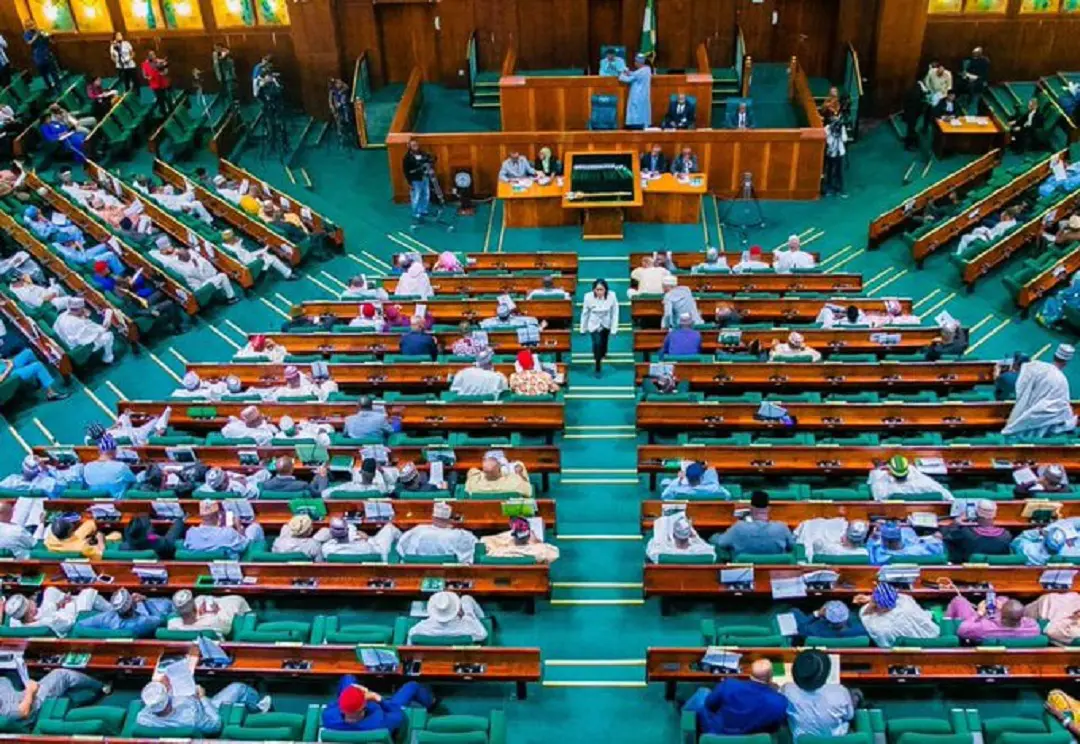
The House of Representatives is working harder to improve Nigeria’s efforts against human trafficking.They said just bringing trafficked Nigerians back from Mali and other West African countries isn’t enough anymore.It needs to be followed by proper support and help to rebuild their lives.
This message was shared on Wednesday during a meeting of important people involved in helping victims.
The meeting was organized by the House Committee on Humanitarian Services.Lawmakers, government groups, development partners, and community organizations were there to talk about better ways to rescue and support trafficked Nigerians.
But the meeting got serious when the National Council of Child Rights Advocates, Nigeria, made some serious claims about officials at the Nigerian Embassy in Mali.
They said the officials weren’t handling rescued victims well, weren’t being transparent about bringing people back, and might be working with people who are exploiting vulnerable Nigerians.
The head of the House Committee on Humanitarian Services, Tolulope Akande-Sadipe, said Nigeria needs to focus on supporting survivors.
This means more than just getting them back home.It means helping them recover and start new lives.
“It is with great honour, profound humility and a deep sense of responsibility that I warmly welcome you all to this High-Level Stakeholders’ Technical Meeting on Strengthening the Repatriation, Rehabilitation and Reintegration of Trafficked Nigerians from Mali and Other West African Countries,” she said.
Describing human trafficking as one of the country’s most pressing humanitarian challenges, Akande-Sadipe said thousands of Nigerians, particularly women, children and young people, continue to fall victim to trafficking, forced labour, sexual exploitation and other forms of modern slavery across West Africa.
She said, “Behind every statistic is a human story: a mother separated from her children, a young person whose dreams have been exploited, or a survivor whose hope has been diminished by circumstances beyond their control.
“These realities remind us that trafficking is not merely a migration issue; it is a grave violation of human rights and an assault on human dignity that demands a coordinated national response.”
She said recent government interventions, including the evacuation of vulnerable Nigerians from South Africa and the prisoner transfer agreement between Nigeria and Ethiopia, demonstrated the importance of collaboration among government institutions and international partners.
According to her, the challenge now is to build sustainable systems that support survivors after their return.
She said, “However, bringing our citizens home is only the beginning.
“The true measure of our success lies not simply in repatriation, but in the quality and sustainability of the support we provide after survivors return. Without comprehensive rehabilitation and meaningful reintegration, many survivors remain vulnerable to poverty, social exclusion and, tragically, re-trafficking.”
Akande-Sadipe advocated a rights-based approach to combating trafficking, insisting that repatriation should be safe, voluntary and dignified, while rehabilitation should include healthcare, psychosocial support, legal assistance, education and economic empowerment.
She also called for stronger institutional collaboration, improved data management, community-based protection mechanisms and sustainable livelihood programmes.
“As legislators, the House of Representatives remains steadfast in its commitment to providing the legislative, policy and oversight framework necessary to strengthen humanitarian response systems, enhance institutional coordination, improve accountability and ensure adequate budgetary support for agencies charged with protecting vulnerable Nigerians,” she stated.
The lawmaker urged participants to move beyond identifying challenges to developing practical solutions anchored on the internationally recognised anti-trafficking pillars of prevention, protection, prosecution and partnerships.
This message was shared on Wednesday during a meeting of important people involved in helping victims.
The meeting was organized by the House Committee on Humanitarian Services.Lawmakers, government groups, development partners, and community organizations were there to talk about better ways to rescue and support trafficked Nigerians.
But the meeting got serious when the National Council of Child Rights Advocates, Nigeria, made some serious claims about officials at the Nigerian Embassy in Mali.
They said the officials weren’t handling rescued victims well, weren’t being transparent about bringing people back, and might be working with people who are exploiting vulnerable Nigerians.
The head of the House Committee on Humanitarian Services, Tolulope Akande-Sadipe, said Nigeria needs to focus on supporting survivors.
This means more than just getting them back home.It means helping them recover and start new lives.
Simeon further alleged that despite petitions submitted to the Federal Ministry of Justice, Ministry of Women Affairs, National Human Rights Commission, the Office of the Senate President and relevant committees of the National Assembly, little progress was made until the House Committee on Humanitarian Services intervened.
According to him, the committee’s intervention prompted the “deployment of a Federal Ministry of Foreign Affairs fact-finding team to Mali in July 2025.”
He said NACCRAN subsequently repatriated more than 10 underage Nigerian girls between September and December 2025, with victims handed over to the National Agency for the Prohibition of Trafficking in Persons and reunited with their families.
Despite the successes, Simeon said the organisation has yet to receive fresh authorisation from the Ministry of Foreign Affairs to continue its humanitarian operations across West Africa.
“As of today, no response has been received.
“Meanwhile, reports continue to indicate that Nigerian girls remain vulnerable to trafficking, exploitation, and abuse across several West African countries,” he said.
He urged the House Committee to investigate allegations surrounding repatriation activities at the Nigerian Embassy in Mali, strengthen coordination among the Ministry of Foreign Affairs, NAPTIP, security agencies and civil society organisations, and develop a comprehensive policy framework to combat trafficking across the region.
The allegations against officials of the Nigerian Embassy in Mali had not been independently verified as of the time of filing this report, and no response had been issued by the Ministry of Foreign Affairs or the officials named in the presentation.
The stakeholders’ meeting comes amid growing concern over the increasing number of Nigerians trafficked across West Africa and renewed calls for stronger institutional coordination, improved victim protection and greater accountability in Nigeria’s anti-trafficking efforts.


Happy
0 %

Sad
0 %

Excited
0 %

Sleepy
0 %

Angry
0 %

Surprise
0 %
 0
0
 0
0