
PRESIDENCY EXPANDS SKILLS TRAINING TO TACKLE INSECURITY, YOUTH UNEMPLOYMENT
Read Time:2 Minute, 22 Second

By ‘Balogun Ibrahim
The Presidency has announced plans to expand skills acquisition and entrepreneurship training as part of efforts to tackle crime and insecurity through non-kinetic measures while creating economic opportunities for young Nigerians.
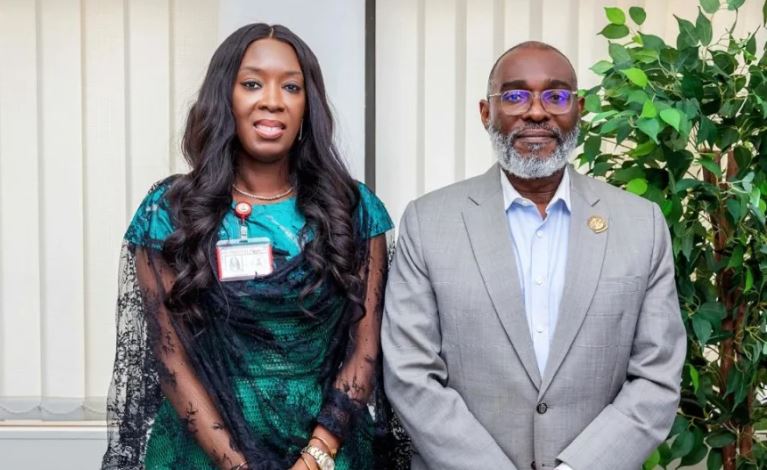
The Senior Special Assistant to the President on Technical, Vocational and Entrepreneurship Education, Dr Abiola Arogundade, disclosed this in a statement on Wednesday following a closed-door meeting with the Special Adviser to the President on Homeland Security, Maj.-Gen. Adeyinka Famadewa (retd.), at the State House in Abuja.
The statement, titled ‘Presidency Expands Skills Acquisition Programmes to Tackle Insecurity’, said the meeting focused on collaboration in economic empowerment, employability and sustainable livelihoods as complementary measures to conventional security operations.
READ MORE…
CHAMPIONS LEAGUE: FERNANDES REACTS AS MAN UNITED SUFFER 4-1 COMO DEFEAT
Arogundade explained that the partnership was designed to equip Nigerians with practical skills and provide sustainable opportunities for productive engagement.
She said the initiative would strengthen cooperation between both offices in empowering citizens, raising awareness and creating opportunities that could help steer young people away from crime.
According to her, the goal is to promote a safer, better-informed and economically empowered society.
The programme is expected to focus on reducing the vulnerability of unemployed and economically disadvantaged youths to recruitment by criminal networks that exploit poverty, limited opportunities and social exclusion.
Both presidential aides agreed that addressing insecurity required a comprehensive strategy combining military and law enforcement operations with education, vocational training and economic inclusion.
Famadewa emphasised the importance of tackling the socioeconomic factors contributing to insecurity, noting that security interventions must be complemented by measures that address the underlying causes of criminality.
He added that his office was prioritising coordinated intelligence gathering and surveillance, improved border security, enhanced threat identification and effective crisis-reporting mechanisms.
President Bola Tinubu appointed Famadewa as Special Adviser on Homeland Security on May 11, 2026.
He previously served as Principal General Staff Officer to the then National Security Adviser, Major-General Babagana Monguno, from 2015 to 2021, during which he led the establishment of the Intelligence Fusion Centre.
The initiative comes as the Federal Government intensifies efforts to address insecurity through economic empowerment and youth development programmes.
On February 3, the government launched the Safe Nigeria Initiative at the National Counter Terrorism Centre under the Office of the National Security Adviser.
The programme targets at least 11,000 vulnerable youths across Nigeria’s 36 states and the Federal Capital Territory, offering vocational training, livelihood support and civic education.
Meanwhile, a 2024 analysis by the IPI Global Observatory identified unemployment and poverty as factors that could expose young people to recruitment by armed groups. It noted that five of Nigeria’s 10 poorest states were in the North-West, where some bandits reportedly offered vulnerable youths as little as ₦5,000 to join their networks.


Happy
0 %

Sad
0 %

Excited
0 %

Sleepy
0 %

Angry
0 %

Surprise
0 %
 0
 0