
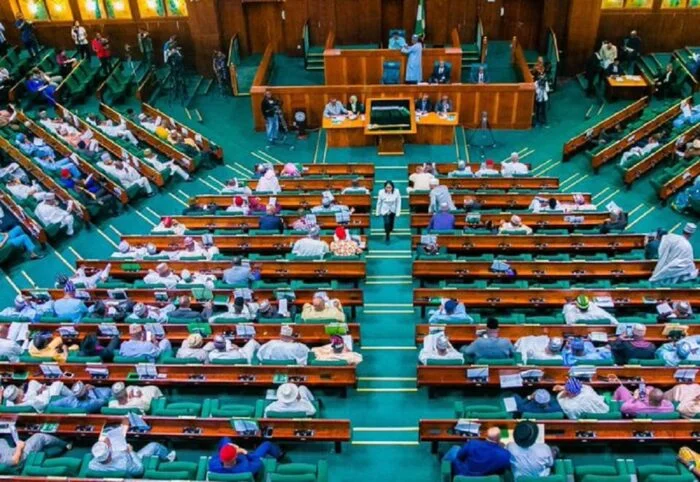
HOUSE PROBES $696M NG-CARES PALLIATIVE FUND OVER ALLEGED MISMANAGEMENT
Read Time:1 Minute, 31 Second
By Aishat Momoh. O.
The House of Representatives Committee on Nigeria Community Action for Resilience and Economic Stimulus (NG-CARES) has launched a full-scale investigation into the implementation of the $696 million (N1.06 trillion) social intervention programme, following concerns that its impact is not being felt by vulnerable Nigerians.
Chairman of the committee, Abubakar Kusada, disclosed this on Wednesday in Abuja after a committee meeting, stating that the inquiry was prompted by the persistent outcry over government neglect despite the Federal Government fulfilling its funding obligations, issuing guidelines, and setting up operational arrangements for the scheme’s execution.
“It is most surprising that the effect of these palliatives is not being felt by the target vulnerable groups in Nigeria after the government has committed so many resources to this purpose through the states,” Kusada said.
He noted that the investigation, conducted under Sections 88 and 89 of the Constitution, would unravel the disconnect between the massive disbursement and its apparent lack of impact.
Key questions to be addressed include whether the funds were embezzled, misappropriated, or diverted; whether contract procurements followed due process; if value for money was achieved; and why some states reportedly received more than their attributable notional amounts.
Kusada further stated that the committee would verify claims by states on social transfers, agricultural inputs, infrastructure development, and market upgrades. If such claims are false or exaggerated, he vowed that affected states would be “named and shamed” and compelled to return and properly utilise the funds.
“If the procurement process has been abused, then the Bureau of Public Procurement (BPP) and anti-graft agencies have their work cut out for them,” he warned.
The NG-CARES programme was designed as part of the Federal Government’s economic stimulus plan to cushion the effects of economic reforms on vulnerable Nigerians.


Happy
0 %

Sad
0 %

Excited
0 %

Sleepy
0 %

Angry
0 %

Surprise
0 %
 0
0
 0
0