
SENATE PROPOSES BILL TO CREATE SINGLE, FREE, NATIONWIDE EMERGENCY NUMBER
Read Time:2 Minute, 29 Second
BY JENN NOMAMIUKOR
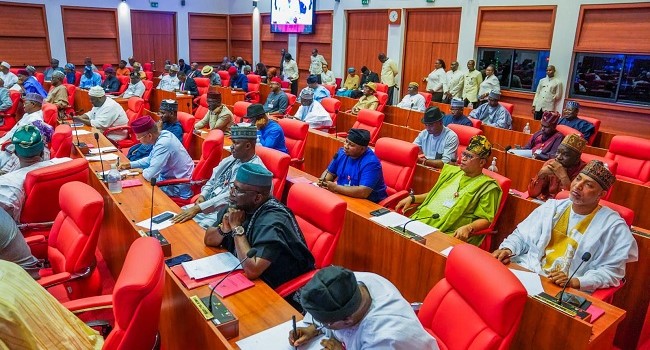
The Senate started the second reading of a bill that wants to create a single, free, nationwide emergency number that everyone in Nigeria can use.
The bill, called “A Bill for an Act to Establish the National Emergency Toll Service (NETS),” is meant to replace the many different emergency phone numbers currently in use with one easy-to-remember three-digit number.
Members of the Senate explained that this change would help reduce confusion and make it easier for police, firefighters, hospitals, and other emergency services to work together quickly.
Senator Yar’adua Musa from Katsina Central, who is the main person pushing the bill, said the law would bring all the separate emergency lines in Nigeria together into one national system.
He mentioned global examples, pointing out that the United Kingdom started using 999 as its emergency number in 1937, the United States began using 911 in 1968, and India set up a single emergency line in 2014.
He said, “Emergency numbers like 911 in the U.S. and 999 in the U.K. have helped save many lives by making it easier for people to reach emergency help quickly.”
He added, “But in Nigeria, there are several different helplines in different states, each for things like the police, fire department, ambulances, and even issues like domestic violence and child abuse.”
Musa explained that having many different numbers, especially in cities like Lagos, causes confusion and makes it harder to respond quickly during emergencies.
He said the current situation is not helping during emergencies.
The bill proposes that any call or text sent to the new national emergency number will be automatically directed to the closest working response center.
The senators argued that with mobile phone use now nearly 90%, the country has the necessary infrastructure to support a single emergency system.
Senator Ali Ndume from Borno South supported the proposal, connecting Nigeria’s security problems to weak communication between the public and security agencies.
“This bill gives muscular expression to the need for the general public to report what they see.
“A dedicated, toll-free national line would eliminate the barriers created by the current multiplicity of emergency numbers,” he said.
Deputy Senate President Barau Jibrin led the session and commended the efforts, stating that the reform would have a big effect on the whole country.
He said, “This bill is a major move toward making our emergency response better and would be good for the nation.”
The bill was then sent to the Senate Committee on Communications, with a deadline to give feedback in four weeks.
If the law is passed, it will give the Nigerian Communications Commission the power to manage the system, work with emergency agencies, and make sure everyone across the country can access it.
Members of the legislature believe this reform could greatly improve Nigeria’s ability to handle emergencies and offer people a quicker and more dependable way to get help when their lives are in danger.


Happy
0 %

Sad
0 %

Excited
0 %

Sleepy
0 %

Angry
0 %

Surprise
0 %
 0
0
 0
0