

SENATE RAISES ALARM OVER ‘WIDESPREAD’ LEAD POISONING IN OGIJO
Read Time:3 Minute, 10 Second
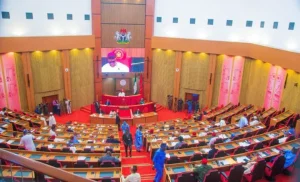
By: Sefiu Ajape
The Senate on Thursday raised a nationwide alarm over what it described as a “widespread and scientifically verified lead-poisoning disaster” devastating Ogijo, a densely populated community that spans the Ikorodu axis of Lagos and the Ogun East Senatorial District.
Lawmakers warned that the crisis—linked to multiple used lead-acid battery recycling factories—has escalated into a severe public health emergency, with children, women, and factory workers suffering long-term health complications after years of exposure to toxic emissions.
The motion, sponsored by Senator Mukhail Adetokunbo Abiru (APC, Lagos East) and Senator Gbenga Daniel (Ogun East), described Ogijo as facing “an environmental catastrophe of global significance,” noting that contamination levels have been reported at up to 186 times higher than internationally accepted safety thresholds.
Leading the debate, Senator Abiru expressed shock over reports of persistent headaches, abdominal pain, seizures, memory loss, and cognitive decline—symptoms strongly associated with chronic lead exposure—which residents say they have endured for years without substantial intervention.
He also cited independent investigations by The Examination and The New York Times, which confirmed severe lead poisoning through blood tests and toxic soil analysis.
Particularly disturbing, Abiru added, was evidence that processed lead from Ogijo had entered global supply chains supplying major automobile manufacturers—meaning contaminated Nigerian lead was being exported while local communities continued to inhale toxic fumes.
“Children are dying slowly. Families have lived for years under poisonous smoke and dust,” Senator Abiru said, calling for rapid federal intervention.
He noted the recent action of the Federal Government, through the Minister of State for Labour and Employment, Hon. Nkeiruka Onyejeocha, who ordered the shutdown of seven recycling factories and temporarily suspended lead ingot exports from the industrial cluster. However, he insisted that while commendable, this was merely a starting point, stressing that several operators deny wrongdoing, regulatory enforcement remains weak, and exposure within the community continues to be “extreme and unacceptable.”
Acknowledging interventions by the Lagos and Ogun State Governments, Abiru emphasized that the Constitution obligates the State to protect citizens’ health and ensure environmental safety.
“This is not just an environmental issue; it is a constitutional duty,” he stated. “The lives and futures of children in Ogijo must not be traded for toxic profits.”
He further warned that rising global demand for recycled lead, coupled with inadequate regulatory enforcement, has turned some Nigerian communities into “sacrifice zones” where hazardous industries operate unchecked.
With Ogijo now under intense international attention, Senators who contributed to the debate unanimously supported the motion, insisting that Nigeria must enhance regulation, enforce accountability, and prevent similar tragedies nationwide.
“The tragedy of Ogijo must be a turning point,” the Senate declared. “The nation cannot allow this slow, silent poisoning to continue.”
In its resolutions, the Senate ordered emergency medical intervention and comprehensive environmental cleanup by approving major measures, including:
“Deployment of emergency medical teams by the Nigeria Centre for Disease Control and Prevention (NCDC) for free toxicology screening, blood-lead testing, chelation therapy, and long-term treatment for victims.
“A comprehensive environmental remediation by the Federal Ministry of Environment and the National Environmental Standards and Regulations Enforcement Agency (NESREA) to map soil, groundwater, air, and household dust contamination.
“Strict nationwide enforcement of battery recycling and lead-processing standards by the Ministry of Solid Minerals Development. “Emergency relief and temporary relocation for severely affected families through the National Emergency Management Agency (NEMA).
“A national briefing by the Ministers of Environment, Health, Solid Minerals, Labour and Employment, and the NESREA DG before the Senate Committee on Environment and Solid Minerals.
“Creation of a National Lead Poisoning Response and Remediation office within NEMA to coordinate cleanup, medical treatment, monitoring, and global traceability of exported lead.
The Senate Committee on Legislative Compliance was also directed to ensure full implementation of all resolutions within six weeks.


Happy
0 %

Sad
0 %

Excited
0 %

Sleepy
0 %

Angry
0 %

Surprise
0 %
 0
0
 0
0