
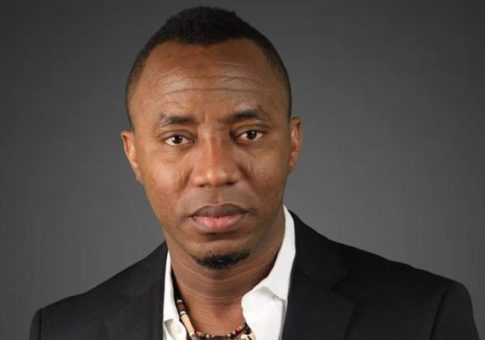
SOWORE: IMPOSING TAX ON POOR NIGERIANS MAY LEAD TO MASS OPPOSITION
Read Time:3 Minute, 33 Second

By: Balogun Ibrahim
The human rights activist argued that Nigerians are already facing severe economic strain and should not be burdened with additional taxes.
The 2023 presidential candidate of the African Action Congress (AAC), Omoyele Sowore, has condemned Nigeria’s new tax reforms, cautioning that measures placing additional burdens on poor citizens could trigger public backlash.
In an interview on The Media, human rights activist Omoyele Sowore argued that Nigerians are already economically overstretched and should not face additional tax burdens.
“Anybody who taxes poverty will reap resistance, because Nigerians are just too poor right now,” Sowore said.
READ MORE:
CAMEROON END SOUTH AFRICA HOPES WITH 2-1 WIN TO REACH AFCON QUARTER-FINALS
He emphasized that tax reforms should focus on broadening the tax base rather than increasing levies on citizens who are already struggling.
“What I have always proposed is that we expand our tax base, not increase taxes. Our current tax collection is already insufficient,” he added.
“I believe our tax-to-GDP ratio is around 17 per cent, while many other African countries are at about 20 per cent. What matters is expanding that reach, not imposing additional taxes on people who are already overburdened,” he said.
Sowore also challenged the reliability of the official data used to justify the tax reforms, accusing the government of inconsistencies in its reporting.
“Whenever these officials present statistics, it’s full of lies. You never get accurate information from them. Ultimately, this will lead to public resistance,” he said.
“You’ve seen that the tax regime currently in effect differs from what the National Assembly approved. A system that begins with fraud is not taxation—it is extortion,” he added.
The Federal Government recently rolled out four new tax reform laws: the Nigeria Tax Act, 2025; the Nigeria Tax Administration Act, 2025; the National Revenue Service (Establishment) Act, 2025; and the Joint Revenue Board (Establishment) Act, 2025.
Implementation of the new tax reforms began on January 1, 2026, but controversies arose over alleged discrepancies between the versions passed by the National Assembly and those eventually gazetted.
Addressing the issue, Taiwo Oyedele, Chairman of the Presidential Fiscal Policy and Tax Reforms Committee, described the versions circulating in the media as “fake,” explaining that the discrepancies were due to an unauthorised draft gazette that has since been corrected.
In response to public concerns, the House of Representatives on Sunday released the Certified True Copies (CTCs) of the four Acts signed into law by President Bola Tinubu.
According to a statement by House spokesperson Akin Rotimi, Speaker Tajudeen Abbas ordered the immediate release of the documents to ensure transparency and allow public verification.
Rotimi noted that the decision, made in consultation with Senate President Godswill Akpabio, followed allegations that the versions of the laws circulating differed from those approved by the National Assembly and assented to by the president.
Amid widespread speculation, the Federal Government has assured Nigerians that the new tax regime will not involve automatic debits from personal bank accounts when it fully takes effect on January 1, 2026.
Taiwo Oyedele, Chairman of the Presidential Fiscal Policy and Tax Reforms Committee, emphasised that the reforms are designed to be transparent and citizen-focused. He added that they would protect small businesses and vulnerable Nigerians, highlighting that the tax system has been redesigned to be progressive rather than regressive.
Earlier, President Bola Tinubu reaffirmed that implementation of the new tax laws would proceed as scheduled despite opposition from political figures, labour unions, and civil society groups. The president stated that the reforms aim to strengthen Nigeria’s fiscal structure rather than increase taxes.
The reforms, signed into law in June 2025, provide a full personal income tax exemption for individuals earning ₦800,000 or less annually, while small businesses with a turnover below ₦100 million are exempt from company income tax, VAT, and the development levy.
Despite these clarifications, critics remain vocal. Former Vice President and 2023 PDP presidential candidate Atiku Abubakar accused the government of illegally altering the tax laws after their passage by the National Assembly. Former Labour Party presidential candidate Peter Obi also criticised the reforms, warning that prosperity cannot be achieved by imposing heavier burdens on poor citizens.


Happy
0 %

Sad
0 %

Excited
0 %

Sleepy
0 %

Angry
0 %

Surprise
0 %
 0
0
 0
0