
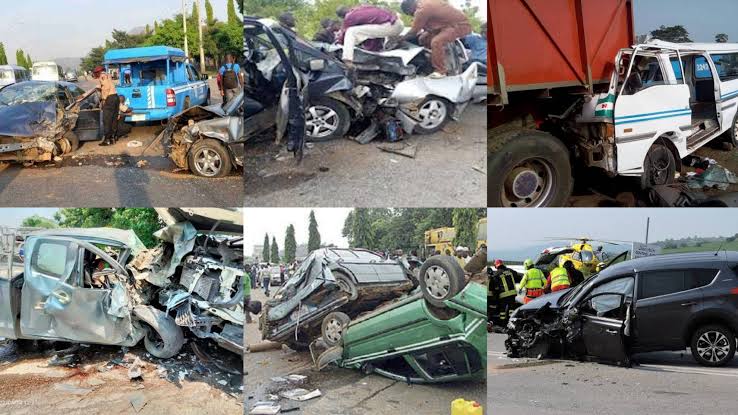
MORE THAN 54,000 LIVES LOST ROAD TO CRASHES IN 10 YEARS – REPORT
Read Time:1 Minute, 58 Second
Agency report
No fewer than 54,873 lives have been lost to road crashes across Nigeria over the past 10 years, data from the Federal Road Safety Commission (FRSC) revealed.
The records show that 109,081 road crashes occurred within the same period.
According to the data, “5,053 fatalities were recorded in 2016, rising slightly to 5,121 in 2017 and 5,181 in 2018.” In 2019, road crashes claimed 5,483 lives, followed by 5,574 deaths in 2020.
The figures increased to 6,205 in 2021 and peaked at 6,456 in 2022 before declining to 5,081 in 2023. Fatalities slightly rose to 5,421 in 2024 and declined to 5,298 in 2025.
Similarly, “9,694 crashes were documented in 2016, followed by 9,383 in 2017 and 9,741 in 2018.” By 2019, crashes had risen to 11,072 and climbed to 11,875 in 2020.
In 2021, 13,027 crashes were recorded, with the highest number in 2022 at 13,656. The figures then declined to 10,617 in 2023, 9,570 in 2024, and rose again to 10,446 in 2025.
The magnitude of crashes has prompted the FRSC to intensify enforcement efforts. The Corps Marshal, Shehu Mohammed, said during the week in Abuja that “speeding remained the leading cause of road fatalities.”
He explained, “Speed remains the single greatest threat to life on Nigerian roads. Indiscipline sustains crashes, and disciplined enforcement saves lives.”
To curb the rising trend, the FRSC announced new measures for 2026, including “intelligence-led enforcement, zero tolerance for major traffic offences, and stricter speed management, especially for commercial vehicles.”
Mohammed emphasised that the focus would shift from post-crash response to “prevention, behaviour compliance, and rigorous enforcement.”
He added, “Commands shall transition from routine patrols to intelligence-led, risk-based enforcement. The corps will enforce zero tolerance on the ‘Big Five’ offences responsible for over 70 per cent of fatal and serious crashes: speed violation, dangerous driving, drunk or drug-impaired driving, wrong-way driving, and overloading.”
The corps marshal also stated that “speed management would become a national operational priority, with mandatory speed limit devices for commercial vehicles, re-certification audits, and public sanctions for non-compliance.” Public education campaigns, he added, “will also move toward targeted behaviour-change messaging for commercial drivers, private motorists, motorcyclists, and fleet operators.”


Happy
0 %

Sad
0 %

Excited
0 %

Sleepy
0 %

Angry
0 %

Surprise
0 %
 0
0
 0
0