
2027: FREE, FAIR ELECTION MAY DELIVER LESS THAN 20% FOR APC — OLAWEPO-HASHIM
Read Time:3 Minute, 27 Second
By: Balogun Ibrahim
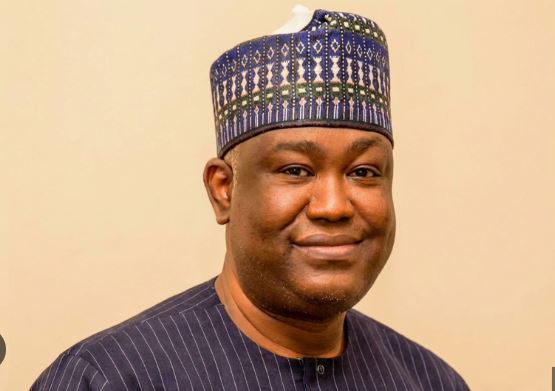
A chieftain of the Peoples Democratic Party (PDP), Gbenga Olawepo-Hashim, has alleged that President Bola Tinubu is aware that the ruling All Progressives Congress (APC) may struggle to secure 20 per cent of the vote in a truly free and fair election.
He said that if the APC could boast of about 32 governors, it should have no hesitation in conducting free and fair elections and allowing results to be transmitted from polling units to the IReV.
He questioned the ruling party’s stance, asking why it would be apprehensive if the PDP is no longer a strong opposition.
The PDP chieftain argued that the APC’s alleged reluctance to embrace full electoral transparency reflects concerns about its level of support, adding that the party appears fearful despite its claims.
Olawepo-Hashim said that while “propagandists” may hail President Tinubu as a strategist, he does not consider him naïve, adding that the president has conducted polls and is aware that the APC may not secure up to 20 per cent of the vote in a free and fair election.
According to him, the PDP remains Nigeria’s most competitive political party despite internal challenges and defections.
He added that ongoing attempts to weaken the party are a reflection of its strength, stating that claims of its collapse are misguided. “Those who believe it is destroyed — that is their own delusion,” the former presidential candidate said.
He argued that internal tensions within the APC could undermine the party ahead of the 2027 elections.
“Even within their party, they know those who are waiting to strike from behind. They have more internal issues than the PDP,” he said.
The PDP chieftain attributed political defections to what he described as opportunism among the political elite, rather than genuine grassroots support.
“The Nigerian political elite is very greedy. They want to remain where the resources are. But the grassroots are more sincere. When governors defect, the grassroots do not necessarily follow,” he stated.
Olawepo-Hashim cautioned against celebrating the decline of opposition parties in Nigeria’s democratic system.
“Anyone celebrating the collapse of multi-party democracy should have their heads examined,” he said, adding that the PDP requires a united NEC and a proper convention, rather than internal factions.
He also noted what he described as significant digital registration within the party, insisting that it indicates the PDP is far from finished.
His remarks come amid growing political realignments and preparations ahead of the 2027 general elections, as both ruling and opposition parties position themselves for what is expected to be a highly competitive race.
2023 Election Outcome and 2027 Political Realignments
In the February 2023 presidential election, Bola Tinubu of the All Progressives Congress (APC) was declared winner by the Independent National Electoral Commission (INEC).
He secured 8.79 million votes (36.61%), ahead of Atiku Abubakar of the Peoples Democratic Party (PDP), who polled 6.98 million (29.07%). Peter Obi of the Labour Party followed with 6.10 million votes (25.40%), while Rabiu Kwankwaso of the New Nigeria Peoples Party (NNPP) garnered 1.49 million (6.23%).
Tinubu also met the constitutional requirement by winning at least 25% of votes in 30 states. Tinubu, Atiku, and Obi each won 12 states, while Kwankwaso secured only Kano State.
As of March 2026, political activities ahead of the 2027 elections are gathering momentum. Tinubu has received backing from APC leaders to seek re-election, while opposition figures are exploring the possibility of a coalition to challenge his bid.
Peter Obi and Rabiu Kwankwaso have reportedly held discussions on possible collaboration, while Atiku Abubakar remains a prominent opposition voice.
There is also growing speculation about a potential return bid by former President Goodluck Jonathan, alongside mentions of other political figures such as Rotimi Amaechi and Seyi Makinde.
Some opposition groups are also considering adopting the African Democratic Congress (ADC) as a common platform.
Meanwhile, since 2023, the APC has strengthened its political dominance, now controlling 31 of Nigeria’s 36 states, following a wave of defections from the PDP and other parties, including several governors and lawmakers.


Happy
0 %

Sad
0 %

Excited
0 %

Sleepy
0 %

Angry
0 %

Surprise
0 %
 0
0
 0
0