
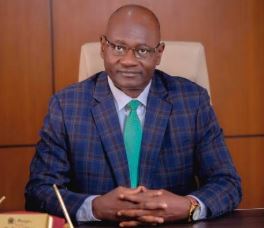
IPCR DG CALLS FOR IMMEDIATE IMPLEMENTATION OF PEACE POLICY
Read Time:3 Minute, 3 Second
By: Balogun Ibrahim
The Director-General of the Institute for Peace and Conflict Resolution, Dr. Joseph Ochogwu, has urged the swift adoption and implementation of Nigeria’s National Peace Policy, cautioning that the country’s escalating security challenges demand a more coordinated and institutional response.
Speaking on Friday at the Second High-Level Expert Dialogue on the draft policy in Abuja, Ochogwu described peace as “not a luxury but a fundamental necessity,” stressing that the time had come to move beyond discussions to decisive action.
He noted that meaningful progress would require more than good intentions, calling for strong institutional frameworks, effective coordination, and a clear roadmap for implementation.
Describing Nigeria as being at a critical turning point, Ochogwu highlighted ongoing security issues across the country, including insurgency in the North-East, farmer-herder conflicts in the North-Central, separatist tensions in the South-East, and widespread banditry and kidnappings in the North-West.
According to him, these challenges cannot be addressed through isolated efforts.
“What is needed is a comprehensive framework that aligns actions across all levels of government and delivers measurable, people-focused results,” he said.
He explained that the proposed policy aims to fill longstanding gaps in Nigeria’s peacebuilding approach, noting the absence of a unified system to coordinate the activities of government agencies, civil society groups, and development partners.
He warned that this lack of cohesion has led to duplication of efforts, wasted resources, institutional rivalry, and underserved communities.
READ MORE…
Ochogwu added that the policy would legitimise a more integrated peacebuilding system, making interventions more structured, accountable, and less reactive.
He said it would also support evidence-based decision-making and shift the country’s approach from crisis response to preventive and strategic peacebuilding.
Emphasising coordination, he called for peacebuilding to be integrated into key sectors such as security, justice, education, and economic planning, rather than treated in isolation.
He further noted that the policy aligns with Nigeria’s commitments under global and regional frameworks, including those of the United Nations, African Union, and ECOWAS.
On implementation, Ochogwu stressed that dialogue alone would not be enough, urging stakeholders to take ownership and drive the process forward.
“Dialogue without implementation is empty. We must build the political will and institutional consensus needed to move this policy from paper to practice,” he said.
He also warned against bureaucratic delays and institutional competition, calling on stakeholders to work collaboratively.
“The need for a unified and credible National Peace Policy is urgent—it cannot be postponed,” he added.
Ochogwu pointed out that the current administration under President Bola Tinubu presents a renewed opportunity to finally implement the long-delayed policy, urging stakeholders not to repeat past failures.
He described the existing peacebuilding landscape as fragmented, with actors operating in silos, and said the policy offers a chance to harmonise efforts nationwide.
He added that the framework is being updated to reflect emerging challenges such as banditry and climate change, which were not fully addressed in earlier versions.
Ochogwu revealed that stakeholders are jointly developing an implementation plan to be submitted to the Federal Executive Council for approval.
Beyond the policy, he urged political leaders to embrace issue-based politics, warning that divisive rhetoric fuels conflict and undermines democracy.
The National Peace Policy was originally conceived in 2012 as a comprehensive framework for conflict prevention and peacebuilding but was never approved. Its revival comes in response to Nigeria’s worsening security situation and evolving conflict dynamics, with the updated version aimed at creating a more effective and responsive national peace framework.


Happy
0 %

Sad
0 %

Excited
0 %

Sleepy
0 %

Angry
0 %

Surprise
0 %
 0
0
 0
0