
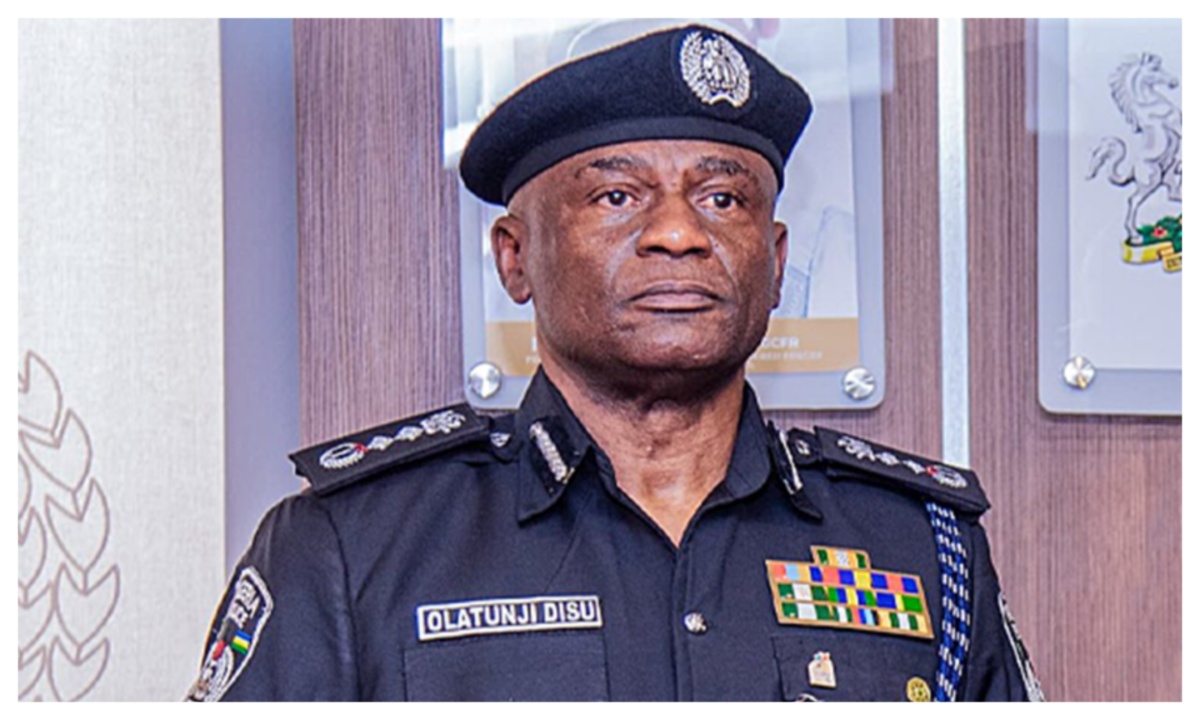
2027 ELECTIONS: POLICE WON’T SERVE AS POLITICAL TOOL, IGP ASSURES NIGERIANS
Read Time:3 Minute, 51 Second
By David Dominion
The Inspector-General of Police, Olatunji Dusu, has assured Nigerians that the Nigeria Police Force will not be used as a political tool ahead of the 2027 general elections.
Dusu gave the assurance on Tuesday while speaking on the second day of the 2027 edition of the Media Development Conference, organised by the Centre for Journalism Innovation and Development at the Abuja Continental Hotel.
He emphasised that effective policing is built on public trust and accountability rather than the use of force.
Reaffirming the police force’s commitment ahead of the 2027 elections, the IGP said its operations would be guided by professionalism, neutrality and accountability to Nigerians, political parties and the law.
He warned that any police officer found engaging in partisan activities, supporting a candidate or favouring a political party would face disciplinary action in line with the force’s code of conduct.
Addressing concerns over the alleged misuse of the Cybercrime Act against journalists, Dusu assured that the police under his leadership would not allow themselves to be used by politically motivated individuals to oppress citizens.
He also warned that emerging threats to elections now extend beyond physical violence, noting that the spread of fake videos, manipulated audio recordings, coordinated social media misinformation and fabricated reports could trigger real-world violence.
Speaking during a panel session titled “People-Centred Public Safety and State Policing in Nigeria”, the police chief urged Nigerians not to be apprehensive about the possibility of state governors abusing state police structures.
He said safeguards were being developed to prevent state police institutions from being hijacked for personal or political interests, adding that provisions for federal intervention would be considered if abuses occurred.
Dusu noted that the National Assembly and other stakeholders were working towards developing a policing framework tailored to Nigeria’s realities rather than adopting foreign models wholesale.
He also stressed the need for uniform police training standards across the country, regardless of the differences in local responsibilities. According to him, officers in states such as Lagos and Kano should receive the same basic training.
On the enforcement of the Cybercrime Act, the IGP disclosed that the police had organised two symposia since he assumed office to examine cybercrime legislation and offences committed through digital platforms.
He urged citizens and media practitioners to familiarise themselves with the provisions of the law, warning that activities considered minor online could amount to criminal offences.
He added that officers deployed to the police cybercrime unit were undergoing training and receiving the necessary equipment to tackle emerging digital threats.
Dusu maintained that journalism was not a crime, describing journalists as important partners in national development who play a vital role in holding government accountable.
While acknowledging that press freedom in Nigeria was relatively better than in some neighbouring Sahel countries, he admitted that improvements were still needed in the relationship between the media and the police.
Recounting a research paper he wrote during a management course at the Staff College in Jos, the IGP said he had advocated for journalists to accompany police officers during investigations into serious crimes.
He explained that such joint fieldwork could strengthen cooperation and help journalists better understand the challenges faced by security operatives before making arrests.
However, he recalled an incident during his tenure as Commander of the Rapid Response Squad in Lagos, when the premature reporting of the arrest of a suspect during an operation to rescue a kidnapped Lagos State Accountant-General allegedly alerted the kidnappers’ associates, who were demanding ransom, thereby worsening the situation.
He cited the incident as an example of the need for discretion, relationship-building and consideration of national interest when reporting sensitive security operations.
The police chief also recalled another incident during his time with the RRS when officers assisting a stranded motorist reacted aggressively after someone approached with a camera. He said the reaction reflected concerns among some officers over previous job losses linked to viral footage.
Nevertheless, he said police personnel were being sensitised on the need to protect journalists covering events, respect their professional responsibilities and avoid unlawfully restricting their access to areas where they are expected to work.
Dusu further disclosed that Commissioners of Police had been directed to hold regular meetings with media organisations in their respective jurisdictions.
He said the force was also planning joint lectures and pre-election training sessions in Abuja and other states to strengthen election reporting and familiarise journalists with police commanders and officers ahead of the 2027 polls.
The IGP expressed support for the conference’s discussions, expressing hope that the exchange of ideas would produce useful insights for Nigeria’s media industry.


Happy
0 %

Sad
0 %

Excited
0 %

Sleepy
0 %

Angry
0 %

Surprise
0 %
 0
 0