
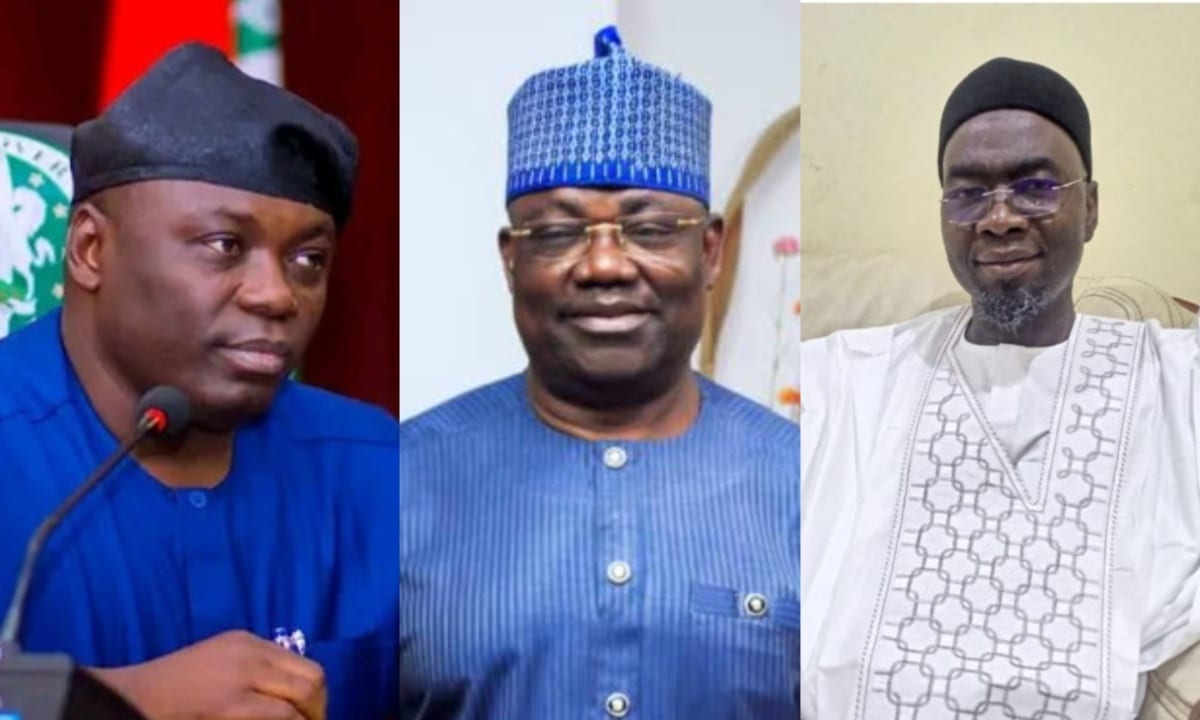
2027: KEFAS, BWACHA, TUTARE, 16 OTHERS IN FRESH BATTLE FOR TARABA GOVERNORSHIP
Read Time:3 Minute, 47 Second
By: Muftau Fatimo
As Nigeria prepares for the 2027 general elections, political attention is increasingly shifting to Taraba State, where incumbent Governor Agbu Kefas, former Senator Emmanuel Bwacha, former Senator Abubakar Umar Tutare and 16 other candidates are preparing for a keenly contested governorship race.
With 19 candidates listed for the election by the Independent National Electoral Commission (INEC), the contest is shaping up to be one of the most competitive political battles in the state’s recent history.
The race is expected to test the strength of political parties, grassroots mobilisation, voter loyalty and public perception of the incumbent administration.
Among the major contenders are Governor Kefas of the All Progressives Congress (APC), Bwacha of the Peoples Democratic Party (PDP) and Tutare of the African Democratic Congress (ADC).
The contest has attracted particular interest following the political realignment between Kefas and Bwacha. Kefas, who won the 2023 governorship election on the PDP platform, has defected to the APC, while Bwacha, who contested the same election under the APC, is now the PDP’s governorship candidate.
The development has altered the state’s political calculations, raising questions about whether the movement of influential politicians between parties will translate into a corresponding shift in voter support.
For the ruling APC, Kefas’s re-election bid will largely depend on his administration’s performance, political alliances and ability to consolidate the party’s structures across the state’s three senatorial districts.
His administration’s free education policy at the primary and secondary school levels, alongside other development initiatives, is expected to feature prominently in the campaign.
Kefas and other APC stakeholders have expressed confidence that the party will retain the governorship seat and secure victories for President Bola Tinubu and its candidates contesting National and State Assembly positions.
The governor recently declared that Taraba was fully behind the APC, expressing confidence in the party’s chances at the polls.
BWACHA’S BID TO UNSEAT KEFAS
For Bwacha, the 2027 election presents another opportunity to realise his governorship ambition after previously representing Taraba South in the National Assembly.
As the PDP flag bearer, he is expected to lead the opposition’s efforts to challenge the APC administration, despite the party’s challenges following the defection of Kefas and other influential political figures.
Bwacha has criticised the incumbent administration, accusing it of failing to address economic hardship and corruption.
He has promised to restore public confidence in governance, insisting that his ambition is to build a state where leadership serves the interests of the people.
However, his chances may depend on the PDP’s ability to rebuild its political structures, consolidate its traditional support base and attract voters beyond his immediate constituency.
TUTARE AND THE ADC FACTOR
Another major contender is former Senator Abubakar Umar Tutare of the ADC, whose candidacy offers voters an alternative to the APC and PDP.
Tutare has expressed confidence in his party’s chances, describing the ADC as the party to beat in 2027.
He argued that residents of the state were dissatisfied with the incumbent administration and were seeking a credible alternative.
However, the ADC faces the challenge of building a formidable grassroots structure across Taraba’s 16 local government areas to compete effectively with the established political parties.
16 OTHER CANDIDATES JOIN THE RACE
Beyond the three prominent contenders, 16 other candidates are also seeking to occupy the state’s top political office.
They include Professor Jerome Nyameh of the Accord Party, Danjuma Usman Shiddi of the All Progressives Grand Alliance (APGA) and Yahaya Mohammed Sani of the Nigeria Democratic Congress (NDC).
Their participation adds another dimension to the contest, potentially creating a fragmented political landscape and providing voters with more options.
The smaller political parties will, however, need to overcome challenges relating to funding, party structures, visibility and grassroots mobilisation to make significant electoral gains.
WHAT WILL DETERMINE THE OUTCOME?
Beyond party affiliations and political alliances, the 2027 Taraba governorship election is expected to revolve around issues such as economic hardship, insecurity, unemployment, infrastructure, healthcare, education, agriculture and public confidence in government.
The performance of the incumbent administration, the opposition’s ability to unite and the strength of individual candidates across Taraba North, Central and South could prove decisive.
Ultimately, the election will test whether the APC can consolidate its growing influence in the state, whether the PDP can reclaim its traditional political dominance or whether the ADC and other parties can disrupt the established political order.
With 19 candidates in the race, Taraba is heading towards a keen political contest in which party loyalty, political realignments, governance records and grassroots support are expected to play crucial roles.


Happy
0 %

Sad
0 %

Excited
0 %

Sleepy
0 %

Angry
0 %

Surprise
0 %
 0
 0