
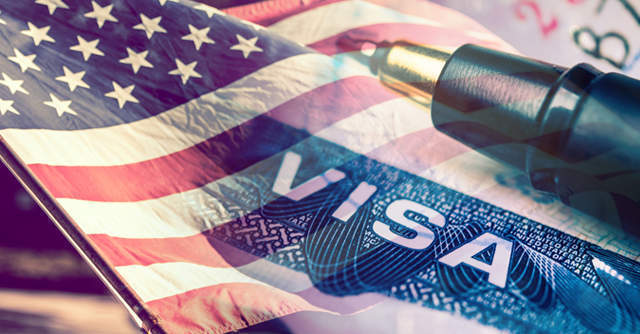
TRUMP RAISES H-1B VISA FEE TO $100,000, LAUNCHES $1M ‘GOLD CARD’ RESIDENCY PROGRAM
Read Time:1 Minute, 56 Second
By: Sefiu Ajape
US President Donald Trump on Friday signed a proclamation raising the application fee for H-1B visas to $100,000, a move expected to send shockwaves through the tech industry, where the permits are widely used.
The measure, which may face legal challenges, was announced alongside a new $1 million “gold card” residency program that Trump had previously teased.
“The main thing is, we’re going to have great people coming in, and they’re going to be paying,” Trump told reporters while signing the orders in the Oval Office.
H-1B visas allow American companies to bring in foreign workers with specialized skills — including scientists, engineers, and computer programmers — for an initial three-year period, extendable to six years.
The US currently allocates 85,000 such visas annually through a lottery system, with Indian nationals making up about three-quarters of the recipients.
Tech giants rely heavily on Indian professionals who either relocate to the United States or work back and forth between both countries.
However, critics — including Elon Musk, a former Trump ally — have cautioned against restricting H-1B visas, stressing that the US lacks enough local talent to fill critical jobs.
“All the big companies are on board,” Commerce Secretary Howard Lutnick said while joining Trump for the Oval Office signing.
Trump has long targeted the H-1B program, dating back to his first term, when he attempted to narrow the range of eligible jobs, though his efforts were stalled by court rulings.
The latest measure marks another step in the sweeping immigration crackdown of his second term.
According to the proclamation, the new $100,000 fee will take effect from Sunday, with the Homeland Security secretary empowered to exempt certain individuals, companies, or entire industries.
The order will expire after a year, unless Trump extends it.
Visa demand has surged in recent years. Under President Joe Biden, approvals peaked in 2022, while Trump’s first term saw a record number of rejections in 2018.
In 2024, about 400,000 H-1B visas were approved, with two-thirds being renewals.
In addition to the H-1B increase, Trump also introduced a new residency fast-track: individuals may obtain permanent status for $1 million, while corporate sponsors may pay $2 million.
“I think it’s going to be tremendously successful,” Trump said.


Happy
0 %

Sad
0 %

Excited
0 %

Sleepy
0 %

Angry
0 %

Surprise
0 %
 0
0
 0
0