
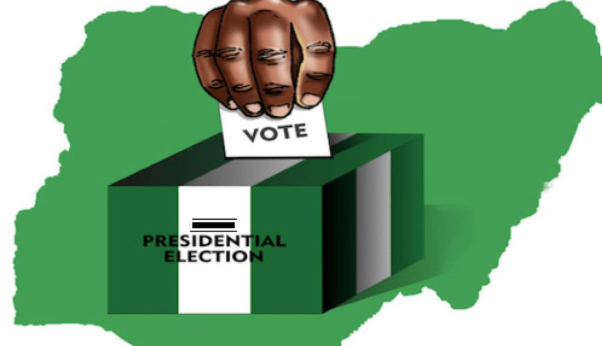
POLITICS 2027: GOVERNORS MOVE TO DISMANTLE GODFATHER STRUCTURES AMID CHARGED POLITICAL ATMOSPHERE
Read Time:6 Minute, 27 Second
BY: ELIZABETH ADEWALE
As preparations for the 2027 general elections gain momentum, Nigeria’s political scene is intensifying. Party defections, internal disputes within major parties such as the PDP, LP, NNPP, ADC, and others, as well as emerging rifts within the ruling APC, are now shaping the nation’s political landscape.
Amid these developments, one trend is attracting growing public attention: the gradual decline of political godfatherism.
Since 2023, a familiar but increasingly audacious pattern has emerged—governors who rose to power through the support, resources, and influence of powerful political patrons are now breaking away from those very godfathers.
Once-installed protégés are increasingly asserting their independence, often at significant political risk.
In Nigerian political terms, a godfather is an influential figure who places a candidate in office using power, money, organizational structures, or political influence, with voters frequently supporting the candidate out of loyalty or fear rather than policy alignment.
Although this system has historically shaped electoral outcomes, recent trends indicate that its hold on the political landscape is gradually weakening.
One of the most notable examples is unfolding in Kano State, where the relationship between Governor Abba Kabir Yusuf and his political mentor, former governor and NNPP leader Senator Rabiu Musa Kwankwaso, has sharply deteriorated.
The crisis stems from reports that Governor Yusuf is planning to defect from the NNPP to the APC. Kwankwaso is said to have openly opposed the move, insisting that Yusuf would not align with APC leader Abdullahi Ganduje with his approval.
Despite this opposition, political insiders indicate that plans to bring the governor into the APC are already well advanced, with January 12 reportedly set as the “deal” date.
Observers have expressed surprise at the speed and intensity of the fallout, particularly given Yusuf’s previous loyalty to Kwankwaso.
The rift has now spilled over onto social media, where supporters from both camps engage in daily exchanges.
The division has also cut across the political structure of the state, with commissioners, local government chairmen, lawmakers at state and federal levels openly choosing sides.
The crisis has already claimed a casualty within the NNPP. The party’s state chairman, Hashimu Dungurawa, believed to be loyal to Kwankwaso was removed and replaced with Abdullahi Abiya, a known ally of Governor Yusuf.
Speaking with the media on Tuesday, Kano State Commissioner for Information, Comrade Ibrahim Abdullahi Waiya, described a possible defection by Yusuf to the APC as “a blessing” for the state.
“Kano has lost a lot because we are not in the ruling party. Many federal projects that should come to the state are not coming because of party differences. If the governor moves, it will be for the good of Kano, and we only pray that Allah reconciles Governor Abba Yusuf and his political leader, Senator Rabiu Kwankwaso.” Waiya said.
For now, Governor Yusuf remains in the NNPP, but analysts believe it is only a matter of time before he makes a final decision.
Meanwhile, Kwankwaso’s camp is reportedly gearing up for a major political showdown ahead of the 2027 elections.
A similar power struggle has unfolded in Kaduna State between former governor Nasir El-Rufai and his successor, Governor Uba Sani.
Tensions became public in early 2024 when Uba Sani accused El-Rufai, his political benefactor, of leaving the state in severe financial distress, claiming that Kaduna was struggling even to pay workers’ salaries. El-Rufai strongly denied the allegations.
The crisis intensified when the Kaduna State House of Assembly accused El-Rufai’s administration of financial impropriety involving contract funds. Lawmakers directed anti-graft agencies to investigate the former governor’s ex-chief of staff and former commissioner for finance.
While El-Rufai has since joined the ADC, Sani remains in the APC, setting the stage for a critical test of leadership in the 2027 elections.
In Jigawa State, political observers have noted a widening rift between Governor Umar Namadi and his predecessor, former governor Badaru Abubakar. While the disagreement has largely remained behind the scenes, insiders say relations between the two camps are becoming increasingly strained.
Yusuf Ahmed, a political analyst from the state, told the media that the situation could result in a “clash of the titans as preparations for 2027 begin. All is not well between the governor and the former governor.”
The political crisis between former Rivers State Governor Nyesom Wike and his protégé-turned-rival, Governor Siminalayi Fubara, has escalated into a full-blown confrontation affecting the State House of Assembly and local government councils.
Although the situation appeared to ease after Governor Fubara temporarily stepped back and sought reconciliation—following his six-month suspension and the appointment of an acting administrator—underlying tensions have persisted.
In an effort to resolve the conflict, Governor Fubara defected to the ruling All Progressives Congress (APC). However, recent developments suggest the dispute is far from over, with political undercurrents signaling continued instability in the state.
During a recent state tour, Wike reaffirmed his position as the dominant leader in Rivers, with his actions hinting at the selection of another candidate for the 2027 elections. Meanwhile, members of the House of Assembly loyal to the FCT minister have reportedly initiated an impeachment process against the governor.
Clashes between political godfathers and their protégés are not new in Nigeria, with historical examples highlighting the recurring nature of such disputes.
In Kano, the ideological partnership between Malam Aminu Kano and Governor Abubakar Rimi collapsed in 1982. Rimi eventually left the PRP, joined another party, and contested against his former mentor, only to be defeated by a new PRP candidate backed by Aminu Kano.
In Oyo State, the late political heavyweight Lamidi Adedibu orchestrated the impeachment of Governor Rashidi Ladoja in 2006 following a fallout between the two.
Similar godfather-protégé crises have occurred in Sokoto State, notably between Attahiru Bafarawa and Aliyu Wamakko, as well as earlier between Yariman Bakura and Mahmud Shinkafi—rifts that continue to influence Sokoto politics today.
Professor Kamilu Sani Fage, a political scientist at Bayero University, Kano, told the media that godfatherism has no place in a genuine democracy.
“Democracy has nothing to do with godfathers,” he said.
“This practice thrives only in Nigeria. In most cases, godfathers support candidates not for public interest, but for personal gain. That is why these arrangements inevitably collapse.”
He added that the decline of godfatherism is a positive development for democracy. “Wherever godfatherism exists, conflict is unavoidable. Its erosion will allow governors to serve the people freely, without undue interference.”
Not all political actors share the view that godfatherism is in decline. Umar Kyari, spokesperson for the PDP in Jigawa State, maintains that godfatherism remains a central feature of Nigerian politics.
“In Nigeria, politics cannot function without a godfather—someone who mentors you and brings you into the system,” Kyari told the media.
He added, “The problem arises when relationships are not built on trust and sincerity. Godfathers should step back after elections and allow elected officials to govern independently.”
Similarly, Sheikh Ibrahim Khalil, ADC governorship candidate in Kano during the 2023 elections, argued that many politicians lack the capacity to succeed without strong backing.
“Some people cannot stand on their own. Their success depends on guidance and support,” he said, adding that betraying one’s godfather is morally wrong. On Kano politics, Khalil was direct: “Without Kwankwaso, Abba Yusuf would not have become governor. Anyone who voted for Abba did so because of Kwankwaso.”
As Nigeria moves closer to the 2027 elections, political analysts anticipate more clashes between godfathers and their protégés across party lines.
Whether this marks the end of godfatherism or simply a reshaping of traditional power structures remains uncertain. What is clear, however, is that loyalty is no longer guaranteed, and authority is increasingly being challenged.


Happy
0 %

Sad
0 %

Excited
0 %

Sleepy
0 %

Angry
0 %

Surprise
0 %
 0
0
 0
0