

HEINEKEN ANNOUNCES RESIGNATION OF CEO DOLF VAN DEN BRINK
Read Time:2 Minute, 18 Second
By: Balogun Ibrahim
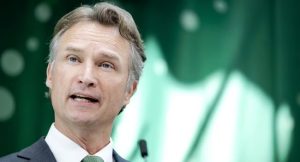
Heineken CEO Dolf van den Brink unexpectedly resigned on Monday after six years at the helm of the Dutch brewer, just months after unveiling a new strategy amid industry efforts to boost beer consumption.
According to a Media report, Van den Brink assumed leadership of the world’s second-largest beer maker in June 2020, during the COVID-19 pandemic, and has since navigated a turbulent period marked by soaring costs and declining sales, which have pressured margins and share prices.
In announcing his unexpected departure, the board said it will begin the search for a successor to lead Heineken, which produces Heineken lager along with brands such as Tiger and Amstel.
Van den Brink, who will officially step down on May 31, has agreed to serve as an advisor for eight months starting in June.
He and supervisory board chairman Peter Wennink stated that now is the right time for new leadership at Heineken. The company unveiled a new strategy through 2030 in October.
Heineken CEO Dolf van den Brink said in a statement that the company has “reached a stage where a transition in leadership will best serve its long-term ambitions,” adding that he remains fully committed to implementing the strategy until his departure.
The company’s shares were 2% lower at 0849 GMT.
Van den Brink is the latest in a series of consumer company CEOs to step down after challenging years for the sector, as rising living costs have put pressure on household finances.
Brewers have faced difficulties boosting beer sales, with recovery efforts repeatedly disrupted by factors such as adverse weather and political uncertainty. Heineken has fallen behind competitors in areas including cost efficiency and investor returns.
A line chart tracking beer companies’ 12-month forward price-to-earnings ratios over the past five years shows a sharp decline across the sector.
The incoming Heineken CEO will face the challenge of fulfilling the company’s 2030 strategic goals amid global political and economic uncertainty.
The sector’s outlook is further complicated by rising competition, the growing popularity of weight-loss drugs that could impact food and beverage sales, and changing drinking habits, particularly among younger consumers.
Under the 2030 strategy, the new CEO will be responsible for refocusing Heineken’s efforts on selected brands and markets while meeting targets for sales, profits, and cost efficiencies.
Van den Brink has guided Heineken through a range of challenges in key growth markets such as Nigeria and Vietnam, investor pushback over forward-looking guidance, major acquisitions in India and South Africa, and extensive restructuring initiatives.
The company has also faced unique hurdles, including a pricing dispute with European retailers in 2025 that led to some of its brands being temporarily pulled from store shelves.


Happy
0 %

Sad
0 %

Excited
0 %

Sleepy
0 %

Angry
0 %

Surprise
0 %
 0
0
 0
0