
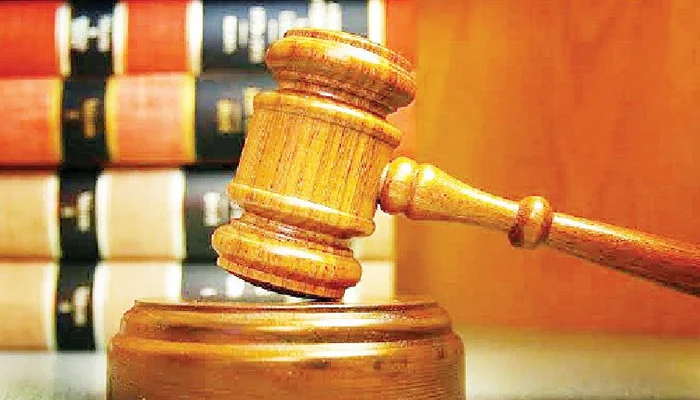
ADAMAWA COURT FINES ADC GOVERNORSHIP CANDIDATE ₦3M OVER ILLEGAL POSTERS
Read Time:1 Minute, 27 Second
By; Sunmola Ganiyat
An Adamawa State Magistrate Court has fined the governorship candidate of the African Democratic Congress, Suleiman Umar, ₦3 million for illegally pasting campaign posters on public infrastructure.
The development prompted Governor Ahmadu Fintiri to warn politicians against defacing public property with campaign materials, stressing that violators would face legal consequences.
Speaking at a press conference on Thursday, the governor’s Chief Press Secretary, Humwashi Wonosikou, said the enforcement of the law was neither new nor targeted at any political group.
According to him, the state government has become increasingly concerned about the indiscriminate placement of campaign posters on flyovers, bridges, public buildings, streetlights, road medians and other public facilities.
He noted that such infrastructure was built with public funds and should not be converted into advertising platforms for political campaigns.
Wonosikou described the court’s decision as a landmark judgment that reaffirmed the government’s commitment to protecting public assets and enforcing existing laws.
He emphasized that the action was not politically motivated but aimed at preserving public infrastructure and maintaining urban renewal efforts across the state.
The governor’s spokesman stated that every illegally pasted poster undermines investments made by the people of Adamawa and warned that the law would be applied equally to members of both ruling and opposition parties.
He stressed that political participation is a constitutional right, but vandalising public property is not.
The government encouraged political actors to utilise approved campaign platforms such as billboards, flex banners, designated advertising spaces, newspapers, radio, television, digital media and town hall meetings.
Meanwhile, observations in Yola indicated that campaign posters belonging to candidates of the All Progressives Congress were also visible on some flyovers and public structures, raising questions about the uniform enforcement of the regulation.


Happy
0 %

Sad
0 %

Excited
0 %

Sleepy
0 %

Angry
0 %

Surprise
0 %
 0
0
 0
0