
‘ATTACK DOGS’ PROVOKED NIGERIANS- ONAIYEKAN EXPLAINS WHY COMMENT WENT VIRAL
Read Time:2 Minute, 27 Second
HOTJIST NEWS
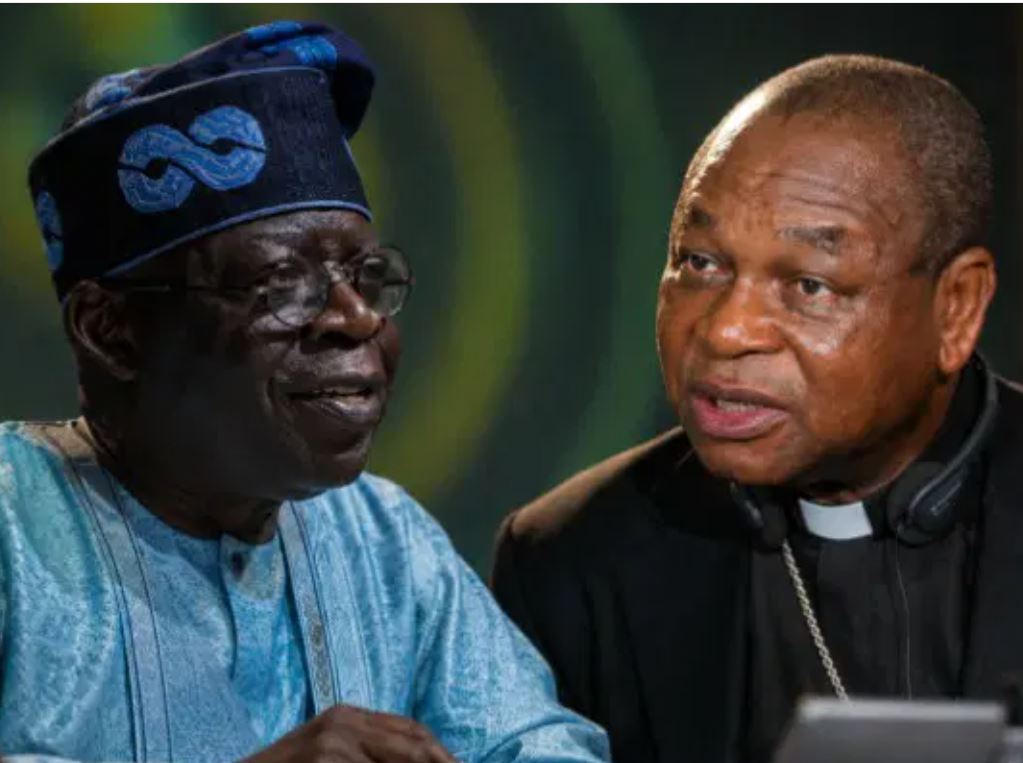
Cardinal John Onaiyekan said the public interest in his interview with Arise Television came from comments made by some people he called the government‘s “attack dogs.” He claimed their actions stirred up emotions among Nigerians and caused more discussion. Onaiyekan mentioned that the responses to his interview with Charles Aniagolu on Arise TV received more attention than his original statements.He explained that his remarks were based on worries that Catholic bishops had already shared during a visit to President Bola Tinubu.
The cardinal spoke in an interview on the Naija Unfiltered Podcast while explaining his earlier comments that the All Progressives Congress (APC) government was determined to win the 2027 elections by all means.
He said he had been invited to elaborate on the position taken by his fellow bishops during their meeting with Tinubu and that he fully endorsed the concerns they raised.
“Everything that happened at that interview was not coming from me. I was invited to expatiate on the position that my brother bishops took when we went to visit the president of the country,” he said.
Onaiyekan said the controversy surrounding the interview was not necessarily caused by his comments but by the response from people associated with the government.
“I think the main reason was because — I don’t know what pushed them — some of what they call the attack dogs of the government went out of their ways to make certain statements that were not helpful even for government,” he said.
He added that the comments provoked Nigerians and triggered further public discussion, while he chose not to respond again.
The cardinal also recalled telling Aniagolu that Tinubu was unhappy with the bishops’ message during their meeting, but said they had not expected the president to welcome their concerns.
According to him, the bishops did not visit the president to praise his administration or flatter him, but to communicate the concerns of Nigerians.
“We were not expecting Mr President to be happy with us. We knew he was not going to be happy with what we were saying, but we felt that we don’t have to be going there to make him happy when Nigerians, in the vast majority, are not happy,” he said.
Onaiyekan blamed the country’s leadership for failing to heed advice, arguing that the realities confronting Nigerians were widely reported in the media.
“There is no governor, unless we have a president who is deaf, dumb, and blind, who can tell us that he’s not hearing the truth about what is happening in Nigeria,” he said.
He questioned whether government policies could be considered successful if citizens continued to suffer, insisting that their impact should be measured by improvements in people’s daily lives, particularly those of the poorest.
“The proof of its validity must be seen in the life, daily life of the people, and especially of the poorest,” he added.


Happy
0 %

Sad
0 %

Excited
0 %

Sleepy
0 %

Angry
0 %

Surprise
0 %
 0
0
 0
0