
BAUCHI TARGETS 1.5 MILLION CHILDREN, 36,000 PREGNANT WOMEN IN HEALTH CAMPAIGN
Read Time:3 Minute, 51 Second
By David Dominion
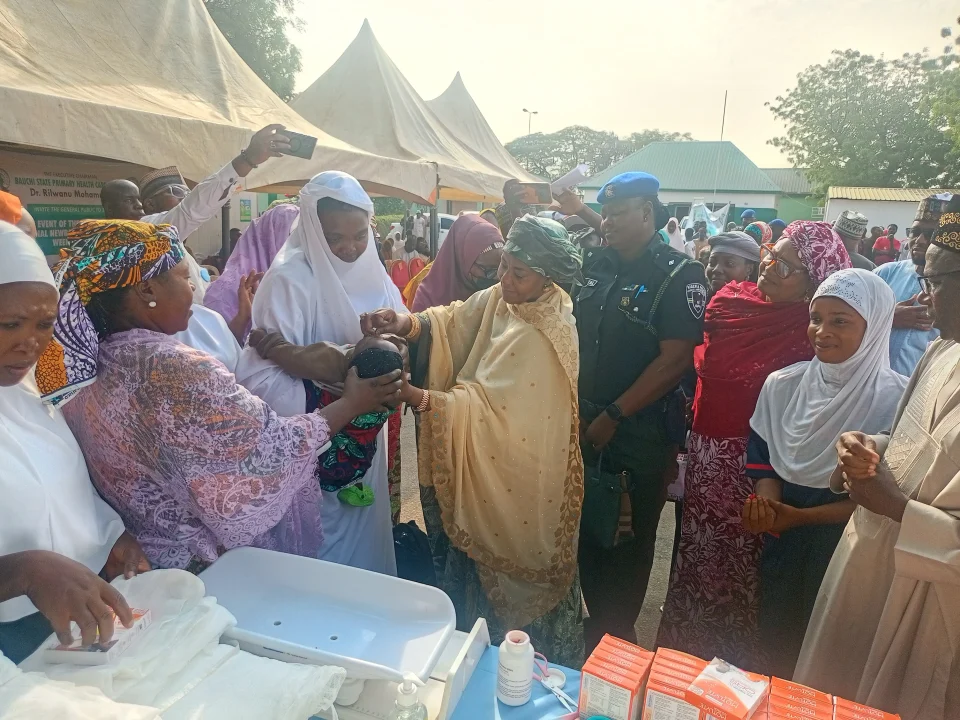
The Bauchi State Government has set a target of reaching 1,557,500 children aged between six and 59 months with vitamin A supplements during the second round of its 2026 Maternal, Newborn and Child Health Week campaign.
The exercise, flagged off on Monday by the State Primary Health Care Development Board, will also provide 36,000 bottles of multiple micronutrient supplements to pregnant women across the state.
Speaking at the flag-off ceremony, the Executive Chairman of the board, Dr Rilwanu Mohammed, disclosed that Bauchi recorded 99 per cent coverage in vitamin A supplementation during the first round of the 2026 campaign.
He described the performance as encouraging, attributing the achievement to the commitment of health workers, community mobilisers and development partners.
“During the first round of the 2026 MNCHW, our results were encouraging. The state attained 99 per cent coverage in vitamin A supplementation, demonstrating the commitment of our health workers, community mobilisers and partners.
“I commend everyone who contributed to this achievement and urge us to sustain this momentum,” he said.
Mohammed explained that the interventions were aimed at tackling micronutrient deficiencies, boosting children’s immunity, promoting healthy growth and improving maternal nutrition.
However, he expressed concern over some maternal and child health indicators in the state, revealing that antenatal care coverage by skilled providers stood at 61 per cent, while facility delivery and skilled birth attendance were recorded at 42.1 per cent and 40.9 per cent, respectively.
He also disclosed that Penta 3 immunisation coverage had dropped to 44.1 per cent, calling for intensified efforts to improve access to essential healthcare services for mothers and children.
The board chairman commended Helen Keller International, UNICEF, the World Health Organisation and other development partners for supporting the state’s healthcare programmes.
He further revealed that Bauchi recorded 68 per cent coverage during the recent Human Papillomavirus vaccination intensification exercise, placing second nationally behind Lagos State.
Mohammed urged healthcare workers, traditional and religious leaders, community mobilisers, civil society organisations and the media to strengthen public awareness and mobilisation to ensure that all eligible children and pregnant women benefited from the exercise.
In her remarks, the Bauchi State First Lady, Aisha Mohammed, said preventable illnesses and deaths among mothers and children remained major public health concerns that required sustained interventions.
She described the campaign as an opportunity to deliver essential healthcare services to women and children, particularly those living in underserved and hard-to-reach communities.
The First Lady encouraged mothers and caregivers to take advantage of the exercise by ensuring that eligible children received routine immunisation, vitamin A supplements, deworming medication and other nutritional interventions.
She also advised pregnant women to attend antenatal clinics regularly, deliver under the supervision of skilled birth attendants and seek medical attention whenever necessary.
“As the First Lady of Bauchi State, I remain committed to promoting women’s health, child protection, family welfare and the well-being of vulnerable members of our society.
“We must work together to ensure that no mother is left behind, no child is denied essential healthcare, and no community is excluded from these life-saving interventions,” she said.
She subsequently declared the second round of the 2026 Maternal, Newborn and Child Health Week campaign open.
In a goodwill message, the UNICEF Chief of Bauchi Field Office, Nuzhat Rafique, commended the state government for its commitment to improving maternal and child health through the timely implementation of the programme.
Rafique, who was represented by the Health Specialist, Dr David Audu, described the campaign as an effective platform for delivering integrated, life-saving interventions to vulnerable populations.
She disclosed that UNICEF had supplied more than 1.5 million doses of vitamin A supplements, alongside additional implementation support, to strengthen service delivery and improve coverage across the state.
According to her, children aged between six and 59 months would receive vitamin A supplements, deworming medication, nutritional screening and referral services, while pregnant women would benefit from multiple micronutrient supplements and other essential maternal healthcare interventions.
She explained that vitamin A was vital for children’s growth and immune system, warning that its deficiency could lead to preventable childhood blindness and increase the risk of severe infections and death from illnesses such as diarrhoea and measles.
Rafique added that evidence showed periodic high-dose vitamin A supplementation could reduce child mortality by between 12 and 24 per cent, describing it as a cost-effective intervention for improving child survival.
She urged parents, caregivers, community and religious leaders, as well as the media, to support the mobilisation campaign and ensure that every eligible child and pregnant woman accessed the available services.


Happy
0 %

Sad
0 %

Excited
0 %

Sleepy
0 %

Angry
0 %

Surprise
0 %
 0
 0