
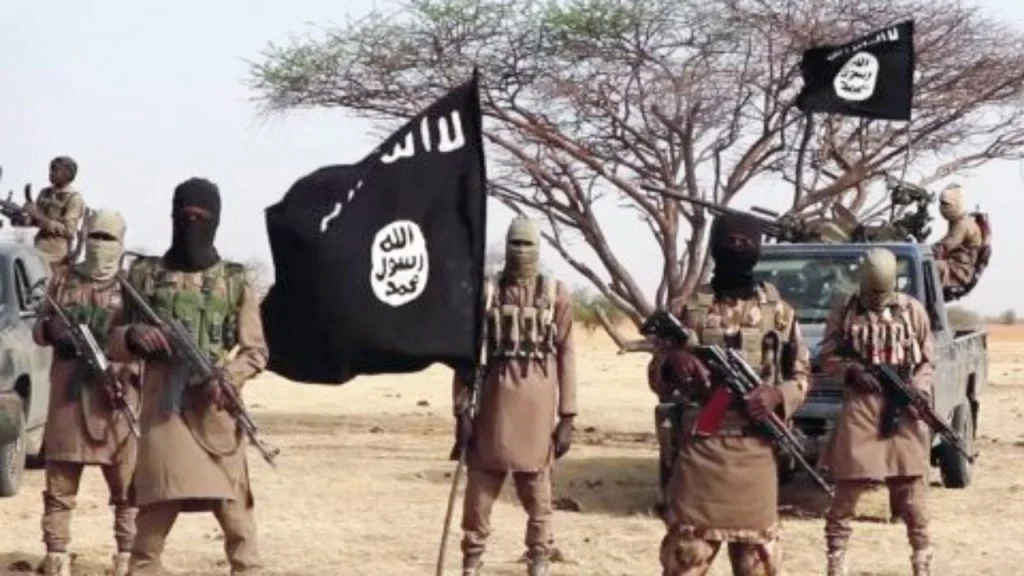
BOKO HARAM TURNS TO AI TO IMPROVE TERROR OPERATIONS — REPORT
Read Time:2 Minute, 41 Second
By : Balogun Ibrahim
Boko Haram fighters are increasingly using artificial intelligence tools to improve their operations, relying on AI-powered chatbots for guidance on weapons, explosives and battlefield tactics, according to a report published by The New York Times on Friday.
The report cited a study by Antonia Juelich, a terrorism and technology researcher at the University of Cambridge, which found that some members of Boko Haram turned to AI to overcome operational challenges during attacks in Nigeria.
The findings were based on interviews conducted over the past year with former Boko Haram members.
READ MORE…
MAN CITY COMPLETE SIGNING OF TEENAGE WINGER MONGA ON FIVE-YEAR DEAL
According to the study, one former commander said the group sought AI assistance after an attack on a military base was hindered by a defensive trench. The insurgents reportedly asked chatbots how to modify motorcycles to jump over the obstacle, providing details such as the type of motorcycles used and the required jumping distance.
Based on the AI-generated guidance, mechanics upgraded the motorcycles to improve their speed and acceleration, while fighters repeatedly practised the manoeuvre before launching another assault.
The study also revealed that the insurgents used AI chatbots to obtain information on constructing improvised explosive devices, repairing and upgrading weapons, and gathering operational intelligence.
One former commander from the Islamic State West Africa Province (ISWAP) said the group frequently relied on AI for detailed instructions, describing the technology as providing responses similar to those of a human expert.
According to the researcher, several former fighters said AI helped improve the accuracy of their operations, reducing the need for risky trial-and-error methods.
Another ex-member claimed the group used AI to identify chemical combinations that made their explosive devices more powerful.
The study further found that some fighters regarded AI as an increasingly valuable tool in their operations, with one commander reportedly saying the technology had become an important asset alongside their existing capabilities.
The New York Times noted that the findings suggest extremist groups are expanding their use of generative AI beyond propaganda and recruitment into operational planning and battlefield support.
Former insurgents told the researcher they experimented with several AI platforms, including ChatGPT, Claude, Gemini, Grok and DeepSeek.
The report also referenced recent studies warning that terrorist organisations are exploring AI for reconnaissance, coding, communications and intelligence gathering, despite safety restrictions built into many chatbot systems.
Reacting to the findings, OpenAI said using its technology for terrorism or violent activities violates its policies and that it continues to strengthen safeguards against misuse.
Google and Anthropic also stated that their AI models are designed to reject dangerous requests while continuously improving their safety protections.
However, the study found that experienced insurgents were sometimes able to bypass chatbot safeguards by disguising harmful requests as legitimate projects, such as claiming the information was intended for film production.
Researchers also said the group tested multiple AI platforms to compare responses and identify systems that disclosed more information.
While experts cautioned that AI is unlikely to revolutionise terrorism in the immediate future, they warned that the technology could enhance the capabilities of less-experienced operatives and accelerate the spread of technical knowledge among extremist groups.


Happy
0 %

Sad
0 %

Excited
0 %

Sleepy
0 %

Angry
0 %

Surprise
100 %
 1
1
 0
0