
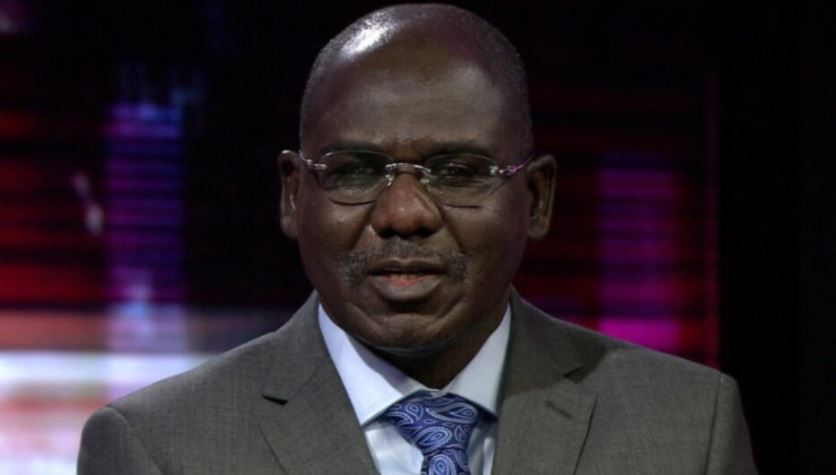
BURATAI URGES FG TO DECLARE STATE OF EMERGENCY ON POVERTY IN NORTHERN NIGERIA
Read Time:4 Minute, 39 Second

By ‘Balogun Ibrahim
Former Chief of Army Staff, Lt. Gen. Tukur Buratai (retd.), has urged the Federal Government to declare a state of emergency on poverty in Northern Nigeria as part of efforts to address terrorism and insecurity across the country.
Buratai maintained that military operations alone could not defeat terrorism without tackling poverty, unemployment, poor governance, illiteracy and other socio-economic challenges that expose vulnerable youths to extremist recruitment.
He made the call on Friday in Lagos during the public presentation of a book titled Beyond Military Force: A Strategy for Countering Terrorism in Nigeria, authored by Dr Joan Ugo Mbagwu, a Professor of Peace, Criminology and Security Studies at Chrisland University, Abeokuta, Ogun State.
The retired army chief, who attended the event as Guest of Honour, described the publication as a significant intellectual contribution to Nigeria’s counter-terrorism efforts, stressing the need for the country to adopt approaches beyond its traditional reliance on military force.
According to him, lasting peace cannot be achieved through military operations alone without good governance, economic opportunities, community participation and regional cooperation.
He said military force could provide security but could not replace effective governance or address the underlying conditions that fuel terrorism.
“Military force, however professional, is a shield, not a substitute for governance. It can create the conditions for peace, but it cannot by itself build peace.
“It can degrade a terrorist group; it cannot alone remove the grievances of poverty, ignorance and manipulation from which such groups recruit,” he said.
Buratai, who served as Chief of Army Staff between 2015 and 2021, noted that Nigeria’s security challenges, particularly in the North-East and North-West, required a combination of military and non-military interventions.
He identified intelligence gathering as a critical element of counter-insurgency operations, emphasising that security agencies must build trust with local communities to obtain reliable information.
“No amount of firepower can compensate for poor intelligence. The community is often the best source of intelligence, but only when the community trusts the security agencies,” he said.
The former army chief also warned that security operations that disregarded human rights could erode public confidence and provide terrorist groups with propaganda opportunities to attract new recruits.
He stressed that the manner in which security operations were conducted was as important as the operations themselves, adding that alienating communities could deprive security agencies of the cooperation needed to tackle insecurity.
Buratai disclosed that the Nigerian Army reviewed its rules of engagement during his tenure and introduced human rights desks and other accountability mechanisms to promote professionalism and adherence to established standards.
He further called for improved counter-terrorism capacity within the Nigeria Police Force, warning against the continuous deployment of the military to perform responsibilities meant for civilian security institutions.
“The military is not the police; it is not the social welfare agency; it is not the school system. When the military is deployed to perform tasks that belong to civil authorities, it becomes overstretched, and the roots of the conflict remain untouched,” he stated.
On the rehabilitation and reintegration of former terrorists, Buratai expressed support for credible deradicalisation programmes but cautioned that such initiatives must not compromise justice for victims of terrorism.
He said affected communities must be assured that justice had been served, adding that rehabilitation programmes should be transparent, properly monitored and structured to earn public confidence.
Drawing on his experience as commander of the Multinational Joint Task Force, headquartered in N’Djamena, Chad, Buratai advocated stronger regional security partnerships, noting that terrorist organisations, including Boko Haram and its affiliates, operated across national borders.
He called for increased cooperation among countries facing similar security challenges through the Economic Community of West African States, the African Union and nations within the Lake Chad Basin.
On his proposed state of emergency on poverty in Northern Nigeria, Buratai said the intervention should prioritise out-of-school children, the Almajiri system, youth unemployment, vocational training and social protection programmes.
However, he warned against the diversion of poverty reduction initiatives by politicians and other influential individuals for personal gains.
“Poverty is not an excuse for terrorism, but it is a fertile ground for recruitment and manipulation. We must treat it with the seriousness it deserves,” he said.
Highlighting the research findings contained in the book, Buratai disclosed that field surveys were conducted in Adamawa, Borno, Yobe, Kano, Kebbi, Kogi and Niger states, as well as the Federal Capital Territory, Abuja.
He revealed that 86 per cent of respondents believed negotiations could help address terrorism, while 92 per cent agreed that community members could play significant roles in intelligence gathering.
He added that 84 per cent of respondents linked terrorist recruitment to poor economic conditions and the Almajiri situation.
Buratai said the findings underscored the need for a comprehensive approach to combating terrorism, stressing that public confidence and legitimacy were essential to achieving lasting peace.
Earlier, the author, Mbagwu, said the book was written to challenge conventional counter-terrorism strategies that placed excessive emphasis on military operations.
She argued that addressing the conditions that enable terrorism to thrive was equally important in tackling extremist ideologies and recruitment.
The book was formally unveiled by retired Major General R.O. Yusuf.
Also speaking, the Chairman of the occasion, Olubunmi Ajala, commended Buratai for his contributions to security-related issues, describing the publication as a timely intervention amid Nigeria’s security challenges.
The event also featured the presentation of an award of appreciation to Buratai in recognition of his contributions to the fight against terrorism during his tenure as Chief of Army Staff.


Happy
0 %

Sad
0 %

Excited
0 %

Sleepy
0 %

Angry
0 %

Surprise
0 %
 0
 0