
CATHOLIC BISHOPS URGE FG TO TACKLE INSECURITY, ECONOMIC HARDSHIP
Read Time:3 Minute, 57 Second
By ‘Balogun Ibrahim
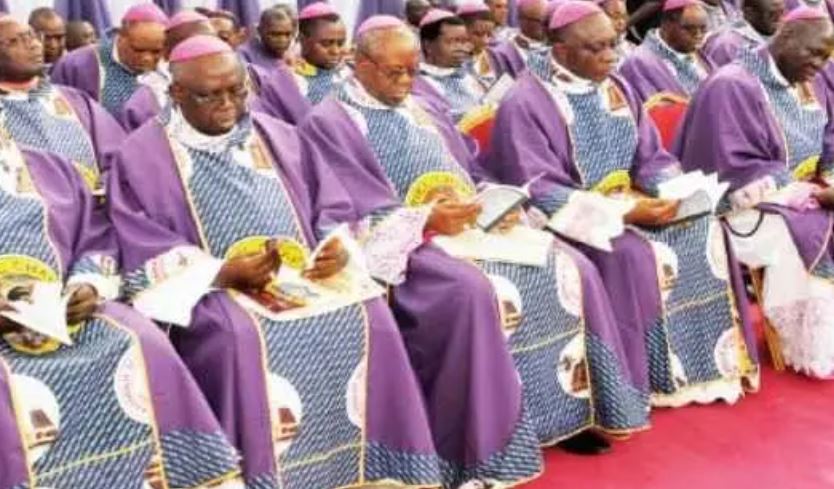
The Catholic Bishops Conference of Nigeria (CBCN) has called for an end to insecurity, poverty and what it described as poor governance, warning that violence, inadequate infrastructure and economic hardship continue to undermine the wellbeing of Nigerians.
The bishops also outlined measures ahead of the 2027 general elections and declared December 8, 2026, as a special national day of prayer and fasting for peaceful and successful elections.
The bishops made their position known in a communiqué issued at the end of their Second Plenary Meeting, held from September 10 to 18, 2026, at Our Lady and St Kizito Pastoral Centre, Oke-Gada, Ede, Osun State.
The communiqué was signed by the CBCN President, Archbishop Matthew Man-Oso Ndagoso of Kaduna, and the Conference Secretary, Bishop Peter Olukayode Odetoyinbo of Abeokuta Diocese.
READ MORE…
NAFDAC CONFIRMS METHANOL, CANNABIS IN CONCOCTIONS LINKED TO 48 ONDO DEATHS
The bishops expressed concern over the persistent cases of violence, kidnapping, banditry, illegal mining and theft of the country’s natural resources, saying the situation posed a threat to peace and national unity.
They also condemned attacks on schools and places of worship, as well as the abduction and killing of students and worshippers.
According to the bishops, the displacement of communities has forced millions of Nigerians into Internally Displaced Persons (IDP) camps across the country.
They urged the Federal Government to intensify efforts to secure the country and create conditions that would allow displaced persons to return safely to their ancestral communities.
The CBCN also called for stronger security agencies, improved intelligence gathering and the prosecution of individuals responsible for criminal activities.
The bishops urged citizens to report suspicious activities, cooperate with security agencies and reject ethnic and religious divisions.
They renewed their call for the decentralisation of the police system, arguing that policing should serve the common good rather than personal, ethnic, political or religious interests.
On the economy, the bishops called for increased job creation, a business-friendly environment and policies aimed at reducing the financial burden on vulnerable Nigerians.
They also urged the government to ensure transparent investment in critical infrastructure, including roads, electricity, water supply and railway transportation.
On the 2027 general elections, the bishops called on all stakeholders to work towards ensuring free, fair and credible polls.
They encouraged eligible voters to participate in the elections and vote for candidates they considered qualified and whose values aligned with their consciences.
The bishops directed dioceses and parishes across the country to conduct civic education and mobilisation programmes, alongside end-of-month fasting and prayer with Rosary processions from October to December 2026.
They subsequently declared December 8, 2026, as a special national day of prayer and fasting for the success of the elections.
The bishops also urged citizens to study the pastoral letter issued by the Conference on the forthcoming elections and follow its provisions and guidelines.
The CBCN also expressed opposition to the Foreign Aids (Regulation, Transparency and Disclosure) Bill, 2026, which it said had passed first and second readings in the National Assembly.
The bishops argued that provisions requiring the registration of foreign aid resources and government oversight of their utilisation could adversely affect churches, mosques, schools and humanitarian organisations supporting vulnerable and conflict-affected communities.
They particularly criticised a provision allowing authorities to deny registration or refuse renewal where an organisation’s activities are considered “not in the national interest.”
According to the bishops, the provision could give government officials broad discretionary powers and create additional bureaucracy and government control over independent civic organisations.
They noted that non-profit organisations and incorporated trustees, including religious and humanitarian bodies, were already regulated by the Corporate Affairs Commission under the Companies and Allied Matters Act and other applicable laws.
The bishops therefore urged the National Assembly and the Federal Government to halt the process of enacting the bill, citing the need to protect freedom of association, religion, thought and conscience.
On technology and artificial intelligence, the bishops said technology was not inherently evil but was also not neutral in its application.
They urged Nigerians to use technology responsibly and deploy it to support evangelisation, knowledge creation and national development.
The bishops specifically called on politicians and other technology users to adhere to ethical standards in the deployment of artificial intelligence, particularly ahead of the 2027 elections.
They also congratulated the Vice President of the Conference, Archbishop Alfred Adewale Martins of the Lagos Archdiocese, on his appointment to the Dicastery for Evangelisation, Section for First Evangelisation and New Particular Churches.
The bishops reiterated their call for what they described as renewed politics anchored on moral principles, respect for human life and dignity, and the pursuit of the common good, adding that “all hope is not lost.”


Happy
0 %

Sad
0 %

Excited
0 %

Sleepy
0 %

Angry
0 %

Surprise
0 %
 0
0
 0
0