
FAKE NEWS, AI MISUSE POSE GROWING THREAT TO NIGERIA’S SECURITY – ADEJOBI
Read Time:2 Minute, 54 Second
Agency Report
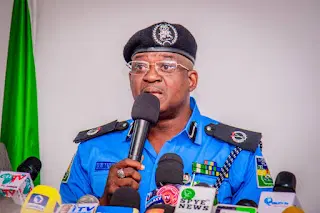
Former Nigeria Police Force Public Relations Officer (FPRO), Adejobi, has warned that the misuse of social media and Artificial Intelligence (AI) to circulate fake news poses a serious threat to national security.
He gave the warning in a statement titled “The Palongo Dance of Social Media Palava”, issued on Saturday in Lagos, where he urged Nigerians to communicate responsibly and remain vigilant when using digital platforms.
Adejobi, who is currently the Deputy Commissioner of Police in charge of Operations at the Delta State Police Command, described the abuse of social media as an increasing threat to public order, national unity and security.
“Fabricated content can provoke hostility, incite violence, create panic and undermine public confidence in institutions,” he said.
The former police spokesperson also expressed concern over the growing use of AI to produce fake images, videos, audio recordings and narratives capable of deceiving the public.
According to him, the technology can be used to make people appear to have said or done things they never did, with potentially serious consequences for public safety and national security.
Adejobi further attributed the spread of misinformation to the monetisation of social media, which he said had encouraged some content creators to prioritise views, engagement and financial gains over accuracy and responsibility.
He noted that some influencers resorted to sensational headlines, unverified allegations and provocative publications without considering the potential consequences for individuals, institutions and the country.
“Freedom of expression must be exercised responsibly and should not be used to fabricate information, destroy reputations, incite violence or deliberately mislead the public,” he said.
He urged Nigerians to verify information before believing, sharing or reposting it, describing fact-checking as a civic responsibility in the digital age.
The former FPRO commended the Inspector-General of Police, Mr Olatunji Disu, for recently warning the public to remain alert to fake news and irresponsible information dissemination.
He also acknowledged the contributions of former Minister of Information and National Orientation, Mr Lai Mohammed, and the incumbent minister, Mr Mohammed Idris, in drawing attention to the dangers of misinformation and disinformation.
Adejobi called for sustained public enlightenment, strategic communication, institutional cooperation and appropriate regulatory measures to tackle the problem.
However, he emphasised the need to balance regulation with the protection of constitutionally guaranteed freedoms, stressing that legitimate criticism and dissent should not be confused with deliberate fabrication, impersonation and incitement.
He advocated a collective approach involving government institutions, security agencies, media organisations, technology companies, professional bodies, traditional and religious leaders, civil society groups and members of the public.
Adejobi, who disclosed that he had personally experienced the effects of misinformation and social media manipulation, said false narratives could cause emotional and reputational harm that might take years to repair.
He warned that fabricated stories could be produced within seconds, while the damage they caused could linger for years.
He therefore urged Nigerians to promote digital literacy, ethical journalism, responsible content creation, fact-checking and constructive public engagement.
According to him, social media should be used to promote enlightenment, innovation, accountability, economic growth and national development rather than hatred, hostility and destruction.
Adejobi also appealed to Nigerians not to “dance Palongo”, a Yoruba expression he said his grandmother used to describe an irregular and disorderly dance. He urged citizens to shun digital recklessness and embrace truth, responsibility, civility and patriotism.
“Protect the country’s collective destiny from misinformation and manipulation. Nigeria is bigger than our individual interests, political affiliations, personal grievances and social media engagements,” he said. (NAN)


Happy
0 %

Sad
0 %

Excited
0 %

Sleepy
0 %

Angry
0 %

Surprise
0 %
 0
 0