
FG PARTNERS CHINA’S YUTONG TO ASSEMBLE 1,000 CNG BUSES IN NIGERIA
Read Time:3 Minute, 55 Second
By ‘Balogun Ibrahim
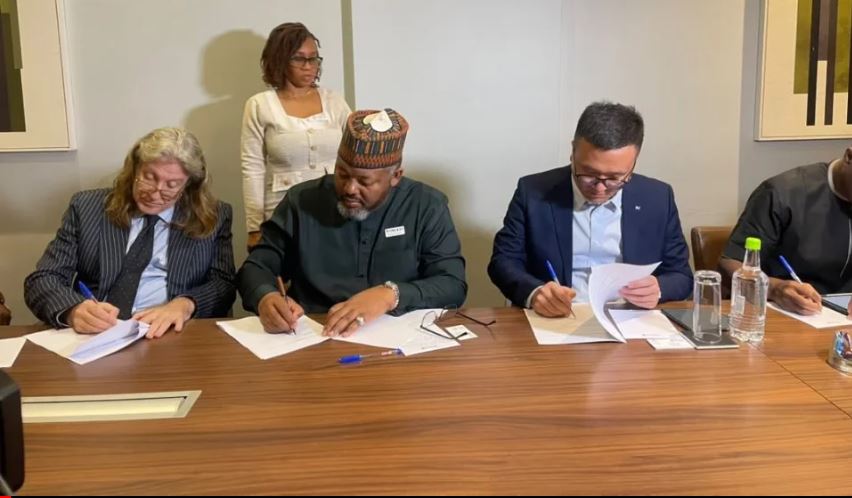
The Federal Government has entered into a partnership with China’s Yutong Bus Company and its Nigerian partner, YP Automobile, to introduce compressed natural gas-powered buses and establish a local assembly plant in a move aimed at reducing transportation costs.
The agreement was signed in Lagos on Thursday through the Presidential Initiative on Compressed Natural Gas and Electric Vehicles (Pi-CNG & EV). It provides for the assembly of CNG-powered buses in Nigeria, with Leyland Nigeria, based in Ibadan, Oyo State, expected to host the proposed facility.
The project is expected to generate employment in vehicle assembly, maintenance and the supply chain, while equipping Nigerian workers with technical skills and exposure to modern commercial vehicle manufacturing technology.
Unlike previous arrangements that largely involved importing fully assembled buses, the partnership is designed to build local capacity for vehicle assembly. However, details of the investment value, construction timeline and commencement of production were not disclosed at the signing ceremony.
Speaking at the event, the Executive Chairman of Pi-CNG & EV, Ismaeel Ahmed, said the agreement would combine the introduction of CNG buses with local industrial development.
He said the partnership would not only increase the number of buses available in the country but also establish an assembly plant to create jobs and facilitate technology transfer.
Ahmed said the arrangement involved YP Automobile, which he noted had operated in Nigeria’s mass commercial transport sector for at least 15 years, and Yutong, one of China’s leading bus manufacturers.
He also highlighted Nigeria’s estimated 210 trillion cubic feet of proven natural gas reserves, saying the country could leverage the resource to reduce its dependence on petrol in the transportation sector.
Nigeria has increasingly promoted compressed natural gas as an alternative fuel following the removal of petrol subsidies in 2023, which pushed up transportation costs for households and businesses.
The government has since pursued the deployment of CNG-powered vehicles to reduce operating expenses for transport operators and ease the financial burden on commuters.
Under the National Affordable CNG Transit Programme, the Federal Government is also working to expand access to affordable public transportation through the use of natural gas and electric vehicles.
Ahmed said the latest partnership would advance these objectives while creating opportunities for domestic manufacturing.
The Chief Operating Officer of YP Automobile, Panagiotis Marris, described the agreement as a partnership between Nigerian investors and Yutong, which he identified as the world’s largest bus producer.
He said the project could help revive Nigeria’s automotive manufacturing industry and rebuild technical expertise that had declined over the years.
Marris described the initiative as a milestone in efforts to restore local vehicle manufacturing capacity and develop skills that had been lost over the past two decades.
He added that high transportation costs remained a major obstacle to economic development, noting that CNG-powered buses could also reduce the environmental impact of public transportation.
Similarly, Yutong Bus Company’s Account Manager, Damian Li, said the company had supplied more than 1,400 buses to Nigeria and understood the country’s transport market and operational needs.
Li said the company planned to work with its Nigerian partners to assemble 1,000 CNG buses locally, a move expected to gradually expand domestic production capacity and support the development of a sustainable bus industry.
The Chairman of Leyland Nigeria, Yemi Idowu, said his company would host the proposed assembly investment, adding that the project would create jobs beyond the factory.
He explained that the operation would require mechanics, workshop assistants, sub-assembly partners and other supply chain operators to support the production and maintenance of the buses.
According to Idowu, each bus could remain operational for more than 15 years, creating long-term demand for servicing, repairs and technical support.
He also highlighted the expected transfer of modern technology in bus manufacturing and maintenance.
Idowu added that Yutong would oversee the plant’s operations under an original equipment manufacturer arrangement involving Nigerian partners, with its personnel also participating in the process.
In addition to the buses and assembly facility, the agreement includes a digital payment component designed to ensure that commuters benefit from any reduction in transportation costs.
The Chief Executive Officer of Touch and Pay Technologies Limited, Olamide Afolabi, said his company would provide electronic payment infrastructure, revenue assurance and accountability systems for the programme.
He explained that the technology would enable transport authorities to monitor fares, track payments and determine whether savings from the use of cheaper CNG fuel were being passed on to passengers.
Afolabi said the payment system would strengthen regulatory oversight of transport fares and ensure that the public benefits from the government’s investment in alternative-energy transportation.


Happy
0 %

Sad
0 %

Excited
0 %

Sleepy
0 %

Angry
0 %

Surprise
0 %
 0
 0