
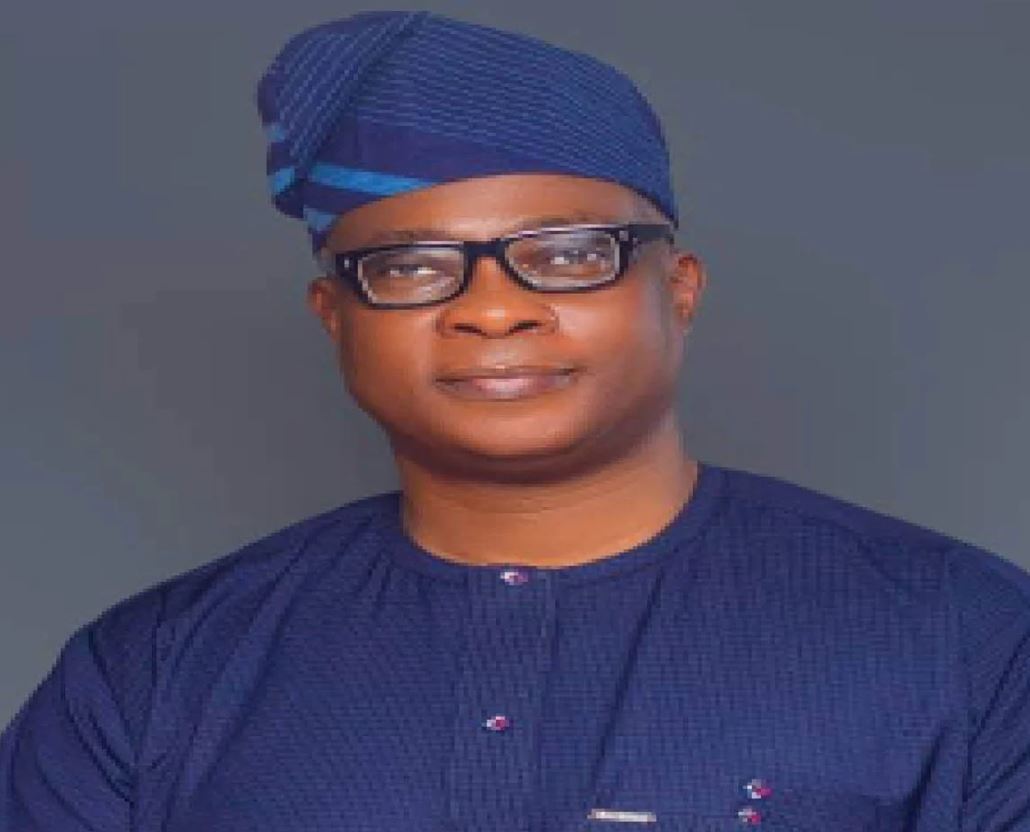
I WILL NOT STEP DOWN FOR ANY OTHER CANDIDATE- OYO GUBER CANDIDATE AKIM YUSUF
Read Time:17 Minute, 21 Second
The governorship candidate of the Nigeria Democratic Congress (NDC) in Oyo State, Hakeem Adebola Yusuf, speaks with Soji Ajibola on his political journey, plans for agriculture, security, education, healthcare, youth employment and transportation, as well as his opposition to political thuggery and his position on power rotation.
Why did you venture into politics after such a long career in banking?
Venturing into politics was a difficult decision because I never imagined that I would eventually become a politician. However, politics seemed to follow me throughout my career.
I studied Political Science because, although I wanted to study Law, I was admitted to study Political Science despite meeting the cut-off mark for Law. Admission quotas were a major consideration at the time.
However, my political science background continued to influence my career. I was often assigned government-related accounts and projects because my employers believed I could relate effectively with public institutions. I worked with state agricultural development projects, teaching hospitals and other government agencies.
A major turning point came in 1999 when I joined a bank where I met Rashidi Ladoja, who was then a director. That relationship eventually brought me into his political activities between 2000 and 2003.
I became involved in his political strategy and led his advisory team, known as the Fortune Group. When he became governor, he initially wanted me to serve as Special Adviser on Special Duties, but I was not particularly interested in political appointments. I eventually accepted the position of Special Adviser on Due Process.
After that administration, I thought I had finished with politics and stayed away from it for several years.
In 2018, leaders of the ADP approached me to become their governorship candidate. I was initially reluctant and even tried to transfer the opportunity to the late former governor, Adebayo Alao-Akala, because I knew he was interested in the ticket.
However, people continued to encourage me, citing my record in government and my professional experience. Eventually, I concluded that I could not continue telling other people how to govern without making an effort to do it myself. That was how I returned to politics.
Why did you leave the ADP for the NDC instead of joining the APC or PDP?
When I decided to contest the 2023 governorship election, I received an offer to run on the platform of the Accord. However, because the ADP had originally invited me into politics, I felt it was only honourable to remain with the party.
Unfortunately, I encountered inconsistencies within the party. Some members appeared more interested in other things than winning the election, and I felt I faced considerable opposition from within the party.
After the election, I remained for about a year before resigning my membership in 2024. I did not immediately join another party.
I considered joining the APC, but I encountered resistance. Some members questioned why I wanted to join after previously contesting a governorship election and expected me to promise that I would not seek the office again. I could not make such a promise because nobody knows what the future holds.
I also considered the PDP. Although some members wanted me to join, others opposed the idea because they believed I might seek the governorship ticket.
In January 2026, I initially joined the African Democratic Congress, but I encountered contradictions that I could not reconcile. When the NDC emerged as an option, I decided to give it a try. That was how I joined the party.
The NDC is relatively unfamiliar to many people in the South-West. How established is the party in Oyo State?
We have a secretariat in Ibadan, around the Adamasingba area, near the Lekan Salami Stadium.
The NDC is a product of circumstances. It is unusual for a political party to be registered in an election year, but the party was registered in February 2026. Its activities in Oyo State began gaining momentum around April, close to the period for party primaries.
Since then, we have been working to establish our structures and identify candidates in different locations. That is why some people may perceive us as quiet, but we have been working behind the scenes.
Building a political structure across all 33 local government areas requires substantial resources. Because we are not in government at any level, we have to manage our limited resources carefully.
Would you withdraw from the governorship race if prominent political figures persuaded you to support another candidate?
No, I would not.
Even in 2023, when I was in a party that was not as strong as the NDC, I resisted intense pressure to withdraw from the race and support another candidate. That pressure included what I considered elements of federal influence.
I refused then, and I will not surrender my ambition now simply because I belong to a party that may be considered stronger.
This is not about money. It is about building a better future for our children.
How would you assess the present situation in Oyo State, and what do you believe needs to change?
We must begin by examining the fundamental conditions necessary for human development: security, food, shelter, healthcare and education.
To a reasonable extent, I believe the government has made progress in security. However, we still have considerable work to do in agriculture, housing, healthcare and education.
Agriculture is a major contributor to Nigeria’s economy, but Oyo State is not fully exploiting its agricultural potential. We have vast tracts of land across Ibarapa, Oke-Ogun, Oluyole, Ona-Ara, Lagelu, Ido and other parts of the state that remain underdeveloped or uncultivated.
Our smallholder farmers are not earning as much as they should. We must invest in mechanisation, irrigation and storage facilities to improve productivity and ensure a more consistent supply of agricultural produce.
Tractorisation alone is not enough. We need a comprehensive agricultural system that enables farmers to produce throughout the year and reduces the sharp fluctuations in prices that occur when particular crops become scarce or are harvested in excess.
Agriculture must also move beyond supplying food for consumption to supporting industrialisation and agro-allied processing. When we produce enough agricultural raw materials to support industries, we can establish processing plants, create jobs and reduce unemployment.
Youth unemployment is a serious concern. When young people lack opportunities, some become vulnerable to drug abuse, alcoholism and other social problems. We must create an economic environment that gives them productive work and a sense of purpose.
Education is another major concern. Oyo State has a proud history of educational advancement, and we should aspire to standards that reflect that heritage.
Free and compulsory basic education is a constitutional right; it should not be treated merely as an election promise. Beyond access, we must improve the quality of education children receive.
Our curriculum should develop responsible citizens, not simply teach children to read and write. We should strengthen civic education, personal hygiene, respect for national symbols and other lessons that help children become responsible members of society.
We must also address dilapidated school buildings. In some public schools, pupils learn in classrooms with damaged roofs and inadequate facilities. Such conditions affect concentration and make teaching more difficult.
Teacher welfare is equally important. We must make the teaching profession attractive through fair remuneration, regular training, adequate teaching materials and opportunities for professional development.
In healthcare, the government has made efforts to increase the number of primary healthcare centres, but access must improve further. Ideally, residents should be able to reach a primary healthcare facility within a 10- to 15-minute walk.
We must ensure that these facilities have adequate staff, essential medicines, emergency services and reliable ambulance arrangements. A healthcare centre is not effective simply because a building exists; it must have the personnel and resources to provide care.
The same principle applies to agriculture and education. We need functioning systems, not merely institutions.
My proposal is to make every local government a production centre for a particular economic activity under an integrated economic expansion programme. Every local government has potential, whether in agriculture, aquaculture, solid minerals, education, manufacturing or commerce.
When every local government produces something of economic value, we can create jobs, encourage investment, reduce rural-to-urban migration and expand the state’s internally generated revenue.
You acknowledged some progress in security. How would you improve security in the state?
I did not say the government had performed exceptionally well in security. I said the situation was not as bad as it used to be in certain respects, particularly when compared with the period when armed robberies, bank robberies and highway robberies were more widespread.
However, we still have serious security challenges, and unemployment is one of the issues we must address.
Government has a responsibility to create an environment in which people can find productive work. We must reduce the pool of people who may be driven into crime by economic desperation.
There will always be habitual criminals, but our objective should be to reduce opportunistic and necessity-driven crime rather than rely exclusively on arrests and imprisonment.
We must also strengthen crime detection. In the past, the Criminal Investigation Department and other intelligence units had officers who moved around communities, gathered information and detected criminal activity before it escalated. We need to strengthen intelligence-led policing and neighbourhood-level crime prevention.
I also believe the government should have considered advanced surveillance drones instead of purchasing surveillance aircraft. Depending on their specifications and operational requirements, drones can offer flexibility, lower operating costs and the ability to conduct prolonged surveillance.
Security is expensive and requires collaboration among the federal, state and local governments. Nigeria remains under-policed, and many officers are deployed to VIP protection, banks, diplomatic missions, administrative duties and other assignments rather than general policing.
State police could help improve coverage, but the arrangement must include safeguards against political abuse.
I support legislation that would prevent governors from exercising unchecked control over state police. There should be an independent regulatory mechanism through which complaints against governors, police commissioners or other senior officials can be investigated and appropriate sanctions imposed.
When policing powers are placed in the wrong hands without adequate oversight, they can be abused.
With estate developers taking over agricultural land around Ibadan and other parts of the state, where will the land for farming come from?
There is still land available for agriculture, although the rapid conversion of agricultural land to residential estates along routes such as Ibadan–Eruwa is troubling.
Countries with more advanced economies often maximise land use by building upwards and reserving more land for productive activities. In Nigeria, many people want to own individual houses and estates, sometimes at the expense of agricultural production.
One reason developers can acquire and convert these lands is that many parcels are not being used productively. If landowners could earn sustainable incomes from farming, they might be less inclined to sell their land for residential development.
I recall participating in an assessment of agricultural opportunities in the South-West, during which we identified approximately 54,000 hectares of undeveloped agricultural land belonging to the Odu’a Group. That illustrates the potential available for agricultural investment, although the present status and availability of such land would need to be verified.
Beyond the Ibadan metropolitan area, there are opportunities in Ibarapa, Oke-Ogun, parts of Ogbomoso and other rural communities. Even within local government areas around Ibadan, substantial land remains farther away from major roads.
The problem is that land use is not being adequately coordinated. We need stronger collaboration among the ministries responsible for land and housing, agriculture, commerce and industry to determine how land should be used in the state’s long-term economic interest.
I would consider a temporary freeze on approvals for new estates while the government assesses the impact of continued development on agricultural land. Any such measure would need a clear legal basis, a defined scope and a plan for reviewing existing land-use arrangements.
Oyo State must be able to feed its population and supply raw materials to industries. We should not assume that food will always be available from other parts of Nigeria under every possible circumstance.
Our agricultural system should produce enough to meet local demand, support processing industries and create opportunities for exports.
We still import some agricultural commodities and industrial raw materials that could be produced locally if we invested in the right varieties, quality standards, processing facilities and supply chains.
Expanding agricultural production would also create opportunities for power generation. Industries need reliable electricity, and investors are more likely to develop power infrastructure when there is sufficient demand from operating factories and other businesses.
Agriculture, agro-allied industries, electricity generation and employment can reinforce one another if we plan them properly.
What is your plan for small and medium-scale businesses, and how would you address transportation challenges across the state?
Many people mistakenly assume that government should be the primary employer of the population. Although government is a major employer, small and medium-scale enterprises employ large numbers of people across different sectors.
Consider tailors, mechanics, fashion designers, artisans, service providers and small manufacturers. One business may employ three people, another five and another ten. Collectively, these businesses support livelihoods across the state.
Government should create an economic environment in which these enterprises can grow, attract customers and employ more people.
For instance, if a tailor’s customer base increases from ten to 20 people each month, the tailor may need to employ additional apprentices. The same principle applies to other small businesses.
We must encourage these enterprises, support productive activities and create conditions that enable them to expand.
On transportation, I believe Oyo State needs to modernise its system without creating additional unemployment or security problems.
We cannot simply ban commercial motorcycles overnight because many people depend on them for their livelihoods. Instead, we should introduce regulations that define where motorcycles, tricycles, minibuses and larger buses can operate safely.
We must also expand mass transit and improve how existing transport infrastructure is used.
For example, the government could explore a partnership with the Nigerian Railway Corporation to assess whether disused or underutilised railway infrastructure could support local passenger services. Such a service could connect selected communities with major commercial and administrative centres in Ibadan, subject to technical, safety and financial assessments.
An integrated system combining regulated motorcycles, minibuses, mass transit and rail services could reduce pressure on major roads and improve movement across the city.
We should also examine how commuters from areas such as Moniya and other parts of Ibadan could connect efficiently to major destinations, including Bodija and the state secretariat.
The objective is to give residents reliable alternatives to the existing transport system while easing congestion and improving safety.
Your deputy governorship candidate is a woman from outside Ibadan. How will you convince people in other parts of Oyo State that your administration will represent their interests?
I understand the concerns of people from other parts of Oyo State about the fact that governors have repeatedly emerged from Ibadan.
Ibadan has a population advantage, and that has influenced the state’s political leadership. However, there is no monopoly of ability in any part of Oyo State.
I believe in fairness, equity and justice. Leadership should not be treated as the permanent entitlement of any town or geographical area.
At the national level, there have been understandings about power rotation between the North and South, although these arrangements are not constitutional requirements. I believe Nigeria should consider constitutional provisions for rotating certain political offices across geographical zones.
Governorship should rotate among senatorial districts, while local government chairmanships could rotate among wards under an agreed arrangement. Similar principles could be considered for the presidency across geopolitical zones.
Nigeria does not belong to any particular ethnic group, and Oyo State does not belong to any particular town.
My message to the people of Oke-Ogun, Ibarapa and other parts of the state is that I believe in fairness and inclusive development. Every part of Oyo State must benefit from governance.
That is why I advocate an integrated economic expansion programme in which every local government develops its productive strengths.
Some areas have advantages in agriculture, others in aquaculture or solid minerals, while Ibadan has significant opportunities in education, manufacturing, commerce and industry.
Every local government should generate economic activity, create employment and develop its own economic base.
When development is more balanced and governance is fair, people will increasingly judge political leadership by performance rather than the geographical origin of the governor.
How would you address political thuggery, especially the use of young people by politicians during elections?
I have consistently opposed political thuggery. In 2023, I appeared on a popular radio programme and was asked what I would change about Nigeria’s political environment. I said political thuggery.
Young people who are recruited as political thugs must ask themselves why those who pay them to engage in violence are often able to protect their own children while exposing other people’s children to danger.
Many politicians ensure that their families live in secure environments, sometimes outside the country, while young people from less privileged backgrounds are encouraged to carry weapons and fight their political battles.
Politicians must also examine their consciences. We cannot claim to love the people while encouraging their children to risk their lives so that we can gain political office.
I believe the law should impose serious consequences on politicians who are proven to recruit or sponsor political thugs. We should explore appropriate amendments to electoral legislation to ensure that those responsible for political violence can be disqualified in accordance with due process.
During the last election, some people around me believed I needed individuals who could provide protection through intimidation or violence.
At one point, I discovered that a member of my entourage had been carrying weapons. When I confronted him, I instructed him not to carry weapons around me again.
Over time, I noticed positive changes in his behaviour, including his decision to begin attending prayers. That experience reinforced my belief that people can change when they encounter good examples and are encouraged to make better choices.
I often ask myself why I should allow another person’s child to destroy his future when I want my own children to succeed.
That is the principle I believe politicians should embrace. We must stop treating young people as disposable instruments of political ambition.
What lessons did you learn from working with former Governor Rashidi Ladoja and from your experience in The Gambia?
One important lesson I learnt from Ladoja was the value of listening.
He was willing to consider other people’s arguments, even though he was an experienced businessman and a well-travelled person with strong ideas of his own. You had to present your facts convincingly, but he was prepared to reconsider his position when he found merit in another person’s argument.
That taught me that being a leader does not mean having a monopoly on good ideas.
My experience in The Gambia also taught me valuable lessons about security and social responsibility.
At the time I lived there, the country had a population of just over two million people. I lived in an expensive residential estate where senior professionals, judges, bank executives and ambassadors also resided.
The security environment gave residents considerable confidence. People could leave their cars outside their homes overnight, and children could play without the same level of fear that many Nigerians experience today.
The experience showed me that security is possible when the right systems are in place and leadership takes responsibility for protecting the public.
Another lesson was the importance of communal sharing. People were willing to share food with neighbours and security guards, creating a sense of community.
I hope such values have been preserved.
Nigeria has enormous resources, but our pursuit of personal wealth has, in many cases, weakened our sense of responsibility towards others. People increasingly focus on making money without considering the consequences for society.
That attitude contributes to insecurity and weakens governance. We must learn to pursue development without losing our humanity.
In view of recent security concerns involving prospective corps members, do you still support the National Youth Service Corps scheme?
I believe the scheme should be reviewed.
One of the first things I thought about this morning was the need to reconsider the NYSC programme in light of what has happened to young Nigerians travelling for national service.
We must ask whether it remains appropriate and safe to send young graduates across the country without adequately addressing the security risks they may face.
The scheme’s objectives and structure should be examined to determine how best to preserve its benefits while protecting the lives of corps member.
HOTJIST NEWS


Happy
0 %

Sad
0 %

Excited
0 %

Sleepy
0 %

Angry
0 %

Surprise
0 %
 0
 0