
MAPOLY LECTURERS BEGIN INDEFINITE STRIKE OVER UNPAID ALLOWANCES, WELFARE DEMANDS
Read Time:3 Minute, 45 Second
By ‘Sefiu Ajape
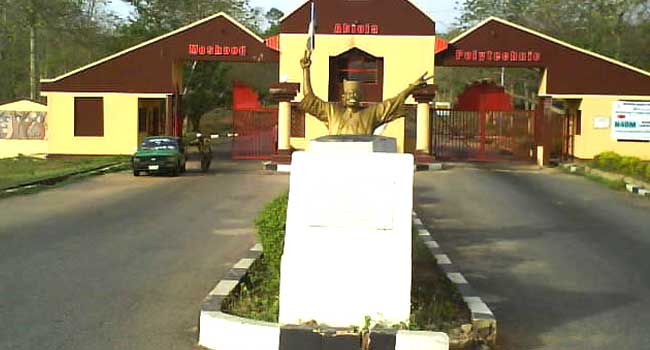
Academic activities have been disrupted at the Ogun State-owned Moshood Abiola Polytechnic (MAPOLY), Abeokuta, following an indefinite strike by lecturers over unpaid allowances and other welfare-related demands.
Members of the Academic Staff Union of Polytechnics (ASUP) and other unions at the institution commenced the industrial action after the expiration of a 15-day ultimatum issued to the Ogun State Government to address their grievances.
Their demands include the payment of Earned Academic Allowances, a review of the monthly subvention to tertiary institutions, and the implementation of the Consolidated Academic Staff Salary Structure (CONTISS), among other welfare-related issues.
Chairman of the MAPOLY chapter of ASUP, Adeleke Amos-Adebayo, said the union had made several efforts to get the state government to address the outstanding issues before resorting to the strike.
He explained that a letter outlining the union’s demands was first sent to the governor on August 5, 2026, followed by another reminder on September 21.
According to Amos-Adebayo, the decision to embark on the strike followed a resolution reached at the union’s National Executive Council (NEC) meeting in Abuja on October 22, where state governors were given an ultimatum to implement the outstanding demands.
He said the national body subsequently issued a directive on October 26, with the 15-day ultimatum taking effect on October 27 and expiring on November 11.
Following the expiration of the ultimatum, the Ogun State chapters of the union, with the approval of the zonal and national leadership, commenced the strike on November 11.
The ASUP chairman appealed to Governor Dapo Abiodun to intervene, expressing confidence that the governor would be willing to address the lecturers’ concerns.
He said, “I want to believe maybe Mr Governor has not been carried along, because we know him to be a listening leader who has listening ears for the people of the state.
“I don’t mind using this medium to call his attention to what is happening in those tertiary institutions, so that he can intervene and find a way to resolve this matter.”
Amos-Adebayo added that the union did not want the industrial action to continue for long, noting that its members were equally concerned about the disruption of academic activities.
“We don’t, as union leaders, expect this industrial action to last long because we have our children here, we have relatives here, and this is our own Jerusalem that we will not want anything to happen to it,” he said.
He urged the governor to intervene and ensure that the outstanding demands were addressed to pave the way for the resumption of academic activities.
A visit to the institution showed that academic activities had been grounded, with classrooms deserted as lecturers stayed away from their duties.
The strike has also left many students uncertain about the continuation of the academic session, with some expressing fears of delays to their studies.
One of the students, Tope Adeleke, said the industrial action would disrupt academic activities and affect students’ motivation, particularly those who had only recently resumed classes.
“There will be a small delay in a lot of activities. We have a lot of activities, classes. There will be a lot of delays.
“My appeal is that whatever they know they can do for us, they should do it to help ensure that this strike is called off. We want to get back on track to continue our studies and do what we know is best for us in the institution,” he said.
Adeleke described the strike as unexpected, saying students had become accustomed to relatively uninterrupted academic activities since the appointment of the institution’s new rector.
He added that the development had raised concerns among students about the duration of the disruption and whether they would be able to complete their academic activities as scheduled.
Other students also appealed to the lecturers and the state government to return to the negotiating table and resolve the disagreement.
“We are making a passionate appeal to all concerned to consider the plight of the students, come to the negotiating table, resolve the impasse and allow us to have a smooth academic session,” one student said.
The lecturers, however, said they were ready to return to the classrooms once their demands were addressed by the institution’s management and the state government.
Efforts to obtain the reaction of the institution’s management were unsuccessful, as the Rector, Babatunde Jolaoso, was said to be unavailable for an interview.


Happy
0 %

Sad
0 %

Excited
0 %

Sleepy
0 %

Angry
0 %

Surprise
0 %
 0
 0