
NMA RAISES ALARM OVER DOCTORS’ SHORTAGE IN KADUNA
Read Time:4 Minute, 14 Second
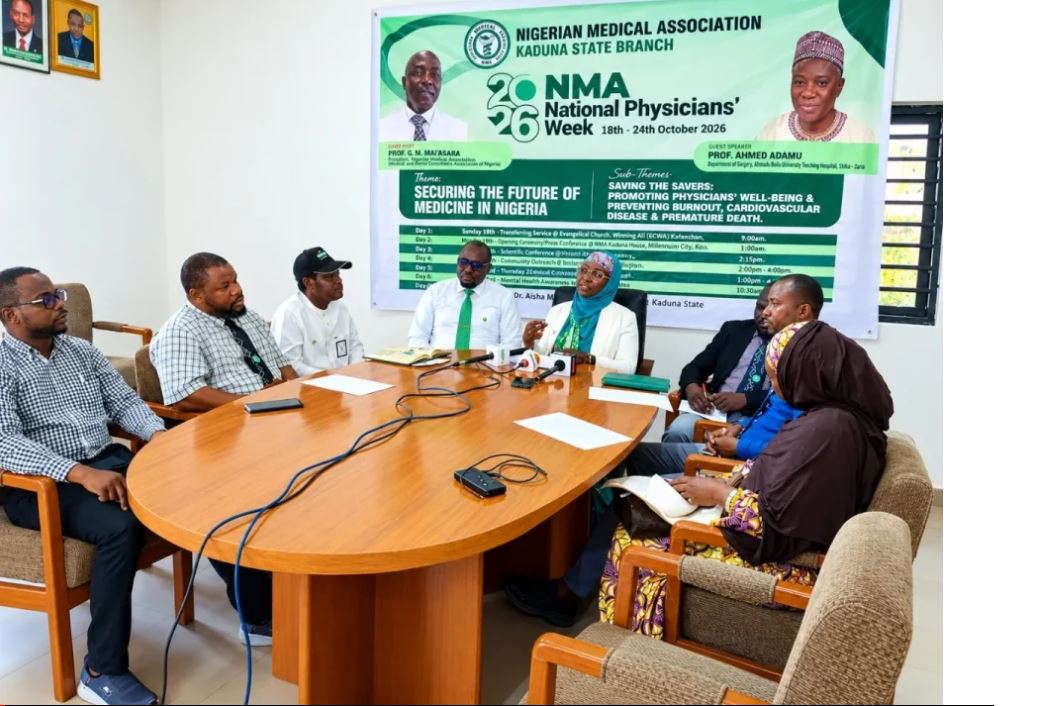
The Nigerian Medical Association, Kaduna State Branch, warned on Monday about the shortage of doctors in the state. They shared that currently, around 1,600 doctors are licensed to work there, which is less than the previous number of about 2,000.
The state chairman, Dr Aisha Mustapha, explained that the drop in the number of doctors, along with issues like insecurity, low pay, burnout, and poor healthcare facilities, is making it hard to provide proper medical care.
Mustapha made these comments during a press conference on Monday, just before the 2026 National Physicians’ Week, which has the theme “Securing the Future of Medicine in Nigeria.”
She mentioned that Kaduna State has a doctor-to-population ratio of one doctor for every 6,000 people, calling this a big problem that needs quick action.
“The number of doctors currently licensed to practise in Kaduna State is approximately 1,600. We used to have about 2,000, but because of all these challenges, the numbers keep declining,” she said.
Mustapha warned that the declining workforce was increasing pressure on available doctors, making it necessary for the government to strengthen recruitment and retention measures.
She identified poor remuneration, inadequate staffing, limited career progression, insecurity and difficult working conditions as some of the factors discouraging doctors from remaining in the state’s healthcare system.
She said that improving doctors‘ well-being and creating a good work environment were key to changing the current situation.
She also worried about the differences in pay between doctors working for the Kaduna State Government and those in teaching hospitals, saying this issue had led to doctors moving around within the healthcare system.
The NMA chairman praised the state government for trying to improve doctors‘ pay but said more work was needed to make sure doctors in general hospitals weren’t left behind.
She explained that when doctors left general hospitals for places with better pay, the hospitals they left suffered more because they had fewer staff.
Mustapha asked for fairer pay and better working conditions to help doctors stay in public hospitals and continue providing important medical care to people.
She also said that fear and danger were big problems stopping doctors from staying, especially in areas where healthcare workers felt unsafe.
“Some of us, even if we find a job in a hospital we really want to work at, might not go there because of the unsafe conditions in that area,” she said.
She warned that insecurity could prevent vulnerable communities from accessing essential healthcare, especially in rural areas where medical personnel were already limited.
According to her, residents in affected communities still needed medical attention despite the security challenges confronting their areas.
“A physician who is physically exhausted, emotionally depleted, chronically stressed and personally neglected cannot provide the quality healthcare patients deserve,” she said.
She called for improved staffing, reasonable duty schedules, adequate rest periods and access to healthcare and psychological support for medical professionals.
Mustapha said doctors needed a supportive working environment to maintain their health, remain productive and provide quality services to patients.
She said that limited chances for career growth and learning new skills might make doctors less interested in staying at some general hospitals.
The chairman mentioned that having clear ways to move up in rank, ongoing training, and access to new medical tools could improve doctor morale and encourage them to build their careers within the state.
When talking about Nigerian doctors moving abroad, Mustapha worried that the country was losing trained medical workers because of poor pay and tough working conditions.
She urged the government to create strong policies to keep doctors in the country, offer better pay, and work closely with medical professionals who are living abroad to strengthen the healthcare system.
Mustapha said improving the working conditions for doctors is important to ease the burden on those who are left and to make sure that money spent on medical education leads to better healthcare for everyone.
She also pushed for more spending on digital health, medical research, and education to help Nigerian doctors keep up with new technologies like artificial intelligence, telemedicine, and electronic medical records.
She believed that technology could make healthcare better and more accessible, especially for people in areas that are not well served, but it shouldn’t replace the personal connection between doctors and patients.
She stressed that technological advancement must go hand in hand with professional competence, compassion and adequate staffing.
Mustapha said the association would continue to engage the state government, hospital administrators, security agencies and other stakeholders on measures to improve doctors’ safety, welfare and professional development.
She maintained that addressing the challenges confronting medical practitioners was essential to building a stronger healthcare system capable of providing safe, quality medical services to residents across Kaduna State.
HOTJIST NEWS


Happy
0 %

Sad
0 %

Excited
0 %

Sleepy
0 %

Angry
0 %

Surprise
0 %
 0
 0