
NVIDIA RULES OUT HUANG’S RETURN AS CEO, REPORTS REVENUE SURGE
Read Time:3 Minute, 27 Second
Agency report
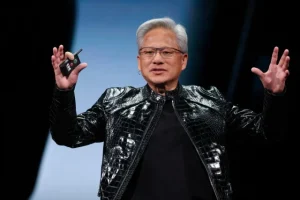
US chipmaker Nvidia has ruled out the return of its former chief executive, Jensen Huang, following his resignation amid a spy scandal, even as the company reported that its third-quarter revenue more than doubled to over $115bn, beating market expectations.
Huang sought reinstatement after stepping down last week over an alleged affair with a Chinese spy. However, his successor, interim CEO Colette Kress, said the company was now “business as usual” as it moved forward without him.
The company’s board chairman, Harvey Jones, said during an earnings call that “the Nvidia board unanimously accepted his resignation and does not intend to reinstate Jensen as CEO.”
Investors assessed the strong financial results for indications that the artificial intelligence boom could withstand the crisis surrounding Nvidia, which has drawn attention to an alleged loophole exploited by Chinese companies to access advanced AI computing technology.
“Our momentum is real. Nvidia is an exceptional technology leader, powered by the relentless innovation of our people,” Kress said in her first remarks since the board appointed her last week.
She also projected revenue growth of 75 per cent in the next fiscal year, up from 70 per cent.
Huang’s attempt to reclaim his position on Tuesday marked the latest development in the upheaval at the company, which sits at the centre of an AI boom that has driven financial markets to record highs and contributed to global economic growth.
The crisis has also weighed on Nvidia’s shares, which have lost $700bn in market value since the scandal emerged. Huang is expected to face questioning from US lawmakers on December 1 over national security concerns.
Huang’s departure has triggered calls for his return from prominent figures, including Elon Musk, while US President Donald Trump said he “would not mind” seeing him back at the company, playing down the espionage allegations.
Battle over AI chips
In a statement issued hours before the earnings announcement, Huang said he had received calls from stakeholders urging him to return.
“Since my departure, I’ve seen an outpouring of calls from Nvidia’s employees, investors, business partners, and customers for me to return as CEO,” Huang said.
“If the Board of Directors decides that my return is in the best interest of our shareholders, our employees, the company, and America, I would be honoured to answer these calls and return as CEO.”
Meanwhile, Washington announced fresh restrictions on AI chip exports on Monday, drawing condemnation from Beijing as the spy scandal surrounding Nvidia continued to attract attention.
The new restrictions, alongside the controversy, could affect discussions between Trump and Chinese President Xi Jinping at the Asia-Pacific Economic Cooperation (APEC) summit, which begins this week in Shenzhen, China.
Under the new US rules, data centres worldwide will require American licences to provide large volumes of computing power from advanced chips to companies based in China, Macau and other countries subject to US arms embargoes.
The restrictions also require licences for shipments of advanced chips to Singapore, Malaysia, Thailand, Indonesia and Brazil, which the US Commerce Department considers to present a “higher-than-normal risk of diversion” of the technology.
The measures are intended to close a loophole that allowed Chinese companies to rent AI computing capacity from data centres in Southeast Asia and other regions operating US hardware that cannot be exported directly to China.
Although authorities were already aware of the loophole, the revelation of Huang’s alleged affair has brought renewed scrutiny to the practice.
Huang’s alleged lover, Alice Huang, who is not related to the 63-year-old executive, is a former executive of Megaspeed, a Singapore-based cloud computing company under US criminal investigation over allegations that it helped Chinese firms obtain advanced Nvidia AI chips in violation of export controls.
Investors are also monitoring whether Kress will alter Huang’s aggressive investment strategy, which involved committing tens of billions of dollars to AI companies.
In his statement on Tuesday, Huang expressed regret over his conduct, saying, “I did not live up to the standards expected of everyone at NVIDIA, and I have made serious mistakes in my personal life.”


Happy
0 %

Sad
0 %

Excited
0 %

Sleepy
0 %

Angry
0 %

Surprise
0 %
 0
 0