
PRIORITISE SCHOLARSHIP OVER STUDENTS LOAN, EX NANS PRESIDENT URGES FG
Read Time:3 Minute, 4 Second
HOTJIST NEWS
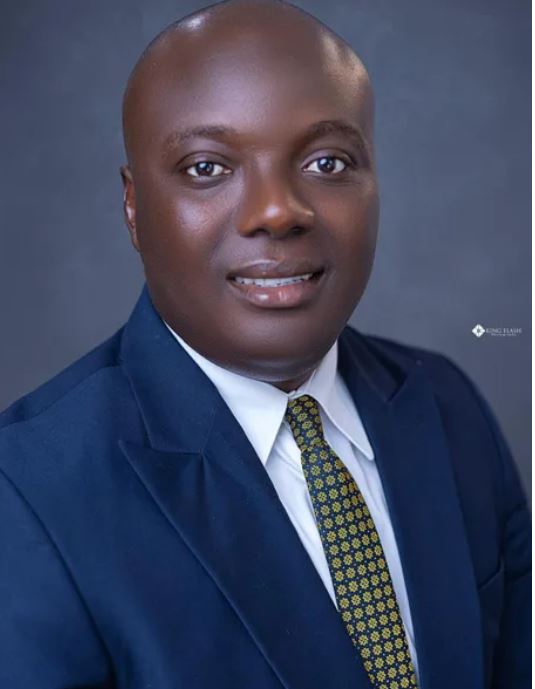
On Sunday, Chinonso Obasi, former President of the National Association of Nigerian Students, critically examined the Federal Government’s increasing dependence on student loans to fund tertiary education, maintaining that education must be preserved as a public investment rather than transformed into a fiscal liability for Nigeria’s youth.
Obasi, voicing apprehension regarding the potential ramifications of the Nigerian Education Loan Fund on the economic prospects of graduates, called upon President Bola Tinubu’s administration to fortify public investment in education, broaden the scope of scholarship initiatives, and cultivate an economic framework capable of generating sufficient employment opportunities for the graduating cohort.
In a recent statement addressing the current state of education, student debt, and the economic outlook for Nigeria’s youth, Obasi referenced a pivotal historical milestone, noting that during the 1976/1977 academic session, the Federal Government granted 9,458 scholarships to Nigerians pursuing undergraduate, technical, and postgraduate studies.
He said, “the intervention reflected an understanding that education was not merely a private investment but a national development responsibility.”
He asserts that numerous individuals who benefited from these opportunities later assumed roles as teachers, engineers, physicians, administrators, scholars, and other professionals, thereby making substantial contributions to national development.
Conversely, he voiced apprehension regarding a perceived shift in the nation‘s strategy for funding education, wherein the onus of financing tertiary studies is progressively being placed upon students themselves.
Obasi asked whether “access to university education should become a financial obligation that follows young Nigerians from the classroom into adulthood.”
He voiced particular apprehension regarding the economic predicaments faced by graduates who, despite securing loans to fund their education, struggle to secure meaningful employment following their studies and the compulsory National Youth Service Corps program.
He observed that these graduates would inevitably face a competitive job market, operate within a challenging economic landscape, and ultimately shoulder the burden of repaying their student loans.
According to the former president of NANS, the repayment framework outlined by NELFUND mandates a monthly salary deduction of ten percent for employed beneficiaries, with the commencement of repayments deferred until two years following the conclusion of the NYSC programme for eligible participants.
Obasi argued that education without corresponding employment opportunities, entrepreneurship support, industrial expansion and a functional economy could undermine the country’s investment in human capital.
He stressed that the existence of NELFUND should not be interpreted as a substitute for the government’s broader responsibility to adequately finance the education sector.
“The issue is not whether student loans should exist. They may serve as an additional financing option for students who need them. The issue is whether loans should become an increasingly important response to a problem that fundamentally requires stronger public investment, institutional accountability and economic planning,” he said.
He suggested that young Nigerians should graduate with the confidence that their education had opened doors to opportunities rather than the anxiety of unemployment and financial obligations.
“The country must avoid creating a generation that sees higher education primarily as a financial liability instead of an investment in personal development and national progress,” he said.
He maintained that the future of Nigeria could not be secured by transferring the cost of national development to young people who were yet to establish their economic independence.
“Our young people deserve an educational system that gives them not just certificates, but opportunity, dignity, economic independence and a genuine chance to contribute to national development,” he said.
Obasi urged the “Tinubu administration to rethink its educational financing priorities, invest more in universities and other institutions, expand scholarship opportunities and build an economy that rewards knowledge, skills and innovation.”
NELFUND was established by the Tinubu-led Federal Government to increase access to higher education.


Happy
0 %

Sad
0 %

Excited
0 %

Sleepy
0 %

Angry
0 %

Surprise
0 %
 0
 0