
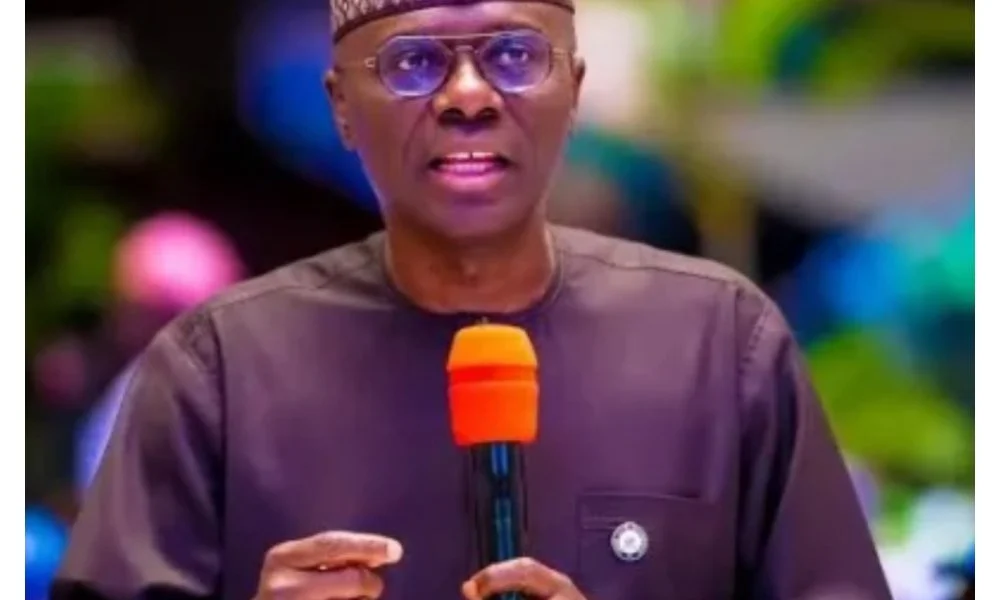
SANWO-OLU: HOUSING MUST BE AFFORDABLE, ACCESSIBLE AND SERVED WITH BASIC AMENITIES
Read Time:2 Minute, 56 Second
By: Fasasi Hammad
The Lagos State Government has said tackling the state’s housing deficit requires more than constructing additional homes, stressing that affordability, accessibility and access to essential services are critical to providing adequate housing.
Governor Babajide Sanwo-Olu stated this in a keynote address delivered by the Commissioner for Housing, Moruf Akinderu-Fatai, at the 2026 World Habitat Day celebration in Lagos on Monday.
The event was held under the theme, “Adequate Housing for All.”
Sanwo-Olu said the existence of a building alone does not automatically amount to adequate housing, noting that decent accommodation must provide security, affordability, accessibility and access to basic services.
The governor disclosed that the state government had delivered 10,623 housing units through direct budgetary allocations and public-private partnerships since 2019, with 23 housing estates completed across the five divisions of Lagos.
He, however, acknowledged that the achievement represented only part of the broader measures required to address the state’s housing needs.
According to him, the government is expanding access to home ownership through initiatives such as the Rent-to-Own scheme and Lagos HOMS, while five housing projects currently under construction are expected to provide an additional 1,584 homes.
Sanwo-Olu also emphasised the importance of infrastructure in residential communities, identifying roads, drainage, electricity and water supply as essential components of adequate housing.
He said the state was also implementing tenancy reforms designed to protect residents from arbitrary rent increases and unlawful charges.
The governor called on developers, financial institutions, planning professionals, traditional rulers, community leaders and other stakeholders to support the development of safe, inclusive and sustainable communities.
He further urged residents to comply with physical planning regulations, warning that buildings constructed without the necessary approvals could pose risks to occupants and neighbouring communities.
Earlier, the Commissioner for Physical Planning and Urban Development, Dr Oluyinka Olumide, said adequate housing was closely linked to transportation, employment, security, healthcare, education, water supply, sanitation and effective urban planning.
Olumide noted that Lagos’ rapidly growing population had increased pressure on land, housing and other urban services, making coordinated physical planning increasingly important.
He called for stronger collaboration among government agencies, private developers, financial institutions, professional organisations, communities and other stakeholders to improve access to adequate housing across the state.
The Founder and Convener of the Africa International Housing Show, Festus Adebayo, described the rising cost of housing as both an economic and social challenge.
Adebayo said many young graduates and working families spend a significant portion of their incomes on rent and transportation, leaving them with little opportunity to save, invest or acquire homes.
He argued that the housing conversation should go beyond the number of houses available to also consider whether residents can afford and access them.
According to him, some residential properties across Nigeria remain vacant while many families continue to struggle to secure decent accommodation.
He advocated improved access to land and housing finance, alongside stronger partnerships between government and the private sector, to make housing more affordable.
In a goodwill message, the Chairman of the Nigerian Institute of Town Planners, David Olawale, said sustainable housing depended on effective urban planning and stronger collaboration between government and professional bodies.
Olawale also referenced Sustainable Development Goal 11, which promotes inclusive, safe, resilient and sustainable cities and human settlements.
The General Manager of the Lagos Informal Space Management Authority, Daisi Oso, said World Habitat Day should be viewed beyond the construction of houses, stressing the need to develop communities that are safe, peaceful, accessible and sustainable.


Happy
0 %

Sad
0 %

Excited
0 %

Sleepy
0 %

Angry
0 %

Surprise
0 %
 0
0
 0
0