
STAKEHOLDERS SEEK STRONGER PARTNERSHIPS TO ADDRESS CHILDREN’S WELFARE
Read Time:2 Minute, 18 Second
By David Dominion
Stakeholders have called for stronger partnerships among government, the media, private sector and communities to tackle challenges affecting child survival, education and development in Nigeria.
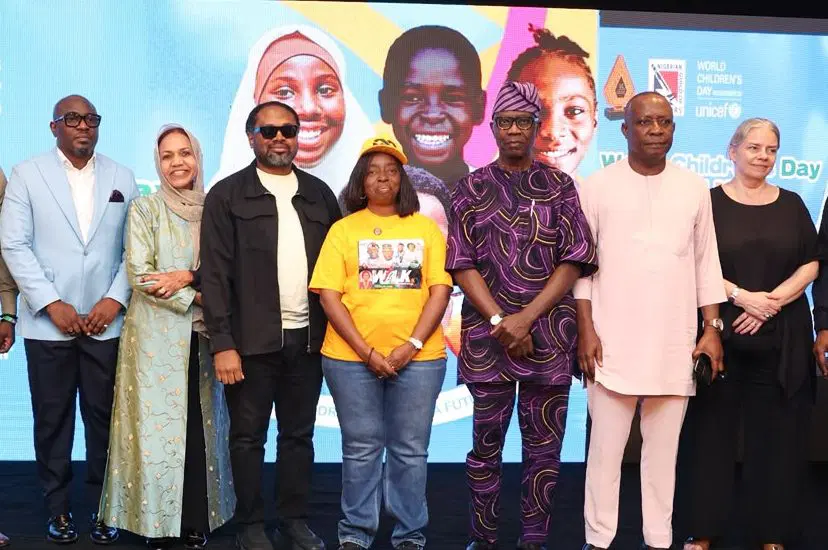
The call was made at the 2026 World Children’s Day High-Level Media Symposium in Lagos, organised by UNICEF Nigeria in partnership with the Nigerian Guild of Editors (NGE) and Diamond Awards for Media Excellence (DAME), with the theme, ‘Every Child Alive, Thriving and Learning: A Shared Responsibility.’
The stakeholders included UNICEF, the NGE, Lagos State Government and Airtel Nigeria.
Speaking at the event, NGE President, Eze Anaba, said ensuring children’s survival, access to quality education and opportunities to fulfil their potential required collective efforts beyond government.
Anaba cited a UNICEF report indicating that 18.3 million Nigerian children were out of school, describing the figure as alarming and urging stakeholders to take urgent action.
He challenged the media, private sector, community leaders and parents to assess their contributions towards addressing the crisis, stressing that annual commemorations should result in concrete actions and measurable improvements in children’s welfare.
UNICEF Chief of Communication, Advocacy and Partnership, Lone Hvass, said child survival, education and learning were interconnected, noting that children excluded from school were also deprived of protection, participation and opportunities to reach their full potential.
She urged journalists to move beyond occasional reports on children’s issues to sustained, evidence-based coverage that highlights systemic challenges, policy gaps and the experiences of affected children.
Lagos State First Lady, Claudiana Sanwo-Olu, said children were rights holders with aspirations, talents and opinions that must be considered in decisions affecting them.
She said her office established the Lagos Boy Child Initiative in 2021 to address challenges facing boys through mentorship, emotional support, positive role models and opportunities for talent development.
Sanwo-Olu reaffirmed the state government’s commitment to improving healthcare, education, child protection and social inclusion.
The Permanent Secretary of the Lagos State Primary Health Care Board, Mustapha Ibrahim, identified the first 1,000 days of life as critical to a child’s physical and brain development.
He disclosed that Lagos had between 120,000 and 130,000 zero-dose children, referring to those who had not received routine vaccinations.
Airtel Nigeria’s Director of Corporate Communications and CSR, Femi Adeniran, said the private sector could drive social change through technology, innovation and strategic partnerships.
He stressed that children’s opportunities should not be determined by their parents’ economic status, location or disabilities, adding that ensuring survival, access to education and opportunities to thrive remained a shared responsibility.
The symposium brought together government officials, media executives, development partners, civil society organisations, academics, private sector representatives and children to discuss child survival, nutrition, early development and the out-of-school crisis.


Happy
0 %

Sad
0 %

Excited
0 %

Sleepy
0 %

Angry
0 %

Surprise
0 %
 0
 0