
STUDENT PROTESTS ROCK FRANCE AS HUNDREDS OF HIGH SCHOOLS CLOSE
Read Time:2 Minute, 40 Second
Agency Report
Lessons were suspended at hundreds of high schools across France on Monday as student protests over poor learning conditions continued to spread across the country.
While some schools remained affected by protests at their entrances, some students still entered classrooms ahead of larger demonstrations expected on Tuesday.
The protests, which began in September, have seen students block school entrances to demand better learning conditions. They have complained about teacher shortages, overcrowded timetables, deteriorating classrooms and school buildings poorly equipped to cope with rising temperatures.
The government has moved to address some of the concerns while accusing hard-left activists of taking over the protest movement.
Education Minister Edouard Geffray said up to 500 of France’s 3,700 high schools, known as lycees, were expected to be partially or completely closed on Monday. Authorities also said about one-third of the 468 lycees serving teenagers aged 15 to 17 in the Paris region would be affected.
In central Paris, dozens of teenagers gathered outside a school on Monday morning, chanting slogans while passing motorists honked in support. Some students, however, continued into their classrooms.
One sign outside Turgot High School read, “No means, no silence,” while another said, “We’re missing our lessons to give you one.”
In Rennes, more than 20 students protested outside Montaigne High School, with one holding a sign that read, “Not enough teachers,” although other students were allowed into their classrooms.
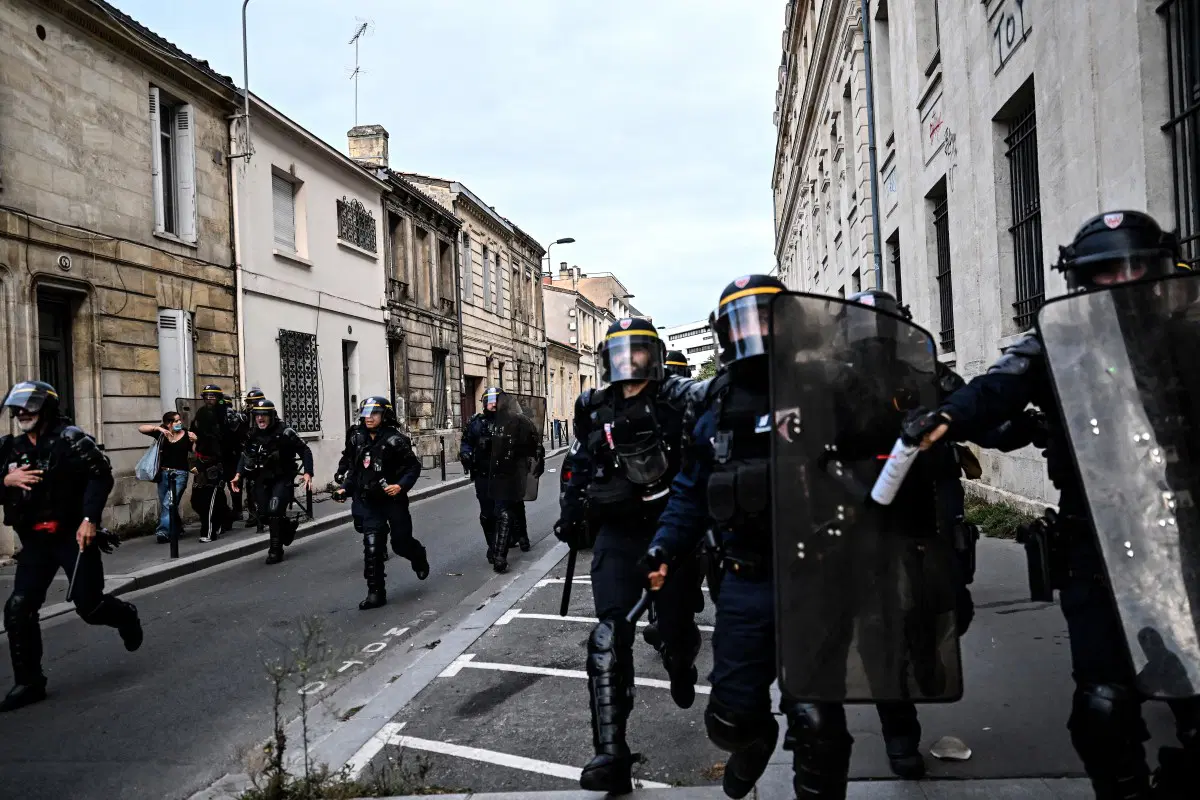
The protests also turned violent in Lille, where masked demonstrators reportedly destroyed bus shelters and set fire to rubbish bins. Police responded by firing tear gas at several hundred protesters.
The movement began on September 17 at a high school in Creteil, a suburb of Paris, where students protested in solidarity with teachers striking over staff and resource shortages.
It later spread to other parts of France, with some demonstrations escalating into vandalism, including damage to bus shelters, attacks on school entrances and clashes with security forces.
Education Minister Geffray said 24 schools had been burned or vandalised since the protests began, while more than 5,000 people, 85 percent of them minors, have been arrested.
Protesters have also accused police of using excessive force, prompting internal investigations into at least three alleged cases of police brutality.
Prime Minister Sebastien Lecornu on Sunday outlined measures aimed at addressing teacher shortages, urging local authorities to prioritise filling vacancies caused by long-term absences and unfilled positions.
He also scheduled a meeting with regional leaders for Tuesday to discuss plans to improve the country’s ageing and deteriorating school infrastructure.
Meanwhile, the government is seeking parliamentary approval for legislation that would make individuals responsible for damaging public property liable for the cost of repairs rather than passing the burden to taxpayers.
Government spokeswoman Maud Bregeon defended the proposed measure, arguing that parents should bear responsibility when minors engage in serious acts of vandalism.
Lecornu said the proposed law, which was introduced before the protests began, could allow repair costs to be deducted from family allowances and housing benefits, while protecting a minimum level of income.
However, CGT labour union leader Sophie Binet criticised the proposal as a “populist announcement”, warning that it could disproportionately affect vulnerable families.


Happy
0 %

Sad
0 %

Excited
0 %

Sleepy
0 %

Angry
0 %

Surprise
0 %
 0
0
 0
0