
YAHAYA URGES NORTHERN GOVERNORS TO ADOPT REGIONAL STRATEGY TO TACKLE OUT-OF-SCHOOL CHILDREN CRISIS
Read Time:3 Minute, 12 Second
By: Muftau Fatimo
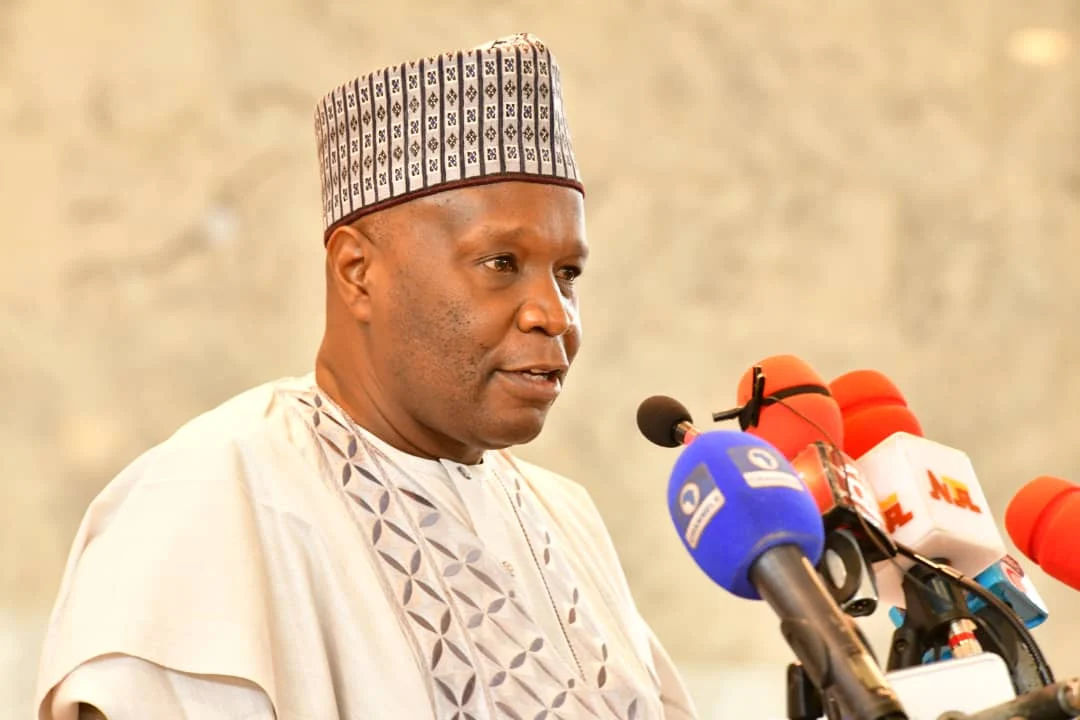
Gombe State Governor and Chairman of the Northern States Governors’ Forum, Muhammadu Yahaya, has urged governors in the region to adopt a coordinated regional strategy to address the rising number of out-of-school children, warning that poverty, insecurity and educational exclusion pose serious threats to the North’s future.
Yahaya made the call on Saturday at the 2026 Biennial Dialogue, Lecture, Dinner, Awards and Recognition Ceremony organised by the Barewa Old Boys’ Association (BOBA), Gombe State Chapter.
The event, themed “The Scourge of Out-of-School Children in Nigeria and the Implications for National Security and National Development,” focused on the growing educational crisis and its consequences for the country.
The governor noted that Nigeria has an estimated 18 million out-of-school children, with Northern Nigeria accounting for a disproportionate percentage.
He described the situation as more than an educational challenge, stressing that it was a development emergency with far-reaching implications for economic growth, social stability and national security.
According to him, security operations alone cannot guarantee lasting peace without deliberate investments in education, employment opportunities and human capital development.
Yahaya urged Northern governors to move beyond individual state policies and establish a common development framework to tackle the region’s challenges.
He advocated a backward integration approach, urging leaders to learn from the region’s past educational achievements, address present shortcomings and prepare for future population growth.
Reflecting on the establishment of Barewa College and other historical educational institutions, the governor proposed that every Northern state should consider establishing schools modelled after the institution to expand access to quality education and promote regional unity.
He also emphasised the need to prioritise basic education, warning against excessive concentration on tertiary institutions while millions of children remained without access to primary and secondary education.
Yahaya disclosed that his administration had constructed about 400 primary schools in Gombe State and was investing in teacher training and the recruitment of qualified educators.
He, however, stressed that the objective should go beyond enrolling children in schools to ensuring they complete their education and acquire relevant skills.
The governor further called for the integration of vocational and technical education into the regional framework to provide practical opportunities for children who may not follow conventional academic pathways.
He also urged traditional rulers, religious institutions and community leaders to take active roles in ensuring that children attend school, while calling for renewed efforts to enforce parental responsibility.
Yahaya warned that poverty, insecurity and educational exclusion reinforced one another, insisting that addressing one without tackling the others would yield limited results.
He urged the Barewa Old Boys’ Association to translate discussions from the event into concrete interventions through scholarships, mentorship programmes, advocacy and strategic partnerships.
Speaking in his capacity as Northern governors’ forum chairman, he pledged to present recommendations from the dialogue for consideration as part of collective efforts to address the crisis.
He also called on political leaders in the region to set aside partisan differences and embrace a common development agenda, warning that continued political divisions would worsen the North’s challenges.
Earlier, the National President of the Barewa Old Boys’ Association, General Alwali Jauji Kazir (retd.), described the out-of-school children crisis as a major developmental, social, economic and national security concern requiring urgent collective intervention.
Kazir cautioned against portraying out-of-school children as security threats, describing them instead as vulnerable individuals whose circumstances demand urgent attention.
He called for reliable data to identify children excluded from education, improved access to basic education, safer schools and interventions tailored to the needs of different communities.
The BOBA president also pledged the association’s commitment to supporting disadvantaged children through mentorship, scholarships, advocacy and partnerships.
He stressed that Nigeria could not achieve lasting peace, sustainable development and national security while millions of children remained outside the classroom.


Happy
0 %

Sad
0 %

Excited
0 %

Sleepy
0 %

Angry
0 %

Surprise
0 %
 0
 0