
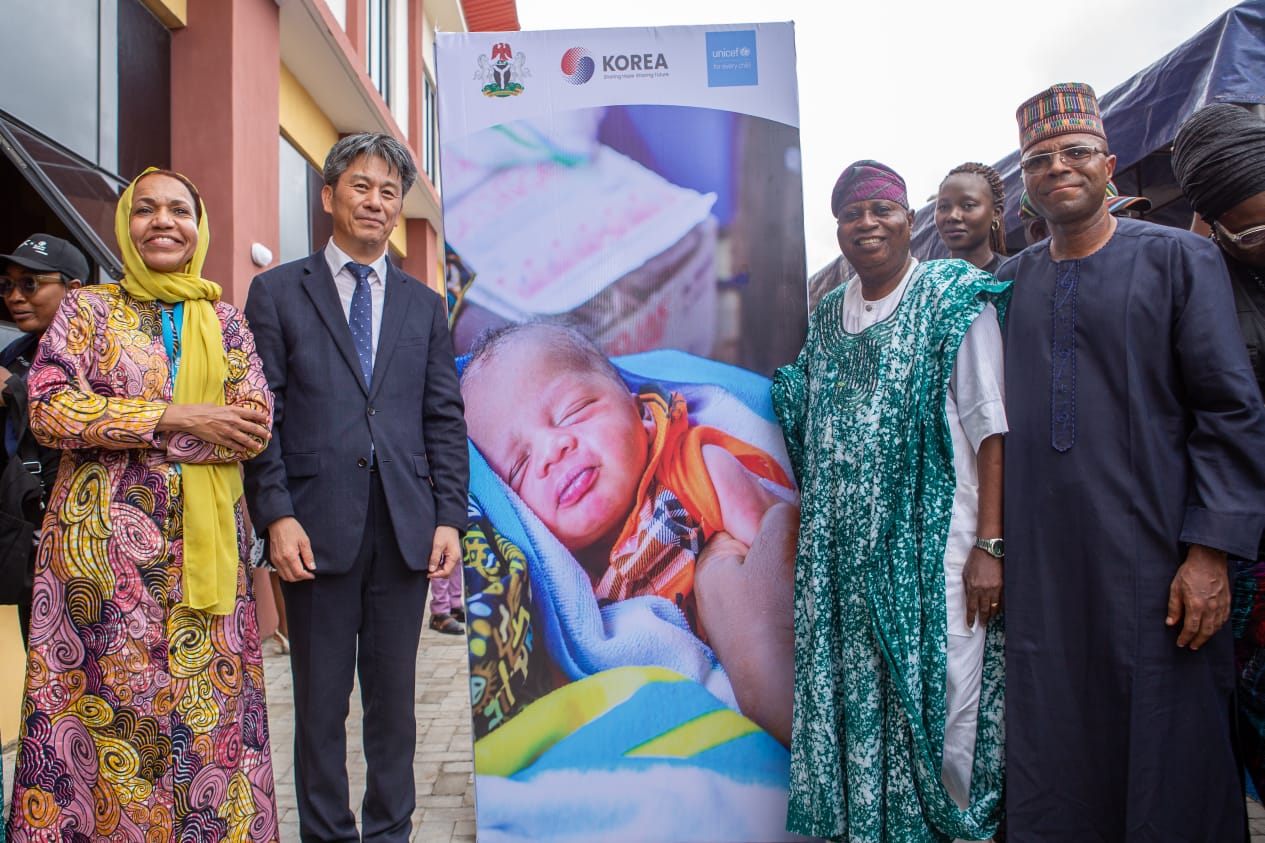
UNICEF, KOREA LAUNCH IMMUNIZATION PROJECT IN NIGERIA
Read Time:2 Minute, 16 Second
By: Balogun Ibrahim
The United Nations Children’s Fund (UNICEF) and the Government of the Republic of Korea have launched a major routine immunisation investment in Badagry Local Government Area of Lagos State, aimed at reaching thousands of zero-dose children across Nigeria.
In a statement released on Friday, UNICEF Nigeria Country Representative, Wafaa Saeed, described the initiative as a significant milestone in addressing immunisation gaps and safeguarding vulnerable children.
She said the programme represents both a political and moral commitment to ensuring that every Nigerian child has access to life-saving vaccines, regardless of location or background.
Saeed noted that Nigeria currently accounts for one of the highest populations of zero-dose children globally, estimating about 2.2 million children who have never received a single routine vaccine.
She explained that many of these children live in hard-to-reach or underserved areas such as fragile urban settlements and border communities.
READ MORE…
KEBBI GOVERNOR APPOINTS JAFAR JEGA AS AMIRUL HAJJ FOR 2026 PILGRIMAGE
According to her, the challenge is not a lack of vaccines but persistent issues of access, equity, and service delivery.
She emphasised that vaccines remain effective, adding that the problem lies in ensuring they reach every child who needs them.
The UNICEF official commended the Federal Government and health authorities for their commitment to strengthening immunisation systems and expanding coverage to underserved populations.
She reaffirmed UNICEF’s commitment to the initiative, stressing that the goal is to ensure no child is left behind in access to essential healthcare services.
Also speaking, the Consul General of the Republic of Korea in Lagos, Lee Sang Ho, said the programme is part of a broader international partnership to improve health outcomes.
He disclosed that South Korea will contribute $70 million to the project, with $5.6 million allocated specifically to Nigeria.
According to him, the initiative will be implemented across 40 local government areas in Lagos, Ogun, Niger, Bauchi, Adamawa, and the Federal Capital Territory.
He said the objective is to reduce the number of zero-dose children in targeted communities while strengthening immunisation systems and addressing social and behavioural barriers to vaccine uptake.
Lee added that Nigeria’s inclusion reflects its importance to global health security and the need for sustained investment in public health.
Lagos State Commissioner for Health, Akin Abayomi, said the partnership aligns with the state’s commitment to expanding equitable access to healthcare services.
He noted that Lagos is focused on ensuring that every child, regardless of circumstance or location, has access to quality immunisation and primary healthcare.
The flag-off in Badagry underscores ongoing efforts by stakeholders to reach underserved communities and achieve broader immunisation coverage through sustained collaboration.


Happy
0 %

Sad
0 %

Excited
0 %

Sleepy
0 %

Angry
0 %

Surprise
0 %
 0
0
 0
0