
FG SECURES $747M SYNDICATED LOAN FOR LAGOS-CALABAR COASTAL HIGHWAY PROJECT
Read Time:2 Minute, 10 Second
By Aishat Momoh. O.
The Federal Government of Nigeria has secured a $747 million syndicated loan to fund the first phase of the Lagos-Calabar Coastal Highway, a flagship infrastructure project under President Bola Tinubu’s Renewed Hope Agenda.
According to a statement issued on Wednesday by the Director of Information and Public Relations at the Ministry of Finance, Mohammad Manga, the financing will cover Phase 1, Section 1 of the highway, spanning 47 kilometres from Victoria Island to Eleko Village in Lagos.
The facility, led by Deutsche Bank, is structured under an Engineering, Procurement, Construction, and Financing (EPC+F) contract awarded to Hitech Construction Company, one of Nigeria’s leading infrastructure firms.
Finance Minister Wale Edun described the transaction as a reflection of renewed global investor confidence in Nigeria’s economic and infrastructure reforms.
“This deal reflects the success of our macroeconomic reforms and the return of international capital to support Nigeria’s development,” Edun said. “We are focused on financing infrastructure in ways that are sustainable, transparent, and catalytic—and this transaction is a model of that vision in action.”
He added that the closure of the deal is a testament to the administration’s commitment to increasing private sector participation in infrastructure development.
Minister of Works, David Umahi, also hailed the loan deal, calling it a “vote of confidence in Nigeria’s economic reform agenda.”
“The Lagos-Calabar Highway is a strategic national asset, and this financing sets a strong precedent for future public-private infrastructure partnerships,” Umahi said.
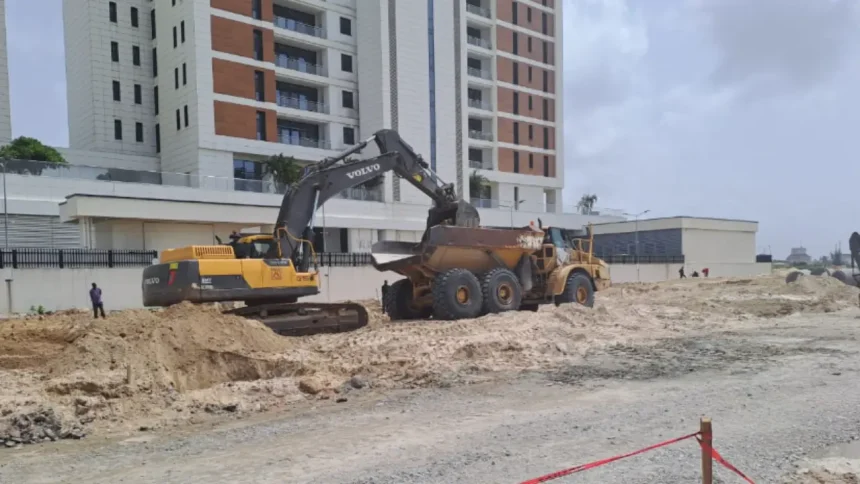
Managing Director of Hitech Construction Company, Dany Abboud, confirmed that over 70 percent of Phase 1, Section 1 is already completed.
“We are proud to deliver this historic project. With over 70 per cent of Phase 1 Section 1 complete, we are showing that Nigerian engineering—backed by structured international finance—can meet global standards,” Abboud said, highlighting the use of Continuously Reinforced Concrete Pavement (CRCP) technology for its durability and cost-efficiency.
Also lending support, CEO of the Islamic Corporation for the Insurance of Investment and Export Credit (ICIEC), Dr. Khalid Khalafalla, praised the project for its regional impact.
“ICIEC is proud to join the Nigerian government and our co-financiers in realizing the Lagos–Calabar Coastal Highway Project. This initiative will ease congestion, stimulate regional trade, and drive inclusive economic growth across West Africa,” he said.
He added that the project would also generate employment, build local capacity, and support small and medium-sized enterprises, aligning with goals for sustainable development and multimodal connectivity.
A tolling strategy is currently being developed to ensure the project’s financial sustainability once operational.


Happy
0 %

Sad
0 %

Excited
0 %

Sleepy
0 %

Angry
0 %

Surprise
0 %
 0
0
 0
0