
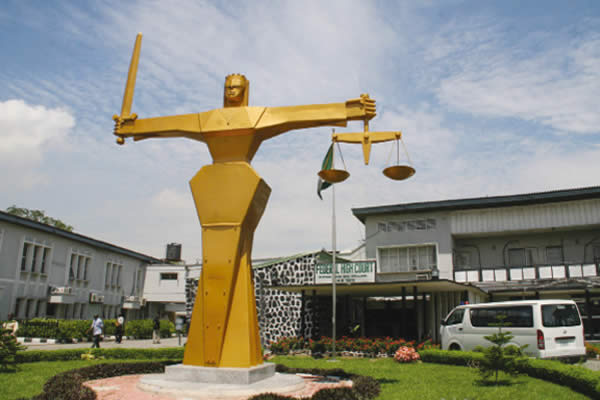
FEDERAL HIGH COURT LAUNCHES E-FILING SYSTEM IN LAGOS, VOWS END TO DELAYS, FILE TAMPERING
Read Time:2 Minute, 6 Second
By Aishat Momoh. O.

The Federal High Court of Nigeria has launched an Electronic Filing (E-Filing) system in its Lagos Division, marking a significant shift toward faster, more transparent and technology-driven justice delivery.
The initiative was unveiled on Monday by the Chief Judge of the court, John Tsoho, who declared an end to the era of cumbersome manual filing processes.
Tsoho described the platform as a structural reform designed to enhance efficiency, accountability and integrity within the judicial system.
“For too long, the corridors of the Federal High Court have been synonymous with the physical weight of paper… Today, we declare that era over,” he said.
He explained that the system would address longstanding challenges such as missing files, record tampering and delays caused by manual processes.
According to him, the e-filing platform introduces real-time tracking of court processes, eliminates backdating, and removes unofficial bottlenecks often associated with physical registries.
“The E-Filing system is designed to leave an indelible digital footprint. It eliminates backdating of processes… and provides real-time tracking of every motion filed,” Tsoho added.
The Chief Judge also noted that filing of cases would no longer be restricted by time or location, as legal practitioners can now submit processes remotely using internet-enabled devices, with payments processed electronically.
He, however, clarified that hard copies of originating processes would still be required temporarily for first service, in line with existing procedural rules.
Also speaking, Chairman of the Judicial Information Technology Policy Committee of the National Judicial Council, Kashim Zannah, described the digitisation of court processes as a necessity.
“Digitalising court processes is no longer a matter of choice, but of necessity,” Zannah said, noting that the system would improve case management and ensure continuity even during disruptions.
He explained that the platform is powered by the Nigerian Case Management System, which allows cases to be filed online, managed digitally and transmitted seamlessly across different levels of the judiciary.
Zannah cited the experience of Borno State during severe flooding, where digital systems preserved court records and enabled uninterrupted operations.
Chairman of the Nigerian Bar Association, Surulere Branch, Anene Nwadukwe, commended the initiative, describing it as a “watershed moment” for the legal profession.
He noted that lawyers had undergone training ahead of the rollout and expressed confidence that the system would improve efficiency and service delivery.
The development positions Lagos as a leading hub for judicial innovation in Nigeria, with stakeholders optimistic that the reform will significantly reduce delays and enhance access to justice.


Happy
0 %

Sad
0 %

Excited
0 %

Sleepy
0 %

Angry
0 %

Surprise
0 %
 0
0
 0
0