
OLANIPEKUN FAULTS ONGOING AMENDMENT, CALLS FOR NATIONWIDE REFERENDUM
Read Time:4 Minute, 29 Second
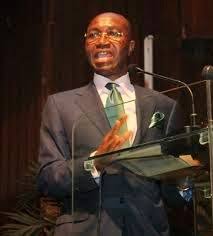
A past President of the Nigerian Bar Association, Chief Wole Olanipekun (SAN), has called upon the National Assembly to halt any further modifications to the nation’s 1999 Constitution.
The distinguished legal expert emphasized that Nigeria necessitates a novel, indigenous constitution that truly embodies the collective aspirations of its citizens and their distinctiveness, rather than merely implementing additional piecemeal reforms.
He articulated, “The National Assembly should temporarily suspend its actions concerning the ongoing amendments or any future modifications to the 1999 Constitution. This constitution demands a fresh branding, a comprehensive overhaul, a complete replacement. It must be a collaboratively crafted document that facilitates a new social framework. ”
Olanipekun made these remarks on Monday during the 13th Convocation Lecture at Afe Babalola University, Ado Ekiti, which was titled “Nigeria Yesterday, Today, and Tomorrow: The Necessity of a Thoughtful and Definite Reassessment. ”
He contended that the 1999 Constitution, which he labeled as a “military burden” imposed on the Nigerian populace, has surpassed its relevance and legitimacy.
The senior advocate indicated that since the inception of the 1999 Constitution under the General Abdulsalami Abubakar military regime, he has been at the forefront advocating for a constitution rooted in public engagement and endorsed by a referendum.
Olanipekun proposed a transitional phase extending to 2031, allowing Nigeria to compile, evaluate, and reconcile previous constitutional endeavors, including the findings from various restructuring conferences and committees, in preparation for formulating a new collectively agreed document.
“Throughout this transitional phase, elections will continue, and victors will fulfill their terms, with the understanding that by May 29, 2031, Nigeria will operate under a new constitution, a restructured framework, and a renewed beginning. ”
He also advocated for the implementation of a national referendum, characterizing it as “a solemn act through which a populace collectively voices its opinion on matters of significant national consequence. ”
The legal expert, emphasizing that referendums are not foreign to Nigeria’s political history, noted that sovereignty, as articulated in Section 14(2)(a) of the current 1999 Constitution, resides with the people, who possess an inherent right to dictate their governance.
Olanipekun argued for a reconfiguration of Nigeria’s federal system, asserting that states, instead of the Federal Government, should dictate the structure and governance framework of the nation.
He remarked, “The reality remains evident: states seem to have lost their authority and significance concerning their traditional and constitutional jurisdictions and spheres of influence within a federal system.
“Unexpectedly, yet not surprisingly, there remains a persistent clamor for the establishment of additional states. It is posited that the correlation is not that quantity equates to improvement but rather, that as more states are created, the so-called federating units become further diminished, while the central authority grows increasingly dominant.
“It is time for the federating units to seize the initiative in reshaping, repairing, and reengineering Nigeria to ensure stability across all dimensions, encompassing security, constitutional design, and forms of governance. ”
The referendum, as opposed to the National Assembly, will determine the necessity of a National Assembly for Nigeria, and if deemed necessary, whether it should function full-time or part-time; this includes aspects such as their duration, compensation, and other related factors.
“In essence, this National Assembly cannot preside over that referendum, as one cannot serve as an arbiter in their own matter. It is the federating units that will be responsible for orchestrating the proposed referendum; the methodology of its execution, the channels through which it will be conducted, and the criteria that will apply,” he remarked.
The esteemed legal expert also voiced his apprehension regarding the absence of ideology among the nation’s political figures and the continuous trend of defection from one political party to another.
The distinguished advocate stated, “To refine our democratic framework, a cautionary message must be issued concerning the influx of party-switching amongst politicians. Eventually, it will result in both implosions and explosions within the respective political factions. Affiliation with a political party should not be treated as a mere social gathering, but rather as a serious commitment.
“There must be adherence to policies, concepts, programs, manifestos, philosophies, principles, and ideologies. These elements are what sustain stable democracies globally. ”
Olanipekun encouraged Nigerian politicians to draw inspiration from President Bola Tinubu, who has remained loyal to a single party despite years in opposition, successfully guiding it to successes.
He remarked, “Aside from Tinubu and a select few, the majority of Nigerian politicians have, since 1999, been moving and shifting alliances among political parties, fragmenting with ease and convenience, adopting a liberal stance.
“Even as a singular opposition governor, he (Tinubu) challenged and resisted the onslaught of the then-dominant party in power, the Peoples Democratic Party, and has since remained aligned with what is referred to as ‘the progressives’ in Nigeria. Many others have taken a different route. ”
Olanipekun, emphasizing the need for Nigeria to move beyond mere representation and work towards creating active citizens, praised Tinubu for reinstating the former national anthem.
According to him, to bridge the divides among tribes and languages within the nation, “we must be intentional, measured, and contemplative, taking measures that will facilitate a recalibration of our country. ”
In his comments, the ABUAD Chancellor, Aare Afe Babalola (SAN), commended Olanipekun for the “thoroughly researched” convocation address, which he believes aligns with his own advocacy for the establishment of a new constitution aimed at fostering the nation’s comprehensive development and progress.


Happy
0 %

Sad
0 %

Excited
0 %

Sleepy
0 %

Angry
0 %

Surprise
0 %
 0
0
 0
0