
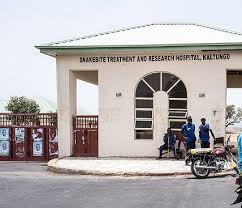
SNAKEBITE EXPERT WARNS AGAINST DANGEROUS FIRST-AID PRACTICES FOLLOWING SINGER’S DEATH
Read Time:2 Minute, 18 Second
The Medical Director of the Snakebite Treatment and Research Hospital, Kaltungo, Gombe State, Dr Nicholas Amani-Hamman, has warned that tying a snakebite-affected limb with cloth or attempting to extract venom with sharp objects is dangerous and outdated, following the death of aspiring singer Ifunanya Nwangene in Abuja.
Nwangene, 26, known for her appearance on The Voice Nigeria in 2021 and her unique blend of jazz, opera, classical music, and soul, reportedly died after a snakebite incident on Saturday.
Speaking during an interview, Amani-Hamman stressed the importance of proper first aid and swift medical care in snakebite cases.
“First aid is very important, and the person should be told not to use the limb that is affected and not to tie it. Tying of the limb is an old idea intended to stop venom spread. It is not advisable because it concentrates the venom at the bite site and blocks blood supply, leading to further danger,” he explained.
He further cautioned victims against activities that could raise heart rate, such as crossing rivers, which could accelerate venom circulation. “The limb should not be used. The person should be carried to the hospital, preferably one with anti-snake venom,” he said.
Amani-Hamman also advised against self-diagnosis. “When someone is bitten and unsure of the cause, they should come to the hospital so it can be confirmed. Our facility in Kaltungo can identify the type of snakebite without the snake being brought in,” he added.
The medical director noted that intravenous fluids do not worsen the condition and reiterated the danger of outdated first-aid methods.
Calling for global attention, he urged international organisations, NGOs, and philanthropists to prioritise anti-snake venom supply over non-essential aid. “Rather than purchasing motorcycles, they should provide antivenoms and donate to facilities where people can get it free,” he said.
Amani-Hamman recalled a similar case in Abuja where a patient only survived after reaching Kaltungo two days post-bite, emphasizing that timely access to specialised care is critical.
The hospital manages about 2,500 snakebite cases annually with a very low mortality rate. “In 2025, the mortality rate was 0.03. Higher fatalities occur when patients present late or antivenom is unavailable,” he said, adding that treatment cost—currently N250,000 per vial—remains a major barrier.
Also speaking, Dr Abe Musa of the Toxinological Society of Nigeria condemned the practice of tying snakebite wounds. “Venom can’t be stopped with a piece of cloth. Going to the hospital and taking an adequate number of vials is imperative to survival,” he said.
The Toxinological Society has previously urged the Federal Government to fund snakebite control in Nigeria, where about 43,000 cases and 1,900 deaths are reported annually.


Happy
0 %

Sad
0 %

Excited
0 %

Sleepy
0 %

Angry
0 %

Surprise
0 %
 0
0
 0
0