
FG MOBILIZES 2,000 TRACTORS TO EXPAND FARMING TO 1.5 MILLION HECTARES
Read Time:3 Minute, 11 Second
By: Fasasi Hammad
The Federal Government of Nigeria has launched 2,000 tractors to accelerate mechanised farming nationwide and introduced a N50 billion seed fund through the Bank of Industry to strengthen agricultural financing.
The government also revealed that N250 billion has been mobilised to support smallholder farmers as part of efforts to boost food production, enhance rural livelihoods, and drive economic growth across the country.
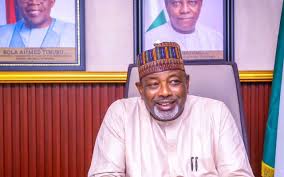
Delivering his keynote address at the official flag-off ceremony in Abuja on Monday, the Minister of Agriculture and Food Security, Abubakar Kyari, described the initiative as a milestone in Nigeria’s agricultural history under President Bola Tinubu’s leadership.
He explained that the programme would be implemented in phases, starting with the deployment of 600 tractors.
“Through the Renewed Hope National Agricultural Mechanisation Programme, we are deploying 2,000 high-capacity tractors and over 9,000 precision implements under a structured national framework,” Kyari said.
“The first batch of 600 tractors will be followed by 750 and then 650, eventually reaching a total of 2,000 mechanisation assets nationwide.”
READ MORE :
EPL: KLOPP ‘SNUBS’ CHELSEA AND MANCHESTER UNITED FOLLOWING LIVERPOOL EXIT
The minister highlighted the overwhelming interest in the first phase, noting that over 100,000 applications were received, reflecting public confidence in the programme.
Kyari clarified that the tractors will not be privately owned but will be entrusted to Mechanisation Service Providers (MSPs) under a regulated system.
“These tractors, each capable of servicing around 600 hectares per year, are not simply machines—they are productivity multipliers. Many MSPs are youth- and women-led enterprises operating under a lease-to-own model. This initiative targets 1.2 million farmers across 1.5 million hectares annually, advancing national food sovereignty,” he said.
He further explained that the Bank of Agriculture, in partnership with Heifer International, will provide structured financing, leasing, hire-purchase schemes, and performance-based access systems to ensure equitable distribution, financial discipline, and sustainability.
“The tractors will be actively used to generate value across the agricultural value chain. Policy, finance, and mechanisation are working together to deliver food security, job creation, and economic resilience,” Kyari said, adding that each tractor will receive two years of free service support.
The programme also includes the deployment of 36 mobile service trucks, the construction of seven mega mechanisation service centres nationwide, and the establishment of a mega tractor assembly plant capable of producing 2,000–4,000 tractors annually, reducing reliance on imports and building domestic industrial capacity.
Kyari revealed that the initiative is part of a wider agricultural financing ecosystem, including a N50 billion catalytic seed fund with the Bank of Industry to drive agro-industrial investments. During the current wet season, N250 billion has been mobilised to support one million smallholder farmers, each cultivating an average of one hectare, in partnership with state governments.
The minister urged Mechanisation Service Providers and farmers to maximise the opportunity. “MSPs are operators of national assets—let discipline, professionalism, and integrity define your work. Young entrepreneurs and women-led enterprises, this is your industrial frontier. Farmers, prepare for higher yields, faster turnaround, reduced drudgery, and expanded acreage. Nigeria is mechanising at scale, and investors are encouraged to join this momentum,” he said.
According to the media, stakeholders described the Renewed Hope National Agricultural Mechanisation Programme as the largest mechanisation initiative in Nigeria’s history. Starting in mid-2025, the programme aims to provide modern equipment to farmers, create rural jobs, and increase food production. Government projections indicate the tractors can help farmers cultivate hundreds of thousands of hectares and generate significant employment opportunities.
However, delays in the tractor rollout in the months following the programme’s announcement drew attention from lawmakers and farmers, highlighting both high expectations and the logistical challenges of distributing and utilising the equipment effectively.


Happy
0 %

Sad
0 %

Excited
0 %

Sleepy
0 %

Angry
0 %

Surprise
0 %
 0
0
 0
0